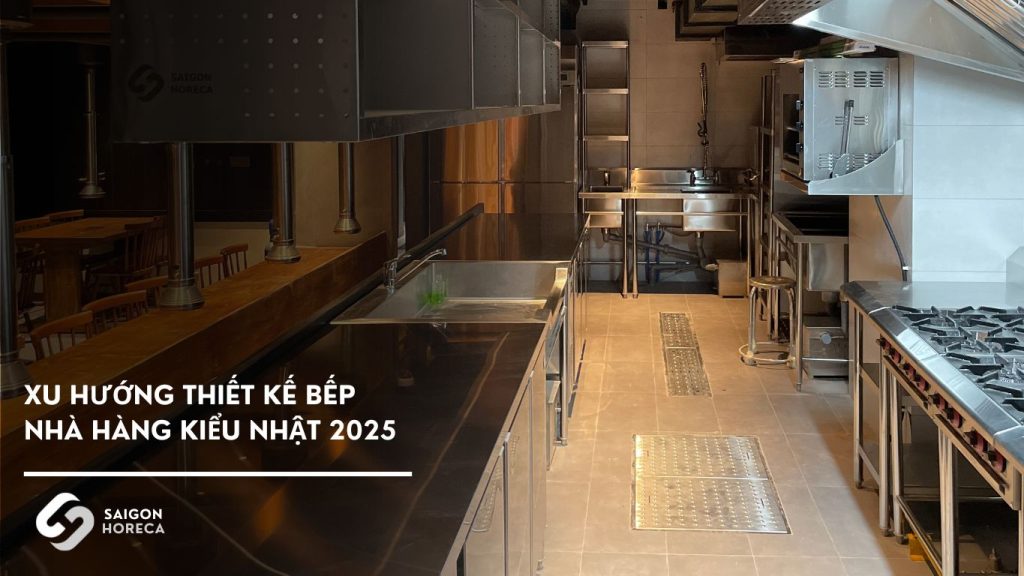
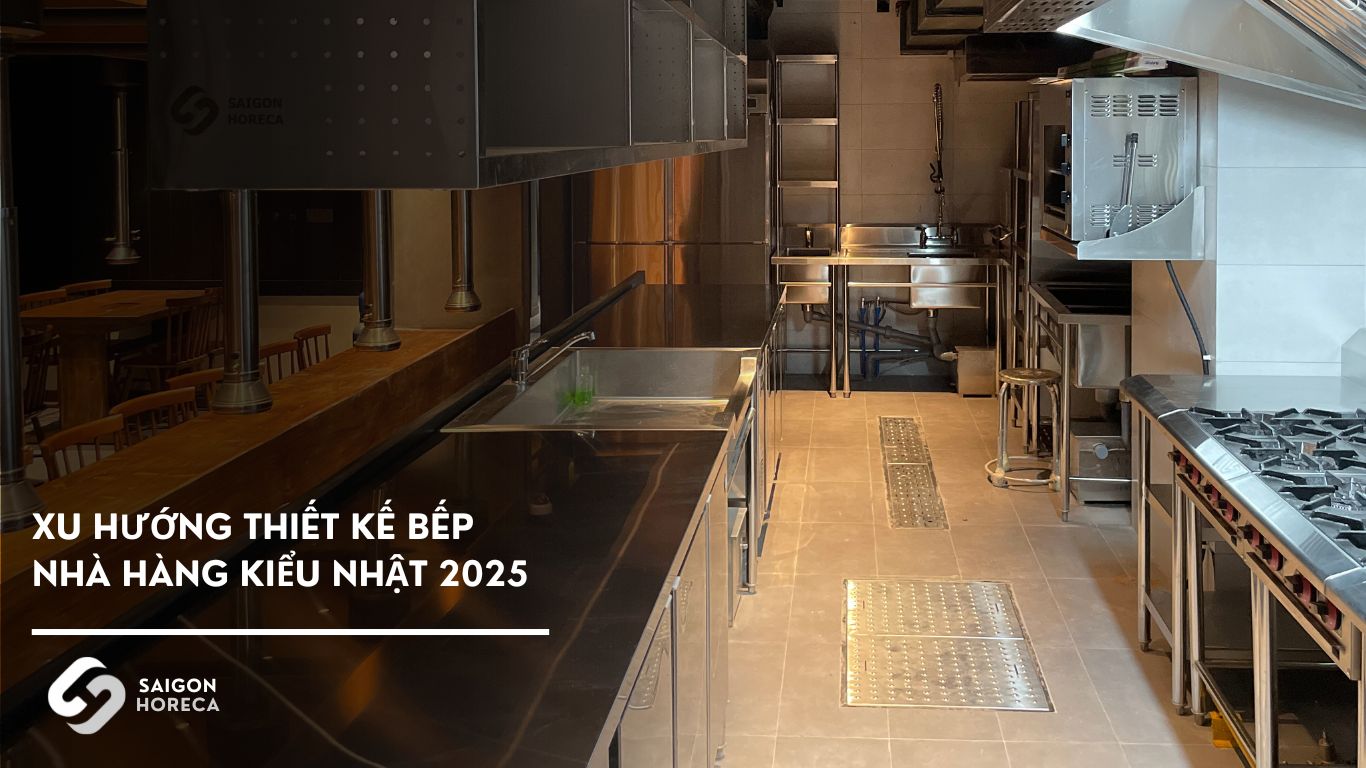
Design trends Japanese restaurant kitchen design 2025
Unlike many conventional culinary models, in a Japanese restaurant – especially Sushi Bar, Teppanyaki or Yakiniku spaces – the kitchen is no longer a separate area behind closed doors. The kitchen is designed to be open, located right in the common space, so that diners can both enjoy the food and witness the chef’s skill through each slice and each precise operation.
To do that, Japanese restaurant kitchens require methodical investment from space design, equipment selection to scientific layout, optimizing functionality while still retaining the typical delicate aesthetics. With many years of experience accompanying Japanese restaurants, Saigon Horeca is proud to be a consultant and provider of professional kitchen design solutions, helping the kitchen space to be both efficient and comfortable, while enhancing the rustic and luxurious beauty of Japanese culture.
1. Characteristics of Japanese-style restaurant kitchen design
Japanese kitchens are always associated with the philosophy of “minimalist but still fully functional”. The space is organized neatly and neatly so that every operation in the kitchen is quick and smooth.
This is also the way Saigon Horeca (SGH) accompanies many Japanese restaurants in Vietnam, creating a kitchen space that both meets international standards and fully represents the spirit of modern Japan.
1.1. Minimalist philosophy & space optimization
Japanese culture always emphasizes minimalism, neatness and orderliness – elements that are thoroughly applied in restaurant kitchen design. The kitchen area is often limited, giving priority to service space, so every square meter must be carefully calculated to ensure convenient operation while still maintaining an overall sophistication and airiness.
At projects such as Yuzu Omakase, Heiwa Sushi, the Saigon Horeca team has consulted and implemented the layout of kitchen equipment systems according to the principle of space optimization. From cool tables, cold storage cabinets to 304 stainless steel equipment, all are scientifically installed, helping chefs operate flexibly and with high operating efficiency without breaking the typical minimalism of Japanese restaurants.
In particular, Saigon Horeca regularly uses cold storage equipment from the prestigious Japanese brand Hoshizaki, including cool tables, freezing tables, refrigerators, and specialized freezers. With stable cooling ability, energy saving and high durability, Hoshizaki appliances not only meet the strict needs of preserving fresh ingredients but also ensure delicate aesthetic elements, consistent with the overall kitchen space.
1.2. Open kitchen – Enhance the diner experience
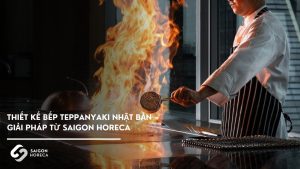
Open kitchen is a familiar model in many modern Japanese restaurants such as Sushi Bar, Teppanyaki, Yakiniku, where diners not only enjoy the food but also directly observe the chef’s cooking process.
Saigon Horeca is a reputable unit in consulting and providing suitable equipment for open kitchens. In particular, in projects such as Yakiuo Ishikawa or Heiwa Sushi, SGH deploys the high-end Teppanyaki kitchen system imported from Japan, combined with Hoshizaki cold storage equipment and under-counter cooling tables to help the space stay neat, operate smoothly, while maintaining the inherent delicate aesthetics.
Outstanding Teppanyaki kitchen lines deployed by Saigon Horeca
All Teppanyaki stoves installed by SGH are manufactured directly in Japan by the Fujimak brand, globally famous for high-end industrial kitchen equipment. Based on the characteristics of each model, SGH advises and implements appropriate solutions such as:
- Teppanyaki stoves have an integrated exhaust system in the stove body: Ideal solution for limited spaces, such as shopping centers and high floors, helping to reduce smoke, limit odors, and keep the space clean and airy.
- Teppanyaki stove with integrated airflow fan: Creates an air barrier to prevent smoke and grease from splashing out, ensuring maximum comfort and safety for diners.
- Teppanyaki stove placed on an integrated refrigerator/cabinet or stainless steel counter: Take advantage of space, increase operational efficiency when ingredients are stored right below with Hoshizaki cold storage devices.
1.3. Sustainable materials – Aesthetics true to Japanese standards
Materials play an important role in Japanese restaurant kitchen design, both ensuring durability in an industrial kitchen environment and contributing to perfecting the overall aesthetic. Saigon Horeca prioritizes the use of anti-corrosion 304 stainless steel, natural stone countertops, heat-resistant wood… combined synchronously with high-end kitchen equipment from Fujimak and Hoshizaki cold storage system.
It is the synchronization and careful calculation from equipment to materials that helps projects implemented by SGH, such as Yuzu Omakase, Heiwa Sushi, not only achieve optimal operating efficiency but also maintain a sophisticated, modern, Japanese style.
2. Japanese restaurant kitchen design trends 2025 – Practical implementation from Saigon Horeca
With practical experience in many high-end Japanese restaurant projects in Ho Chi Minh City, Saigon Horeca (SGH) realized that 2025 will continue to witness the rise of the following kitchen design trends:
2.1. Kitchen integrated with smart technology (Smart Kitchen)
Modern kitchen systems are integrated with smart technologies such as:
Precise temperature control helps preserve the quality of fresh ingredients – a key factor in Japanese cuisine.
- The characteristics of Japanese cuisine, especially sushi and sashimi, require ingredients to always be fresh at standard temperatures.
- Cold preservation equipment such as cool tables, refrigerators, Hoshizaki freezers imported genuine from Japan are integrated by Saigon Horeca in most Japanese restaurant kitchen projects such as Heiwa Sushi, Yuzu Omakase, ensuring accurate temperature control down to one degree Celsius.
- Some high-end models integrate smart temperature warnings, helping chefs promptly handle when the temperature exceeds the allowed threshold.
Effective yet discreet smoke extraction system
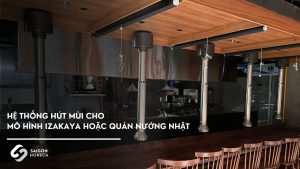
- In models like Teppanyaki, controlling smoke and odor is mandatory to keep the space fresh and clean, especially with open kitchens.
- SGH deploys Fujimak Teppanyaki stoves that integrate an exhaust system right in the stove body or an Airflow Fan, ensuring smoke extraction efficiency while maintaining the neatness and aesthetics of the open kitchen area.
Energy saving equipment, smooth operation
- Equipment from Fujimak, Hoshizaki is highly appreciated for its ability to operate stably, save energy and limit noise – a very important factor in the Japanese restaurant space, which emphasizes silence and sophistication.
- Saigon Horeca always prioritizes providing kitchen equipment from reputable Japanese brands such as Fujimak, Hoshizaki, fully meeting the requirements of modern technology, high durability, stable operation, suitable for the Japanese restaurant kitchen model in Vietnam.


2.2. Japandi style – A cross between Japan & Northern Europe
The Japandi trend – combining the minimalist spirit of Japan with the warmth and rusticity of Northern Europe is increasingly popular in Japanese restaurant space design, especially in high-end models or targeting customer groups who love modern but sophisticated spaces.
In essence, Japandi reconciles two seemingly opposing philosophies:
- Japanese minimalism, sophistication, and meticulousness – reflected in the way space is organized, neat design lines, and moderation of unnecessary details.
- The warmth and intimacy of Scandinavian style – shown through the use of natural materials such as wood, stone, and gentle neutral colors, helping the space become softer and more comfortable.
In Japanese restaurant kitchen design, especially open kitchens or bar areas, Japandi creates an overall look that is both modern and close to diners, while not losing the inherent neatness and sophistication of Japanese style.
2.3. Open kitchen combines experience
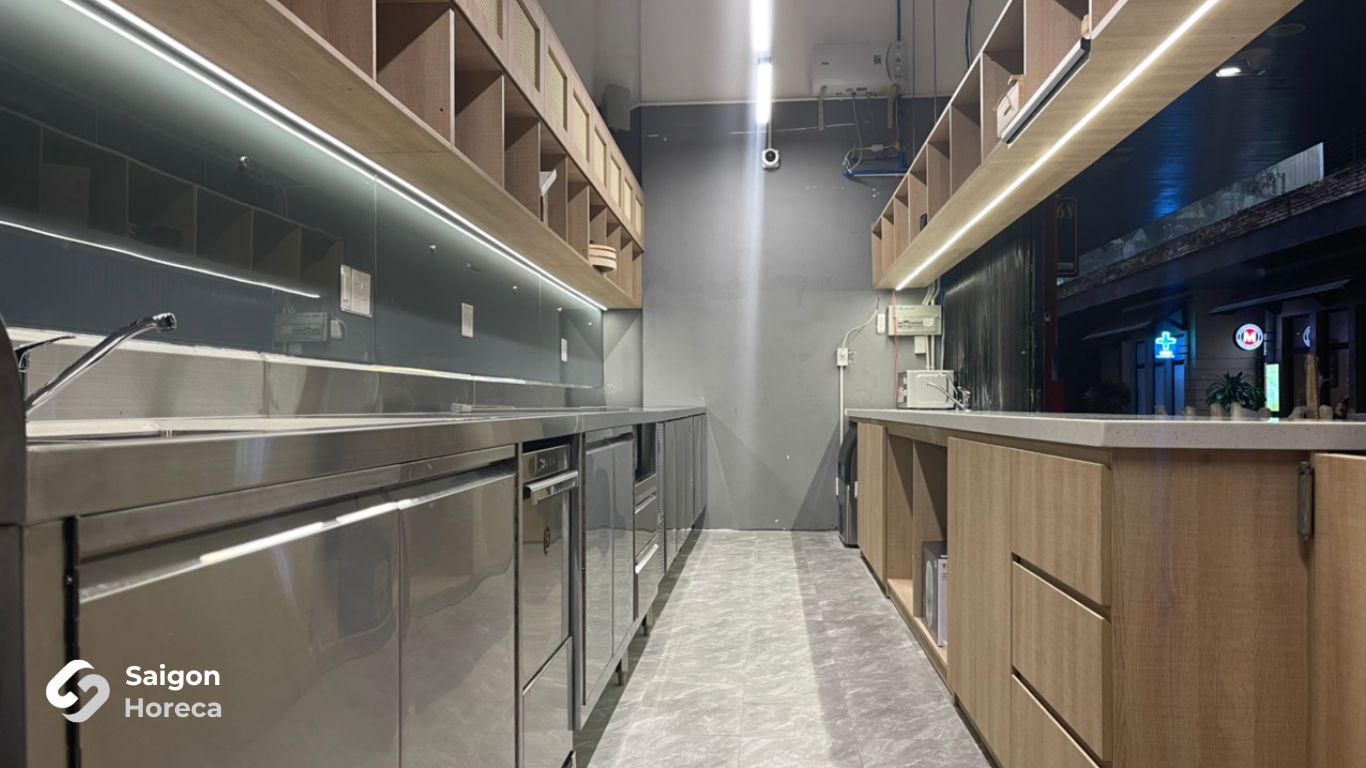
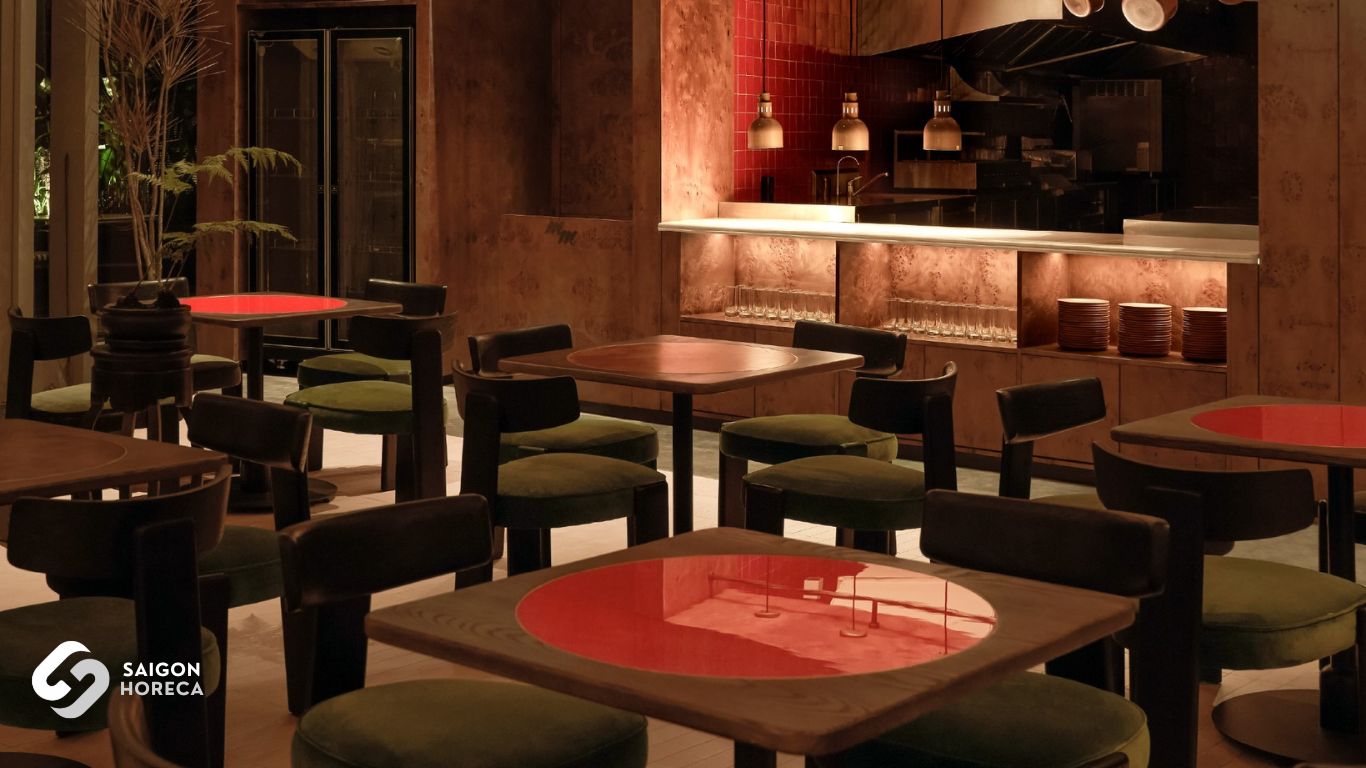
In Japanese restaurant models such as Sushi Bar, Teppanyaki or Yakiniku, the kitchen space is often designed in the form of an open kitchen – meaning the processing area is not completely separated from the serving area. This is not only an aesthetic trend, but also an operating philosophy: considering the diners’ visual experience as an important part of the food enjoyment journey.
Therefore, open kitchens also pose more stringent design requirements than conventional closed kitchens. The equipment not only needs to operate effectively, but also must ensure aesthetics, quietness, hygiene, and not generate smoke and odors that affect the dining space.
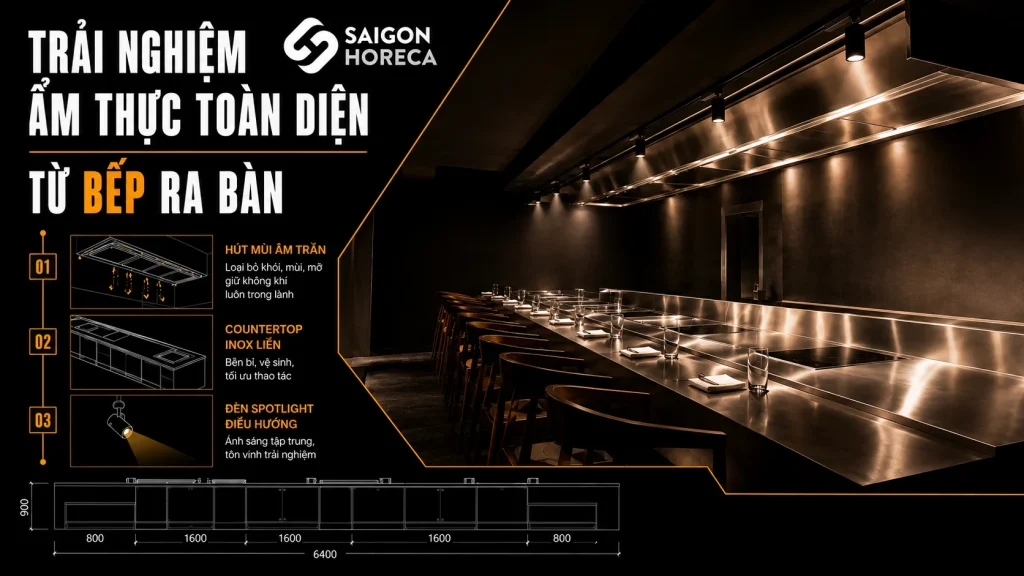
Understanding this, Saigon Horeca has developed many under-counter equipment solutions, integrated right under the processing counter or service counter, both saving space and maintaining the necessary minimalism for Japanese style. Equipment such as high-power induction cookers, under-counter refrigerators, cold ingredient trays, or even wastewater treatment systems are all hidden or designed in sync with the service counter, ensuring that the overall aesthetics are not disrupted.
In addition, Saigon Horeca also pays special attention to specialized smoke extraction and odor filtering systems for open kitchens – especially for Teppanyaki or Yakiniku areas that often generate large amounts of smoke. Saigon Horeca has applied equipment lines imported from Japan or manufactured according to Japanese standards, helping to control smoke and odors right from the point of origin without affecting surrounding diners.
In addition, reducing the noise level of the equipment is also an important criterion in the open kitchen design that Saigon Horeca always puts first. From exhaust fans, chillers to electric stoves – all are carefully selected to ensure smooth operation, without interrupting the conversation or experience of guests at the table.
Thanks to careful investment and a deep understanding of the characteristics of Japanese kitchens, Saigon Horeca has become an open kitchen design partner for many high-end Japanese restaurants in Ho Chi Minh City, both ensuring operational efficiency and creating an impressive space that leaves a mark in the hearts of diners.
2.4. Using sustainable, natural materials
The trend of using environmentally friendly materials continues to be promoted, bringing a rustic and simple beauty true to the Japanese spirit:
The “wabi-sabi” style – the beauty of simplicity, rusticity but sophistication, present in every design detail.
2.5. Exquisite design – Quiet Luxury
Quiet Luxury – a sophisticated design trend, less ostentatious but full of high-end amenities, is also gradually becoming popular in the Japanese restaurant kitchen space in 2025.
Saigon Horeca applies this trend through:
- Arrange hidden kitchen cabinets and under-counter appliances to make the space seamless and minimalist.
- Technical solutions are cleverly hidden, making the overall space both luxurious and sophisticated while ensuring optimal operating performance.
3. Saigon Horeca – Partner to create classy Japanese restaurant kitchen space
In the context of increasingly fierce competition in the F&B market, investing in kitchen space has become part of the brand positioning strategy – especially for Japanese restaurant models.
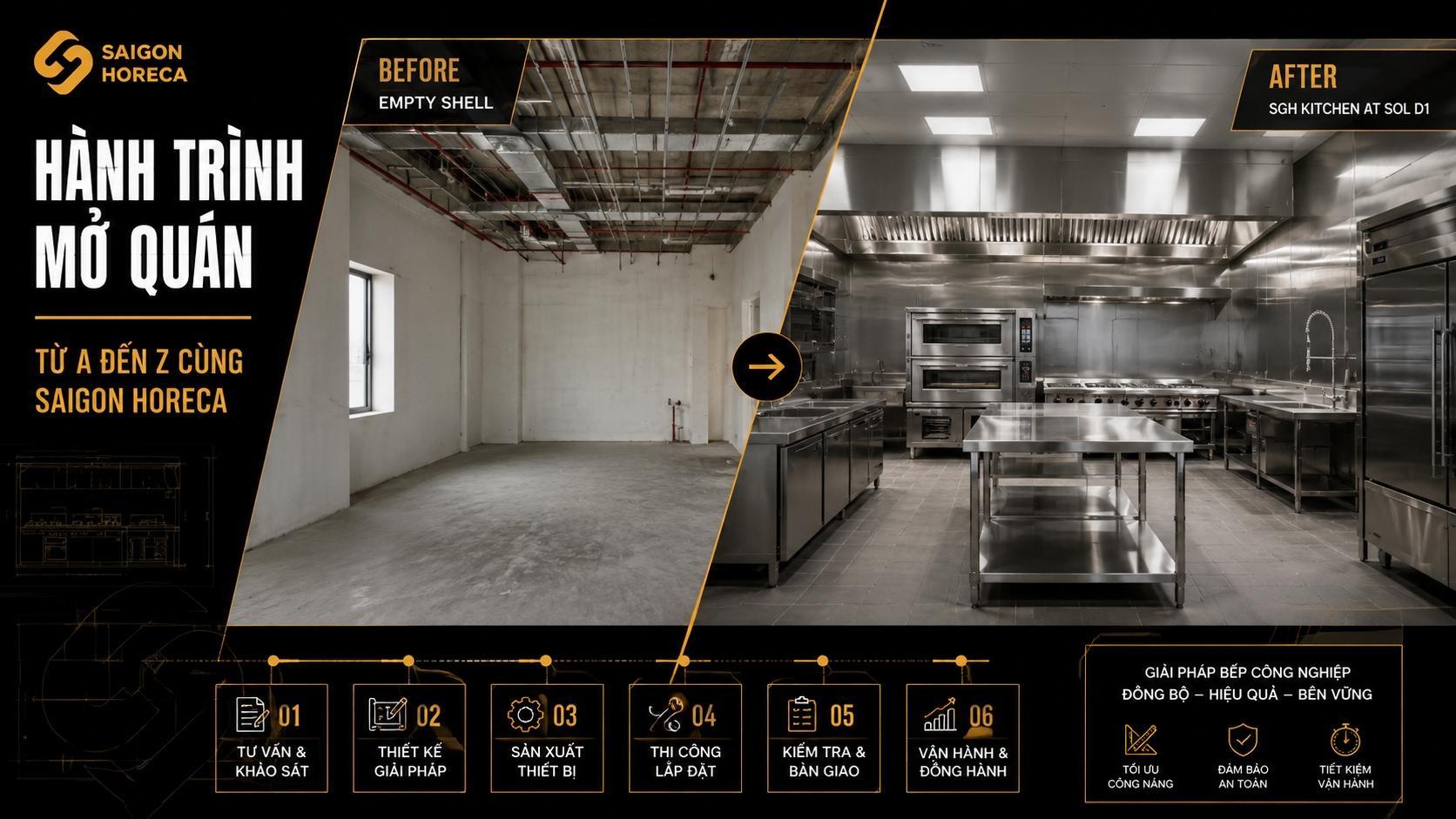
Saigon Horeca is proud to be the unit that has been accompanying many Japanese restaurants in Ho Chi Minh City and provinces across the country in the journey of creating kitchen spaces with their own imprint. SGH provides total solutions, including:
- Consult on optimal kitchen space design
- Choose and arrange equipment according to function and Japanese style
- Providing genuine Smart Kitchen systems imported from Japan, from reputable brands such as Fujimak, Hoshizaki
With a deep understanding of Japanese kitchen design standards – from aesthetics, functionality to hygiene and customer experience – Saigon Horeca and the restaurant create sustainable brand value, contributing to raising the level of Japanese cuisine in the Vietnamese market.
 Facebook
 Zalo
Zalo