Industrial kitchens for bars & lounges lounge: Necessary equipment and notes when installing
With a bar or lounge: music, lighting and design space can be the things that immediately impress guests. But the silent factor that determines the complete experience lies behind the kitchen door. A industrial kitchen for bar & lounge is not simply a place to prepare a few snacks and cocktails, but is also the “operating heart” that ensures service quality, service speed and stability of the entire bar & lounge.
Unlike restaurant kitchens, which focus on diverse menus and large processing areas, bar & lounge kitchens face unique challenges: limited space, the need for quick service, and a compact but sophisticated menu. Without careful calculation in selecting and installing equipment, even a small “bottleneck” can affect the entire customer experience.
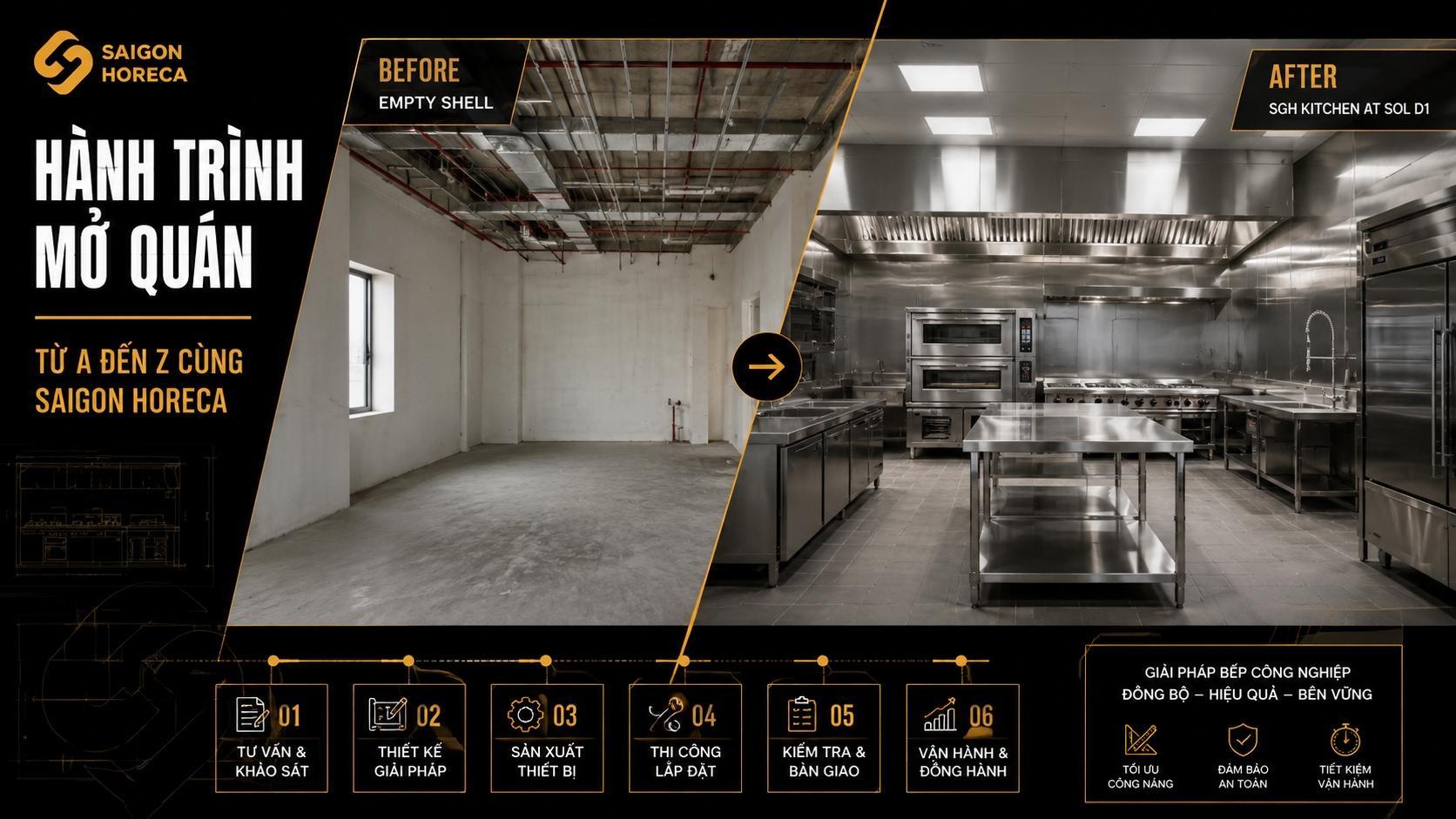
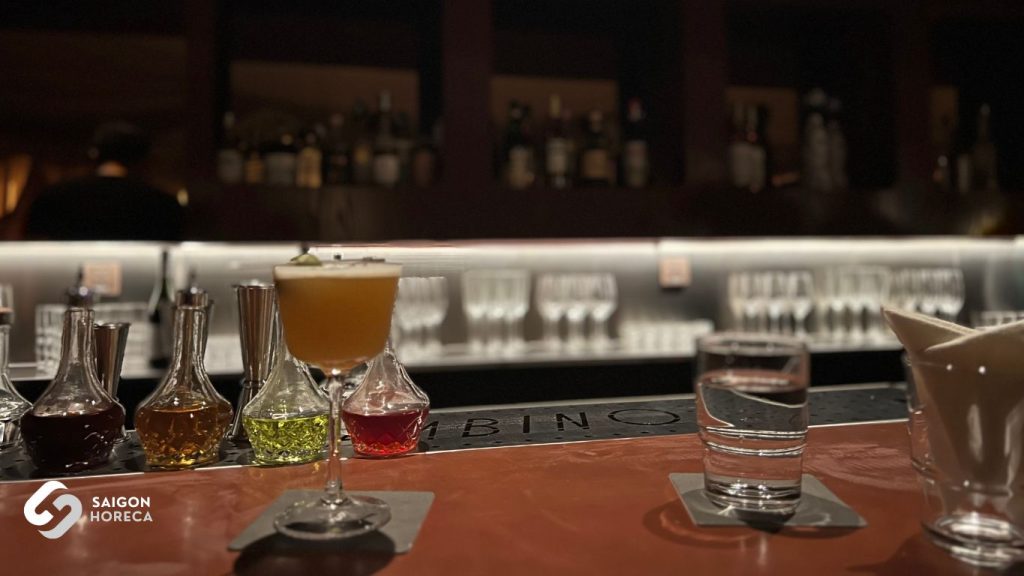
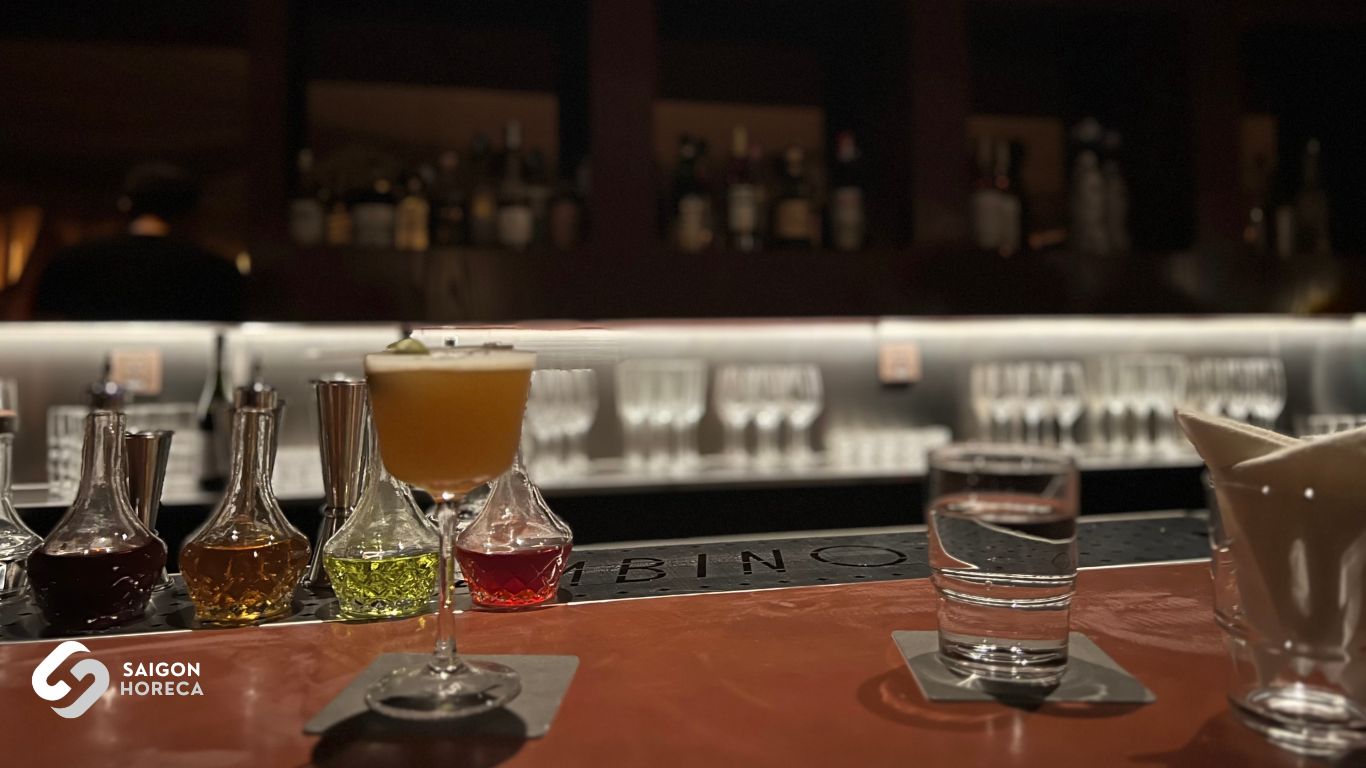
Specific example: in the Bambino Superclub project, Saigon Horeca designed a bar up to 23m² wide, arranged a Fujimak cooling system, a 220kg/day Hoshizaki ice machine, combined with a Winterhalter cup washing machine to ensure capacity to serve hundreds of guests each night. Or like at Sol Kitchen Bar District 7, renovating the kitchen helps the restaurant keep the Latin style while optimizing the restaurant area.
In this article, based on practical experience from many projects, Saigon Horeca will share:
- The difference between a bar/lounge kitchen and a restaurant kitchen.
- Essential equipment to help the bar/lounge operate effectively.
1. The difference between bar & lounge industrial kitchens and restaurant kitchens
1.1. Space: compact, streamlined instead of spacious, complete
- Restaurant kitchen: usually has a large space, clearly divided into processing area, preliminary processing area, main cooking area, and washing area. The equipment system is also arranged in a closed line.
- Bar & lounge kitchen: The kitchen area is often “compressed” to make room for the living space. Therefore, the device must be multi-functional, space-optimized and able to combine many functions in the same location.
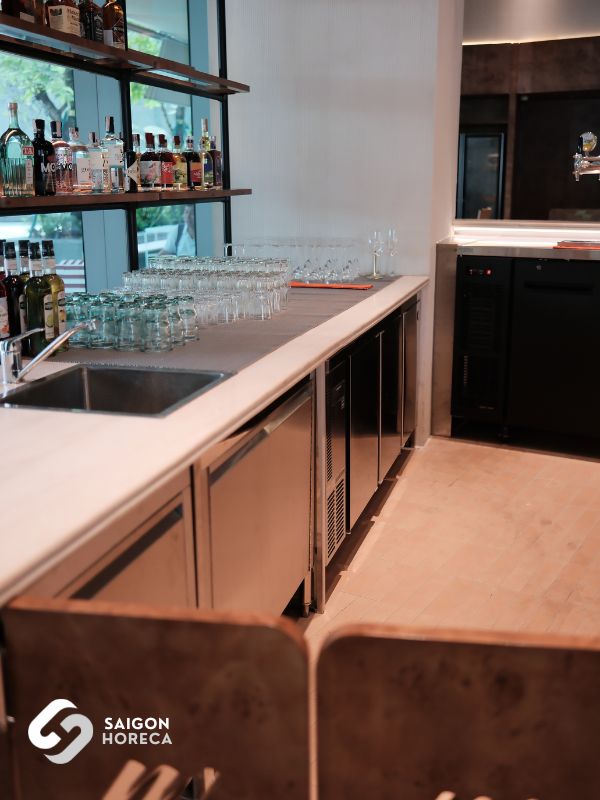
GodMother Bake & Bar is a typical example: the kitchen area is limited, but there is still a need to make cakes, prepare fast food, and serve drinks. Therefore, Saigon Horeca has designed compact stations, combining cold tables for both storage and operation, helping to save maximum space.
1.2. Speed: priority is fast and rhythmic
- Restaurant: customers often sit for a long time, served by table, processing speed can fluctuate depending on the dish.
- Bar & lounge: guests wait less, focusing on experiencing drinks and fast food. Therefore, the kitchen must produce dishes quickly, and at the same time coordinate well with the bar to not disrupt the customer experience.
At GodMother Bake & Bar, the menu includes cocktails and snack cakes. The kitchen needs to ensure the speed is just in time to serve customers’ cocktail orders, and fast enough so that customers don’t have to wait too long for a cake or snack. This requires hot – cold – washing equipment to be arranged properly to support service speed.
1.3. Equipment type: multi-purpose instead of specialized
- Restaurants: use many high-capacity equipment, each specialized for one step (fryer, grill, multi-function steam oven…).
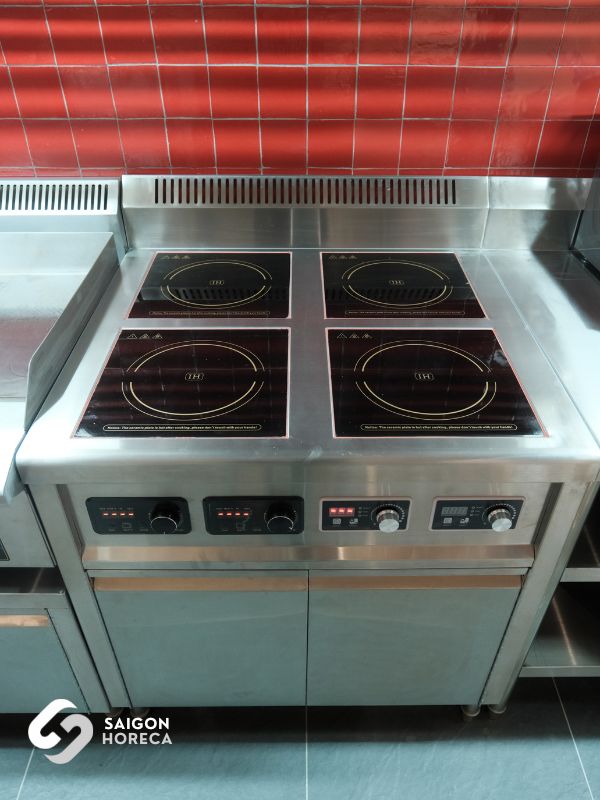
- Bar & lounge: prioritize multi-purpose, compact equipment, quick service for compact menu (snack, tapas, finger food). Basic equipment often includes: cold table, ice maker, dishwasher, small fryer, salamander or induction hob.
Saigon Horeca does not put a full menu in the kitchen like a restaurant, but chooses multi-purpose equipment: both serving fast food and supporting preparation, ensuring flexibility for both needs.
Quick comparison table of criteria:
|
Criteria |
Restaurant kitchen |
Bar & lounge |
|
Space |
Large, many separate areas |
Limitations, need for optimization & versatility |
|
Service speed |
15–30 minutes/dish |
3–5 minutes/drink, snack |
|
Device type |
Large capacity, intensive |
Compact, versatile, bar support |
|
Menu |
Diverse, many main dishes |
Compact: cocktail + finger food |

2. “Must-have” equipment for modern bar/lounge
2.1. Cold processing area – cool table & mini ice maker
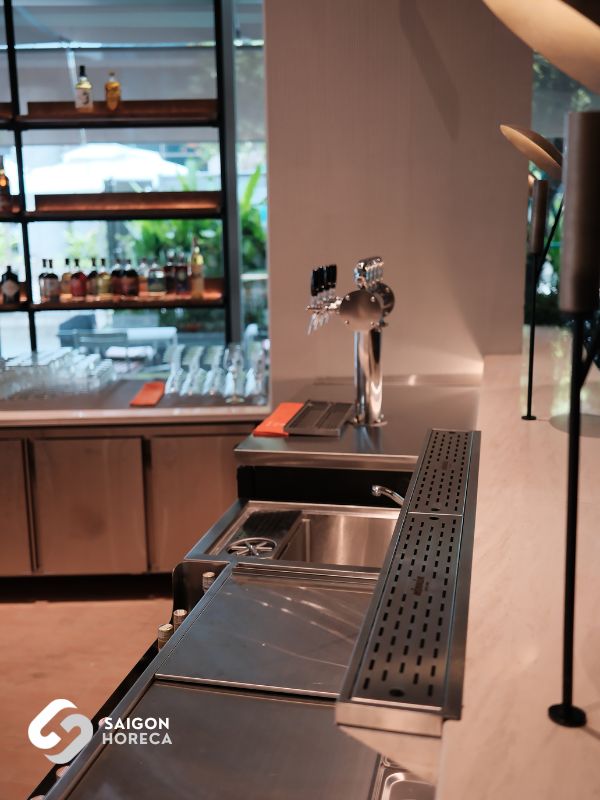
This is the bartender’s “first front” area. In just a few seconds, they have to get fresh ingredients, ice, and mix the cocktail correctly. Therefore, a cool table under the counter and a mini ice maker are two indispensable devices.
Bambino Superclub is a typical example. Although the bar space is large, the mixing area still has to be optimized for each location. Saigon Horeca arranges Fujimak cooler table right under the counter for bartenders to work while taking ingredients, combined with mini ice makers placed close to the main sections so as not to waste time traveling. As a result, the speed of serving cocktails increased significantly during peak hours.
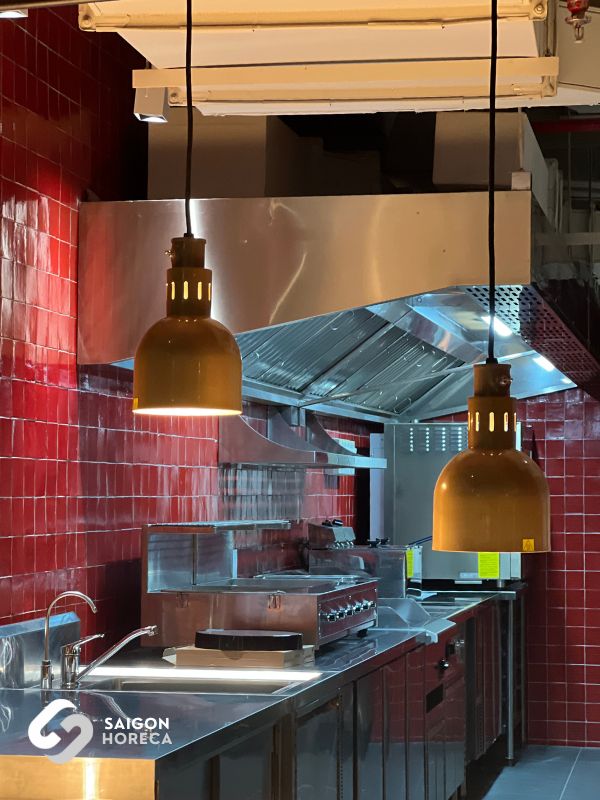
2.2. Fast hot processing area – compact and lightweight equipment for finger food
Modern bar & lounge not only has drinks, customers often order tapas, snacks or finger food to enjoy with cocktails. Therefore, it is necessary to have a compact but fast heating device.
At Little Bear, the youthful style makes customers constantly order finger food. Instead of installing a large kitchen like a restaurant, Saigon Horeca recommends salamander and compact oven, enough to prepare mini burgers, nachos or crispy hot fries without taking up much space.
2.3. Preparation & serving area – high capacity glass washer
The glass in the bar/lounge is not just an item, but also the “soul” of the experience. A crystal clear cocktail in a glass with streaks of wash water will ruin the whole impression. Therefore, high capacity dishwashers become a must-have.
Yuzu Omakase Bar, a high-end Japanese bar, this requirement is even stricter: glasses must be absolutely bright, odorless, and rotated quickly to serve promptly. Saigon Horeca is equipped with Winterhalter UC-L, which only takes about 60–120 seconds for a washing cycle, ensuring both quality and speed.
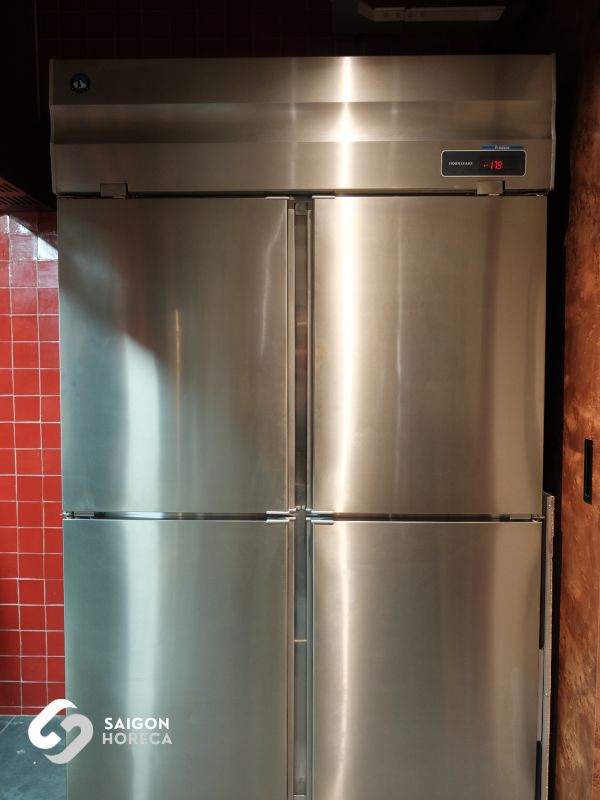
2.4. Storage area – specialized freezer & refrigerator
The ingredients in the bar/lounge include not only alcohol, but also fresh fruit, handmade syrup, and seafood for snacks. To maintain freshness, the storage area must be properly designed, especially when the menu is diverse.
The Brix Lounge is a typical example: with a rich menu, Saigon Horeca arranges freezers and coolers under the counter so that bartenders always have fresh ingredients at hand, without having to run to the kitchen. Thanks to that, cocktail quality and service speed are kept stable.
A modern bar/lounge cannot lack 4 key equipment areas: cold processing – quick hot processing – mixing & serving – storage. Real projects such as Bambino, Little Bear, Yuzu Omakase, The Brix show that only when designing the kitchen and bar based on actual operating rhythms can the restaurant achieve high performance and maintain a consistent customer experience.
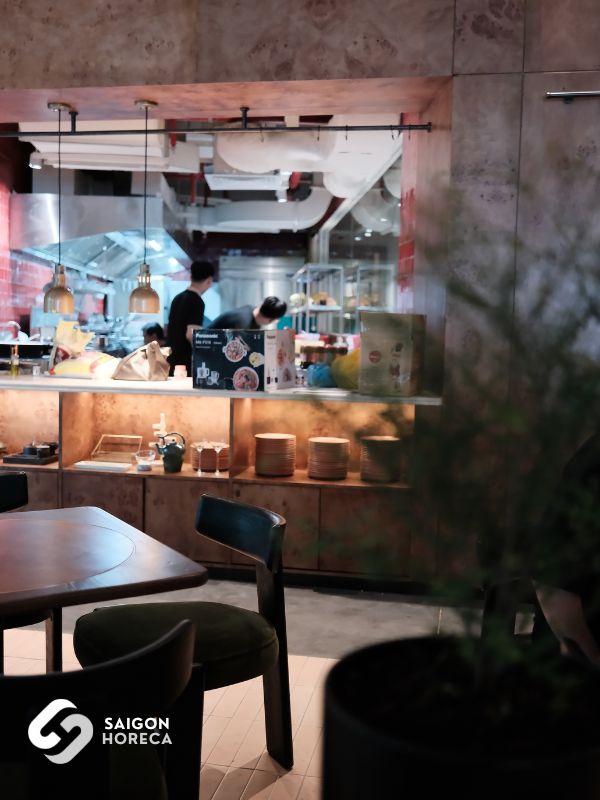
3. Notes when installing & arranging bar/lounge kitchen
If the equipment part is “what needs to be”, then the layout part is “where to place it appropriately”. Many bars/lounges invest in enough quality equipment but still operate inefficiently, just because the design is not consistent. Here are 3 important notes:
3.1. Workflow must be seamless
From taking ingredients → processing → mixing → serving → washing glasses, every step needs to be connected together in a concise flow, avoiding employees having to turn around too much or move far.
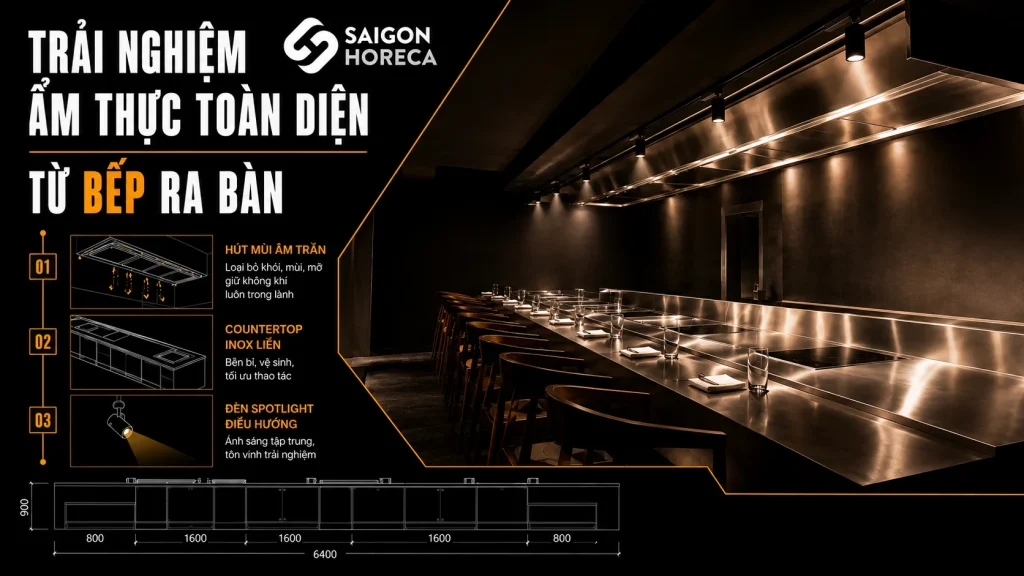
With Sol Kitchen & Bar, Saigon Horeca designed a U-shaped bar, clearly dividing the cold, hot and glass washing areas but still connected by a straight axis. Thanks to that, bartenders can serve continuously without colliding with each other.
3.2. The device is compact but has enough capacity
Bar/lounge usually does not have a large area, especially the kitchen area at the back. Therefore, the equipment needs to be small, but must still ensure productivity. Mini ovens, salamanders, or high-speed dishwashers are all carefully selected to fit the space while still meeting peak customer needs.
3.3. Notes on electricity – water – ventilation
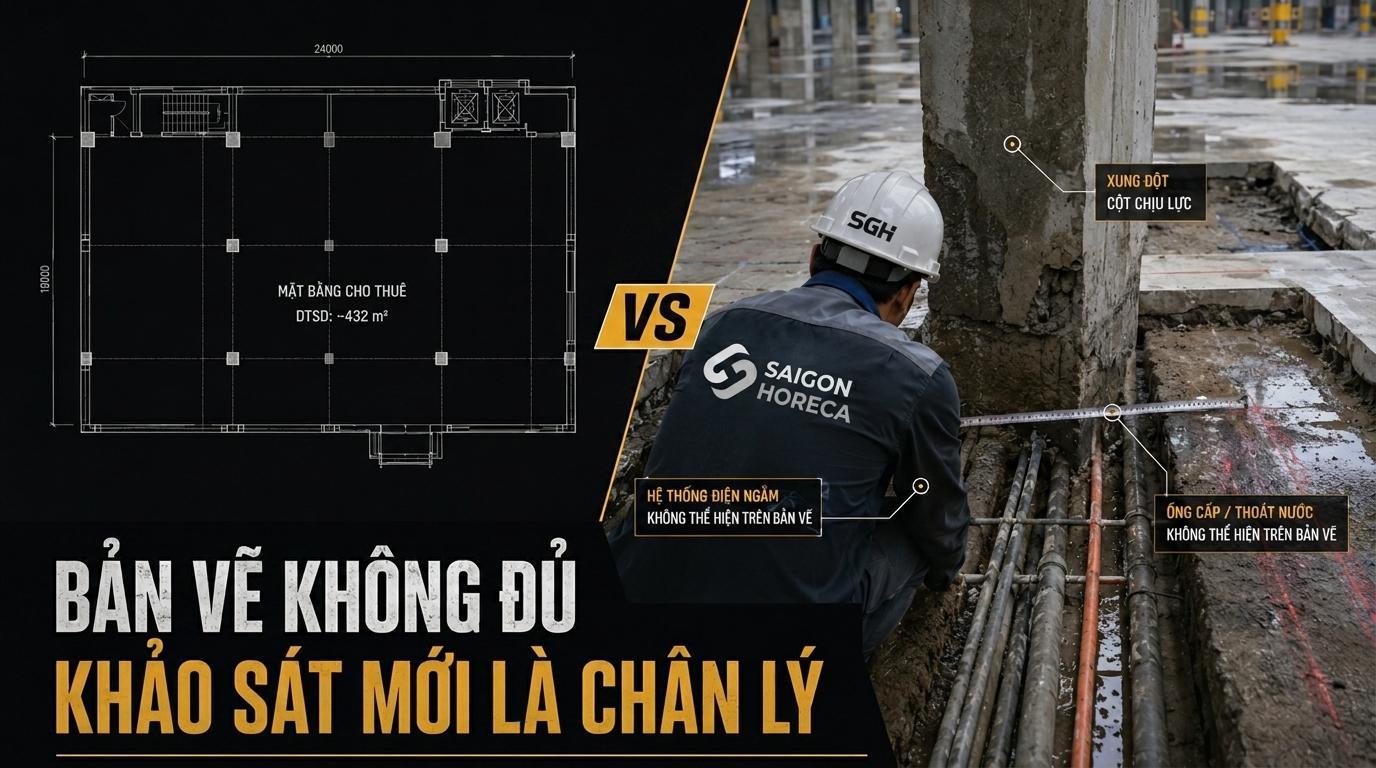
Electrical, water and smoke exhaust systems are often overlooked in the design phase, but determine 50% of sustainability when operating.
- Electricity: need to reserve sockets, calculate capacity for ice maker, glass washer.
- Water: water supply and drainage must be separated between washing and processing areas to avoid cross-contamination.
- Ventilation: the bar needs to effectively absorb odors, especially when there is a hot processing area.
At Sol Kitchen & Bar, Saigon Horeca has synchronized the smoke extraction and fresh air supply systems right from the construction stage, helping the bar operate stably during peak hours.

Saigon Horeca – Smart investment bar/lounge from the beginning
A successful bar or lounge comes not only from a good menu or bartender, but also thanks to a scientifically designed industrial kitchen. Different from restaurant kitchens, bar/lounge kitchens require compact, multi-purpose, high-speed equipment and a seamless layout to serve both food and drinks.
Projects such as GodMother Bake & Bar, Bambino Superclub, Sol Kitchen & Bar, Yuzu Omakase or The Brix have proven that: with the right investment from the beginning, a bar space can be both beautiful and operate effectively, minimizing long-term operating costs.
If you are dreaming of a bar or lounge, don’t let kitchen design be just a side item. Let Saigon Horeca accompany you from consulting, design to construction, to turn the bar space into a smoothly running and sustainable machine.
 Facebook
 Zalo
Zalo