
5 essential cooking principles – The simpler, the more important
Cooking is not just about cooking, it’s about how we take care of ourselves and the people we love.
A delicious dish does not need to be complicated, but there is always a principle behind it.
Here are 5 basic things that everyone should master – whether you just cook rice every day or are thinking about opening a professional kitchen.
5 essential cooking principles – The simpler, the more important
1. Knives and cutting boards – The soul of the kitchen
In any kitchen – from small family kitchens to large-scale industrial kitchens – knives and cutting boards are always indispensable tools.
Good, sharp, hand-balanced knives help to operate quickly, reducing fatigue for the cook; A sturdy, antibacterial cutting board helps ensure food safety and hygiene (Food hygiene and safety) – the most important factor in any professional kitchen model.
In industrial kitchens, cutting boards are often colored to avoid cross-contamination:
- Red for raw meat,
- Green for vegetables,
- Gold for poultry,
- White for cooked food.
If you’re at home, you don’t need to be that picky – just keep the cutting board dry, wash it, and line it with a non-slip wet towel.
Knives and cutting boards are more than just tools – they are the starting point of every dish.
When the knife is sharp, the board is sturdy, and your hands are steady – the dish is half as good.
In the kitchen, knives and cutting boards are the second pair of hands of the cook. You don’t need much – just a good knife and a sturdy cutting board.
A sharp knife will help you cut easier, safer, and make every job in the kitchen easier.
Many chefs trust knife lines such as MAC Mighty, Victorinox, Shun Kai, Wusthof, Zwilling…
If you only choose one, MAC MTH-80 is the choice that balances sharpness and durability.
For cutting boards, choose one that is sturdy, non-slip, and easy to clean – like an antibacterial rubber cutting board with Hasegawa wood core. And if you don’t have a non-slip cutting board, just put a wet towel underneath – simple but effective.
Sharp knife, steady hand, bright stove – that is the foundation of every delicious dish.
2. Preparation – The line between amateur and professional
A good chef not only knows how to cook, but knows how to prepare.
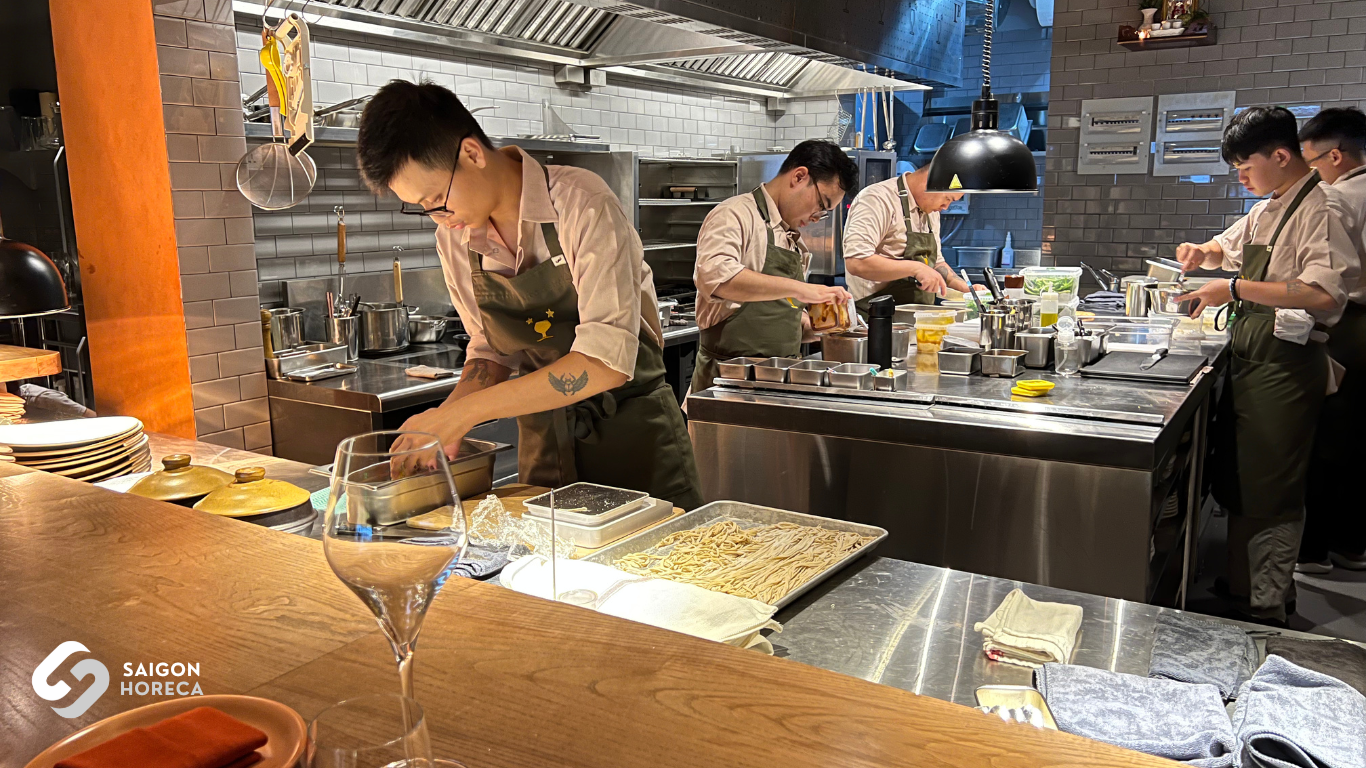
Anyone who has ever stepped foot in a restaurant or hotel kitchen knows the concept of mise en place – “everything in the right place, at the right time”. Before turning on the stove, the chef must prepare all the ingredients, from preliminary processing, classification, weighing, to checking equipment – stove, pots, pans, exhaust fan, stainless steel table – all must be ready.
At home, you can apply this principle more simply:
Clean the kitchen table, prepare vegetables, cut them, and marinate them with spices.
A clean, bright, airy space (and if there is a smoke exhaust system or exhaust fan with sufficient capacity) will help you feel lighter when working. cook for a long time.
Before turning on the stove, take some time to arrange, wash, cut and divide the ingredients. That is the principle of “mise en place” – “everything in the right place, at the right time”.
When everything is ready, you’ll cook faster, with more focus, and with fewer mistakes.
A tidy kitchen not only helps today’s meals go smoothly, but also makes you feel peaceful when you step into the kitchen the next morning.
3. Cook more than you need – For a lighter tomorrow
If it took a while to prepare, cook a little more. Double the pot of soup, grill an extra batch of vegetables, or pre-boil eggs for busy breakfasts. The cooking time does not increase much, but in return you have clean, delicious and ready food in the refrigerator.
The little joy of a kitchen lover is opening the cupboard and seeing everything ready, just need to put it together to have a decent meal.
A principle that professional kitchens always apply is optimizing cooking time and capacity. When the stove is hot, when the pan is ready, take advantage – cook more, prepare more.
Example:
- When stewing in broth, cook a larger amount to portion and freeze.
- When grilling, grill an extra batch of vegetables – you can use them for salad or lunch the next day.
- When frying, fry more and store properly in a stainless steel refrigerator – to avoid re-frying many times, causing oil waste.
In industrial kitchens, this is called batch cooking – cooking in batches to save time, fuel and kitchen capacity. At home, applying this principle helps you reduce stress, save electricity and gas, and always have delicious food available every day.
4. Let the ingredients guide you, not just the recipe
The recipe is the map, but the ingredients are the land you are standing on. Don’t force yourself to cook dishes in the book when the ingredients are no longer fresh. If the supermarket is out of asparagus but the market is full of baby spinach – change the dish.
Let season and fresh ingredients guide you.
A good chef doesn’t rely entirely on the recipe – they watch the ingredients.
If the vegetables are wilted, the meat is frozen or the fish is no longer fresh, they will immediately change the cooking direction.
Each week, choose a new vegetable, meat or seafood and create a dish around it. Gradually, you will see that cooking is no longer about “following a recipe”, but a conversation between you and the ingredients.
5. Find dishes that “Belong to you”
In an industrial kitchen, each chef often has a few “staple” dishes – dishes they cook so much that they can adjust by feel.
Everyone needs a few delicious dishes – dishes that they like to cook and that their loved ones like to eat. Cooking over and over again is not boring – that’s how you gradually perfect your skills and taste the flavors.
A dish that is repeated enough will become your own mark: the braised fish dish your mother likes, the sour soup your husband misses, or the noodle dish your child asks for every weekend.
Familiarity is the most special flavor in every kitchen.
Principles to help your skills “improve”
Once you master these small principles, cooking will become more natural and enjoyable every day:
1. Stir-fry vegetables
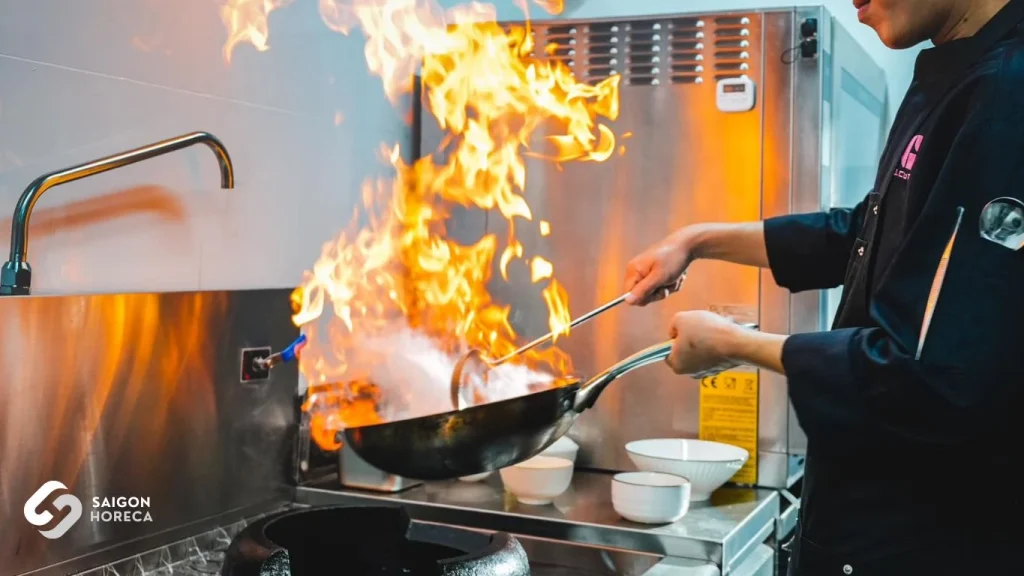
Heat the oil, fry the garlic until fragrant, then add the vegetables. Use high heat and season with salt at the end – the vegetables will be green and crispy, not watery.
Want more beautiful shiny vegetables? Add a spoonful of oil just before turning off the stove.
2. Stir-fry meat
The “4 treasures” marinade recipe: light soy sauce + oyster sauce + cooking wine + starch.
Marinate for 15 minutes then stir quickly. Add a little dark soy sauce at the end for color and aroma.
3. Meat stew
Remember the “10 deodorizers”: salt – ginger – oyster sauce – soy sauce – wine – dried chili – bay leaf – cinnamon – star anise.
Whether it’s beef, chicken or pork, just follow this set – the meat will be soft, fragrant, no odor.
4. Sauce
Memorize a few ratio formulas, you can create your own:
-
Teriyaki: 2 light soy sauce : 1 dark soy sauce : 1 wine : 2.5 honey : 2 oyster sauce : 4 water
-
Sweet and sour: 3 ketchup : 1 soy sauce : 2 vinegar : 2 sugar : 1 starch
5. Use vinegar at the right time
-
Meat: vinegar helps soften muscle fibers, making meat more tender and fragrant.
-
Vegetables: vinegar keeps the green color, increases crispness.
-
Stir-fry eggplant or lotus root with vinegar – it won’t turn brown.
Cooking well = 70% technique + 30% experience
No one is born a good cook.
But as long as you have patience to practice basic techniques – from how to hold a knife, to prepare, to choose ingredients – every dish will naturally taste better every day.
Once the technique is solid, you will see: The kitchen is not just a place to cook, but a place to live slowly, a place to create love.
Saigon Horeca – Upgrade your kitchen
From restaurant kitchens, hotels, cafes to collective kitchens – Saigon Horeca provides full equipment:
- Industrial cooking stove, high capacity fryer – stir-fry
- Stainless steel table, shelves, sink, meeting food hygiene and safety standards
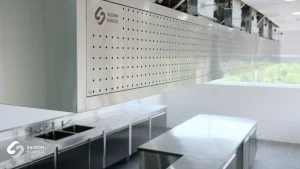
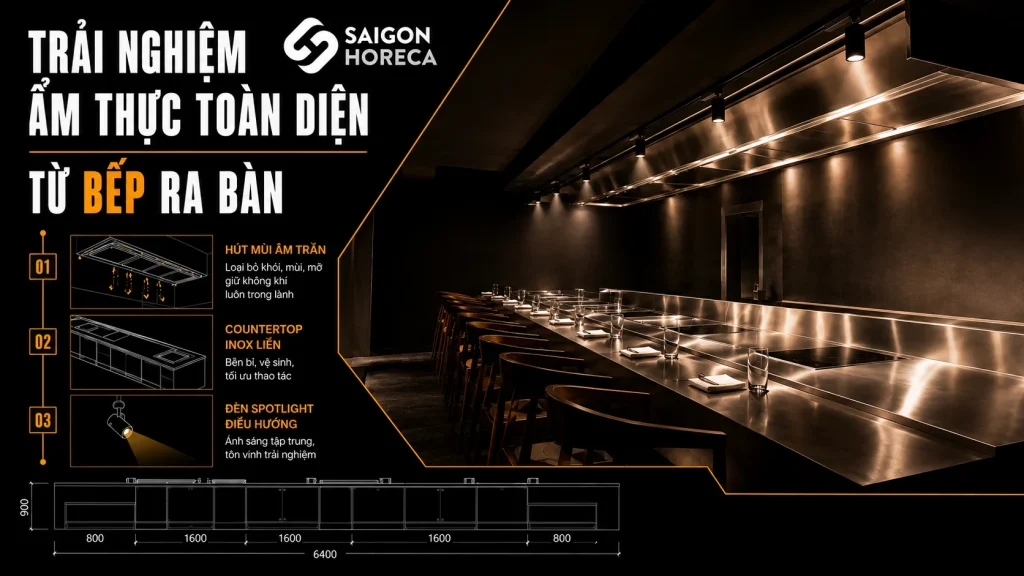
- Safe and effective smoke extraction, air supply and exhaust, fire protection systems
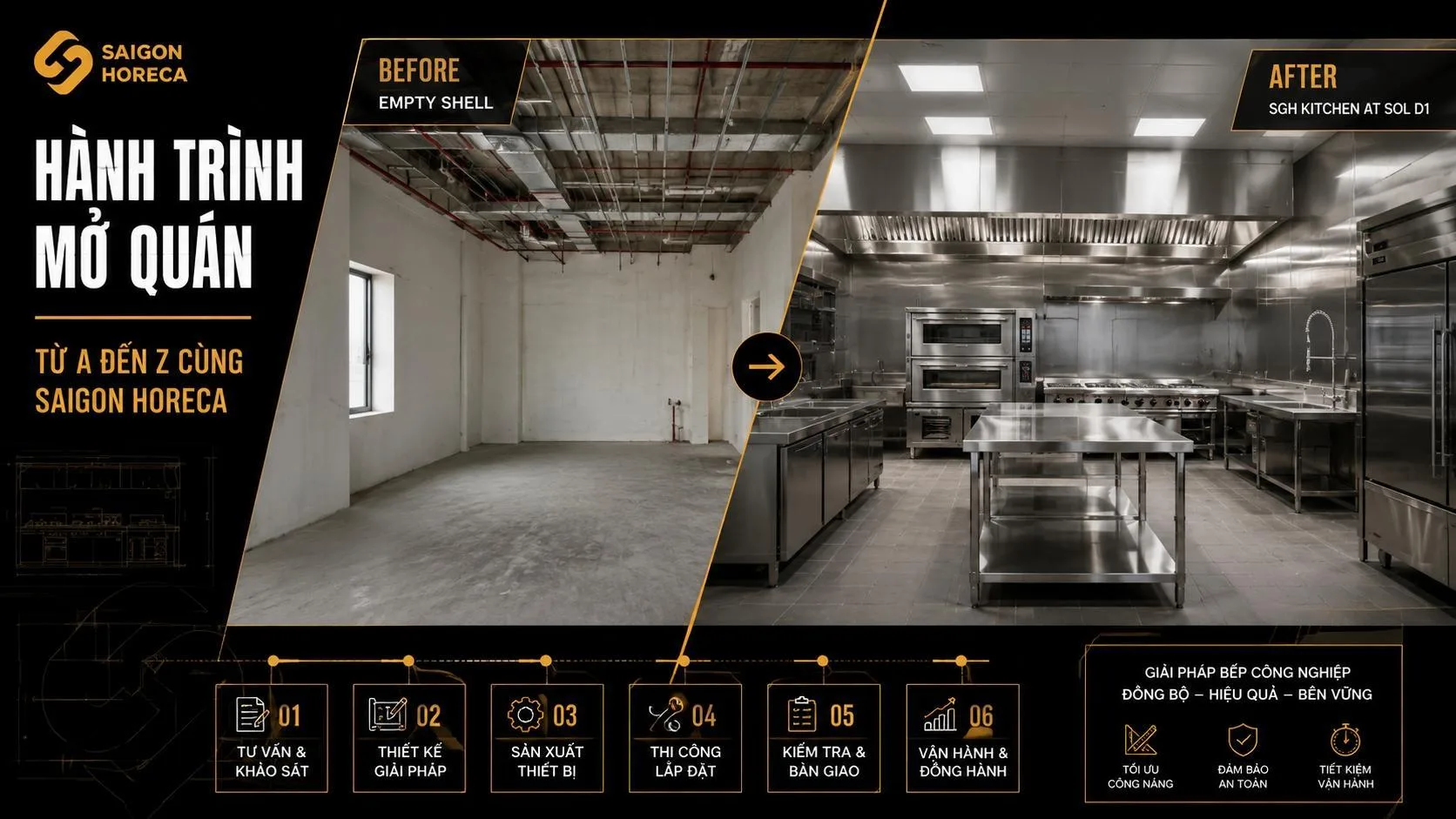
Saigon Horeca provides industrial kitchen equipment, restaurant – hotel and bar utensils that meet international standards. We not only bring products, but also provide solutions to help make cooking more professional and easier.
 Facebook
 Zalo
Zalo