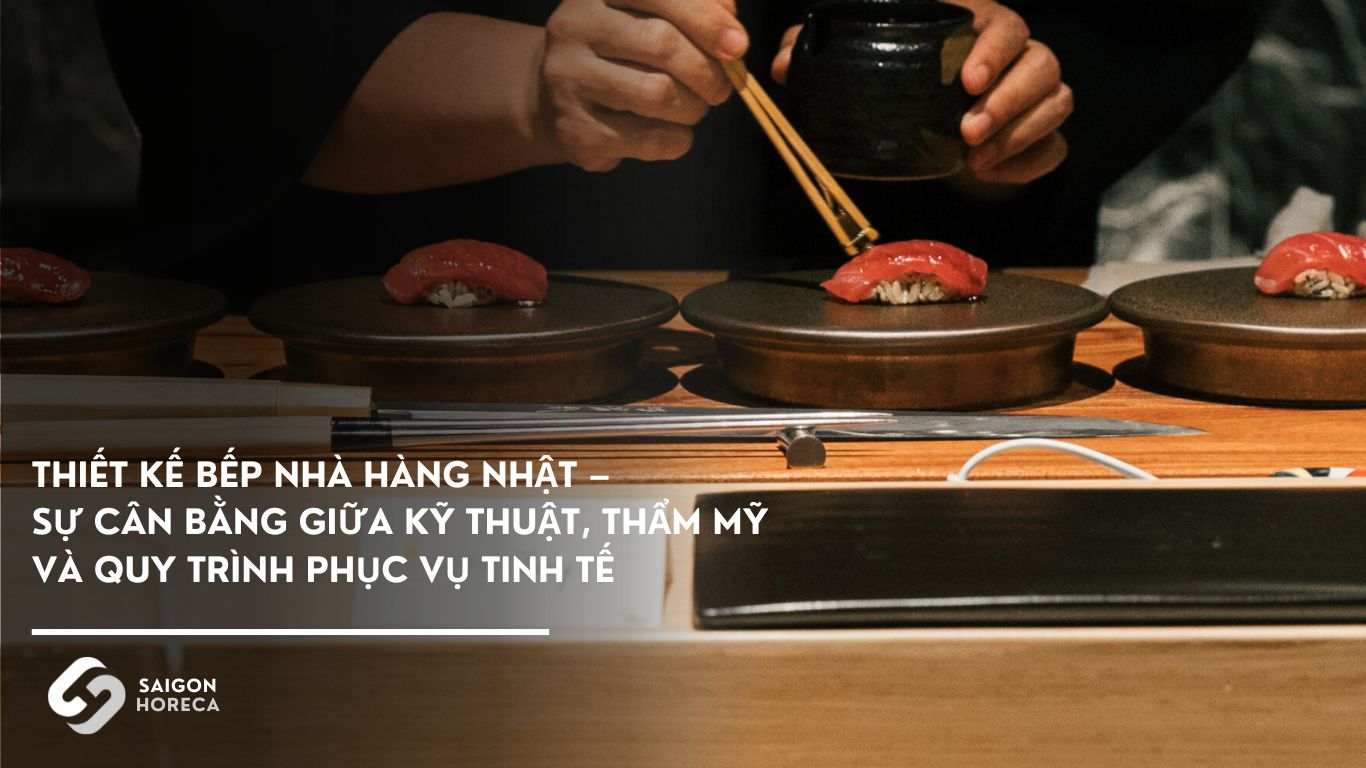
Japanese restaurant kitchen design – The balance between technique art, aesthetics and sophisticated service process
The Japanese restaurant kitchen is not only a place to prepare food but also a space that reflects the exquisite cultural values of the land of Japan. Every detail in the design demonstrates meticulousness, from the layout of the space to the selection of materials and equipment, all of which serve a single purpose: optimize work and create an effective, yet aesthetically pleasing working space.
With current trends, Japanese restaurants increasingly focus on designing kitchens that are both beautiful and convenient. The kitchen space not only helps chefs work quickly and accurately but also honors the sophistication in each dish. Therefore, kitchen design for Japanese restaurants requires a harmonious combination of function and simple beauty, truly reflecting the unique cultural identity of Japanese cuisine.
Why is Japanese restaurant kitchen design important?
With the strong development of the Japanese culinary industry in Vietnam and other countries, restaurant owners are gradually realizing that an effective and stylish kitchen design will create a wonderful culinary experience, while saving time and improving service quality.
Each Japanese restaurant has specific requirements, from the preservation of ingredients to the processing process, and a suitable kitchen design. Therefore, designing a Japanese restaurant kitchen requires a deep understanding of technical factors, while also capturing Japanese cultural identity in every detail. Saigon Horeca with extensive experience in designing kitchens for Japanese restaurants has brought optimal solutions, from outstanding projects such as Yakiuo Ishikawa Saigon, Yuzu Omakase, to Heiwa Sushi, each project has its own unique features.
1. Spirit and culture in Japanese cuisine
Japanese cuisine not only focuses on fresh ingredients but also requires meticulousness and precision in each step of processing.
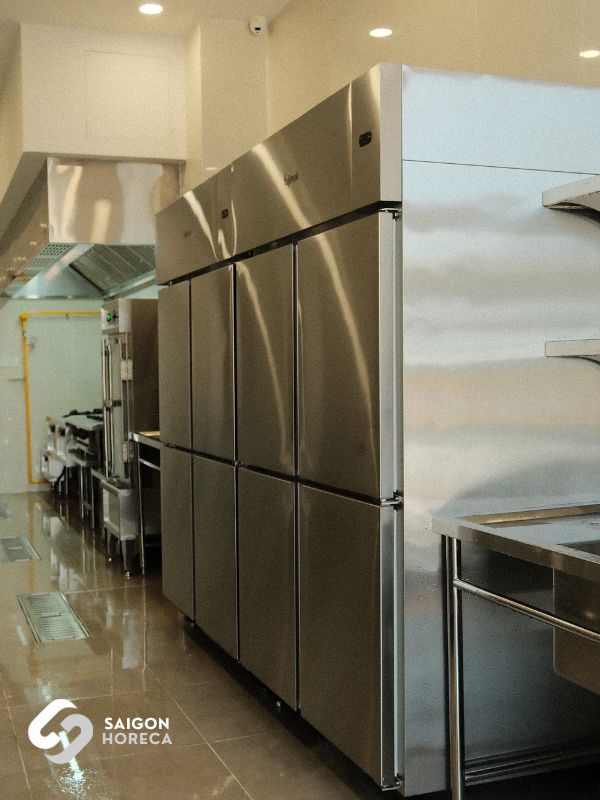
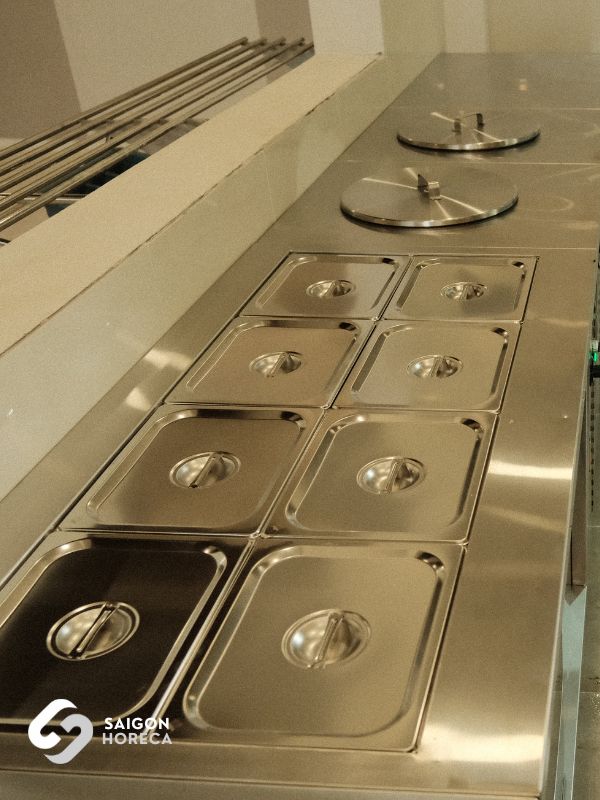
Each Saigon Horeca project is designed to protect ingredients and preserve the typical flavor of Japanese cuisine. At Yuzu Omakase, the design of food preservation systems such as specialized refrigerators and cold counters to preserve ingredients helps maintain the freshness of fish and seafood – indispensable ingredients in sushi and sashimi dishes. These factors ensure that the dish is always prepared with the freshest ingredients, preserving the full flavor.
2. Optimize space and work efficiency
A reasonable kitchen space, with a reasonable division between functional areas, will help chefs operate more easily and quickly, thereby improving productivity and minimizing clutter.
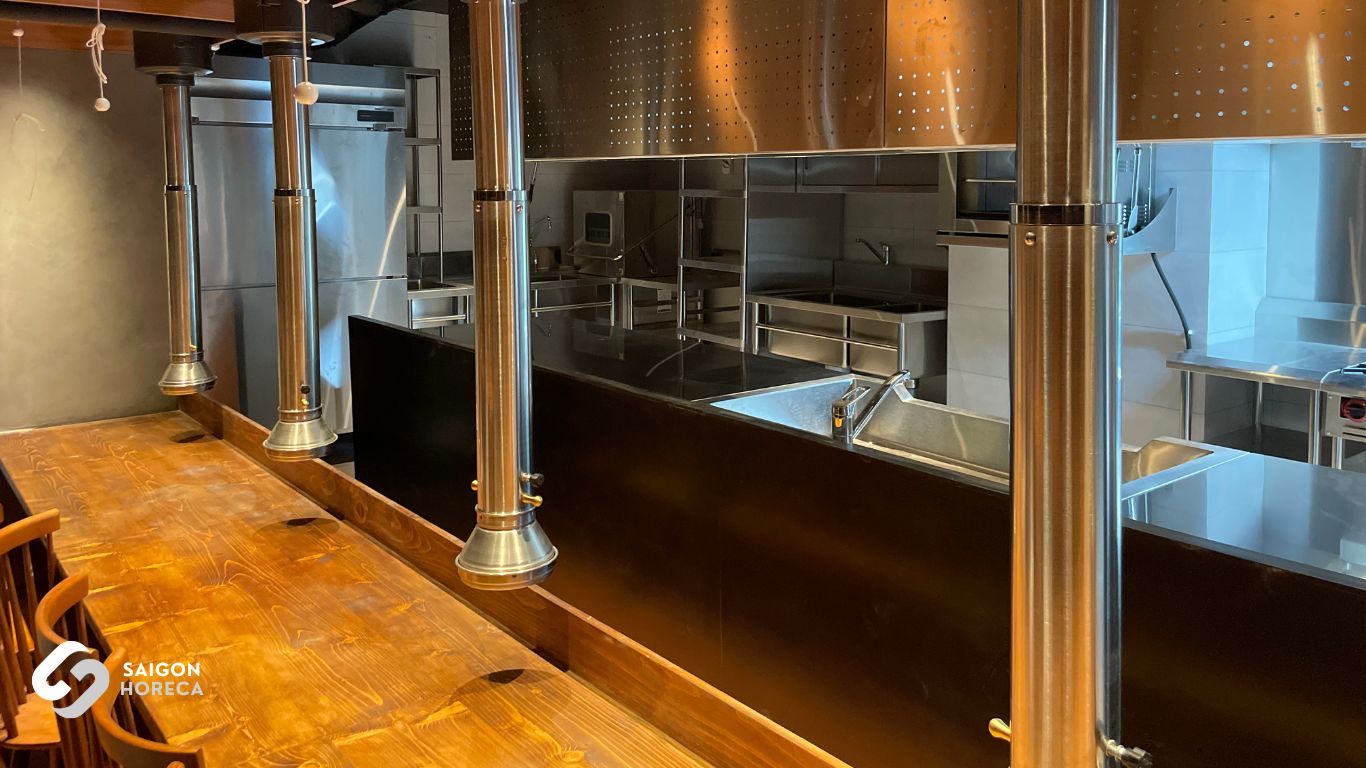
At Heiwa Sushi, the kitchen space is designed to be expandable and easily observed from the bar. The high-class wooden bar with transparent glass not only creates a connection between customers and chefs but is also an aesthetic highlight, helping diners to directly monitor the food preparation process.
3. Cost-saving and sustainable
A good kitchen design not only helps optimize functionality but also saves long-term operating costs. Choosing energy-saving kitchen equipment, using materials that are easy to maintain and improving efficiency are important factors to protect the environment and reduce costs for restaurants.
The Yakiuo Ishikawa Saigon project is a typical example when Saigon Horeca chooses energy-saving and easy-to-maintain kitchen equipment such as Hoshizaki freezers and specialized smoke extraction systems, helping to minimize operating costs while still ensuring maximum efficiency. The smoke extraction system is sophisticatedly designed, not only helping to keep the kitchen space clean but also ensuring that the customer’s dining space is odor-free.
4. Create a comfortable and flexible space for chefs
Chefs need a comfortable kitchen space, spacious enough so they can work effectively without restriction. Kitchen design needs to ensure flexibility in each processing step, from preparing ingredients to finishing the dish.
At Yuzu Omakase, Saigon Horeca has created a spacious and airy kitchen space, helping chefs easily move between processing areas without getting entangled. The kitchen equipment is streamlined, from the grill to the refrigerator to the stainless steel utensils, all designed to ensure that there are no interruptions in the cooking process. This helps chefs focus on creating exquisite dishes, true to Omakase style.
5. Create an impression and attract customers
An open kitchen space where customers can directly monitor the food preparation process. This extremely special design not only attracts guests but also brings a special culinary experience.
At Heiwa Sushi, the bar is designed near the kitchen, creating a relaxing space but still maintaining intimacy. Gentle yellow light combined with high-quality wood and transparent glass helps customers watch the chefs prepare dishes right in front of them.
Saigon Horeca’s Yakiuo Ishikawa Saigon, Yuzu Omakase, and Heiwa Sushi projects demonstrate the attention to detail in Japanese restaurant kitchen design. Each project is a testament to the perfect combination of functionality, performance and aesthetics, helping to optimize workflow, save costs and provide a comfortable space for both chefs and customers.
Japanese cuisine and the need for specialized kitchen design
Japanese cuisine is no longer strange to Vietnamese diners. From signature dishes like sushi and ramen, to omakase and izakaya – each style carries its own philosophy of care, minimalism and respect for ingredients. But for those values to be fully present in each dish, the first element that needs to be seriously invested in is not the dining table – but the kitchen space.
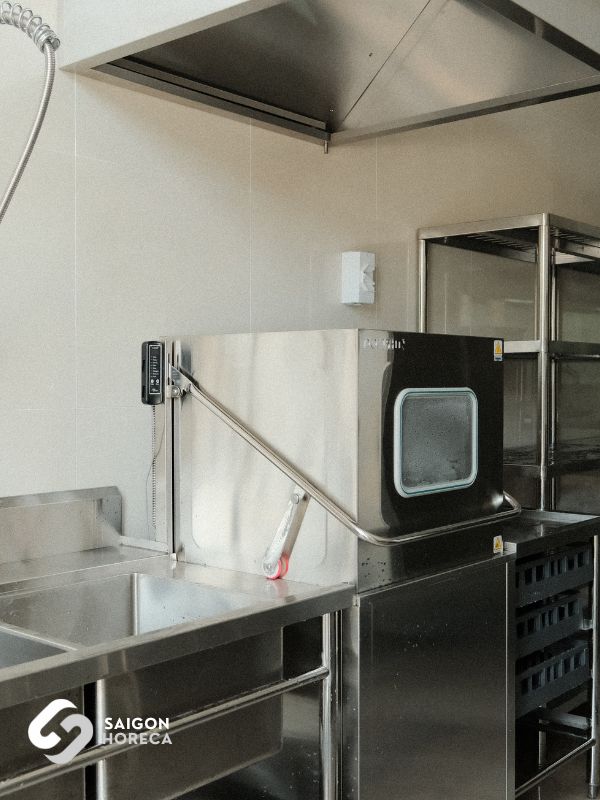
In the Japanese cuisine kitchen space, fresh ingredients – such as sashimi or bluefin tuna – require stable storage temperatures and a standard refrigeration system. Grilled dishes such as yakitori or yakiniku require an effective smoke extraction system. Even the preparation area must be designed separately, ensuring hygiene while still optimizing the chef’s movement and operations.
All equipment, from high-power gas stoves, specialized sinks to storage systems, need to be arranged scientifically, in accordance with specific operating procedures. For example, in omakase – where the chef performs live in front of guests – the neatness and sophistication in the kitchen design not only supports operations but also contributes to shaping a classy culinary experience.
One thing that is often forgotten, but is extremely important: kitchen design also needs to “sympathize” with the culinary style. The kitchen for izakaya needs to be flexible, serving many small dishes at the same time. The ramen kitchen focuses on the area for cooking broth, preserving noodles and toppings. It is not possible to apply a standard model to every style – it requires a “tailored” design based on the menu, space and philosophy of the restaurant.
Choosing the right kitchen design is to lay the foundation for food quality. It’s not just a technical story, but an investment in a long journey – where every detail in the kitchen contributes to the spirit of Japanese cuisine.
Japanese restaurant kitchen design thinking: Minimalist but effective
Japanese cuisine is unpretentious – and neither is the Japanese kitchen.
A Japanese restaurant may not need a very large area, but it requires an extremely scientific kitchen design, where every detail is carefully considered to serve a smooth “one flow” operation: from receiving ingredients, pre-processing, processing to serving. There is no room for excess – only what is necessary, but every inch must be precise and efficient.
Japanese kitchen design philosophy puts the chef at the center. Space, equipment, lighting – all are calculated to maximize the operations of the chef and team. The kitchen must be clean, easy to clean, and easy to access. There are no superfluous details, no “left-there” devices. Everything must serve function and speed.
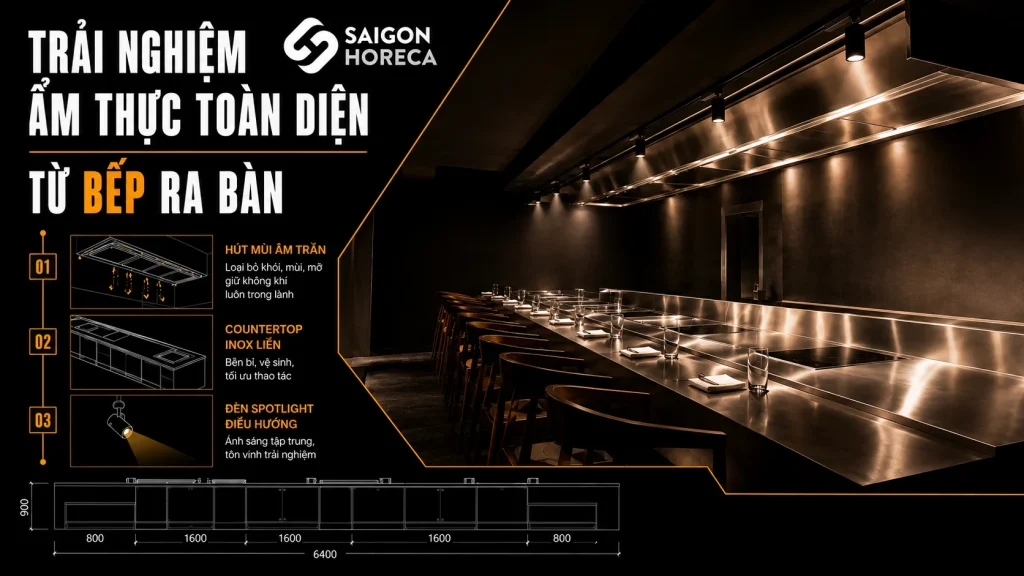
Open kitchen – not just an aesthetic trend, but a part of the omakase spirit: where the chef is not simply a cook, but a performing artist. From cutting the sashimi, grilling the fish, blowing the fire or simply plating the dish – it’s all part of the experience. Therefore, the kitchen design must be clean, airy, compact and beautiful – so that guests can enjoy the food with both taste and sight.
In some specific models such as yakiniku or izakaya, the kitchen design also needs to be flexible and interact a lot with guests. Smoke extraction and fresh air supply systems, mini cold storage areas, or streamlined yet easily accessible cabinets – are factors that help the restaurant operate effectively without losing the intimacy inherent in Japanese cuisine.
Specialized equipment for Japanese restaurants – Small but sophisticated
Japanese cuisine always requires almost absolute precision in each slice, freshness of ingredients, and coherent, clean kitchen operations. Therefore, the Japanese kitchen space cannot lack optimal equipment for the process, while streamlining to both operate efficiently and maintain aesthetics.
At Saigon Horeca, we not only provide equipment, but also synchronously design Japanese kitchen systems based on practical experience from the chef team – so that every step from preparation to serving is smooth, clean, and saves every square meter of space.
Below are the outstanding items implemented in the Japanese restaurant projects we carry out:
- 6-burner European stove made of high-quality 304 stainless steel – flexible for many cooking styles in an omakase or izakaya space.
- Super large custom-made sink, specifically for preparing ocean tuna – a high-quality ingredient often found in traditional sushi models.
- Dedicated drying cabinet for Japanese bluefin tuna – one of the important factors to ensure deep sweetness and standard meat structure.
- Hoshizaki freezer and high-end cold storage equipment, maintaining the quality of fresh ingredients throughout the operation.
- The exhaust system and fresh air supply are specifically designed to ensure an airy, odor-free working environment – especially important in Japanese kitchens, which are often small-scale and serve directly.
- High-end tableside smoke extraction system, can adjust height and flow, combined with separate oil separator filter – helping the diner experience not be interrupted by odors or smoke.
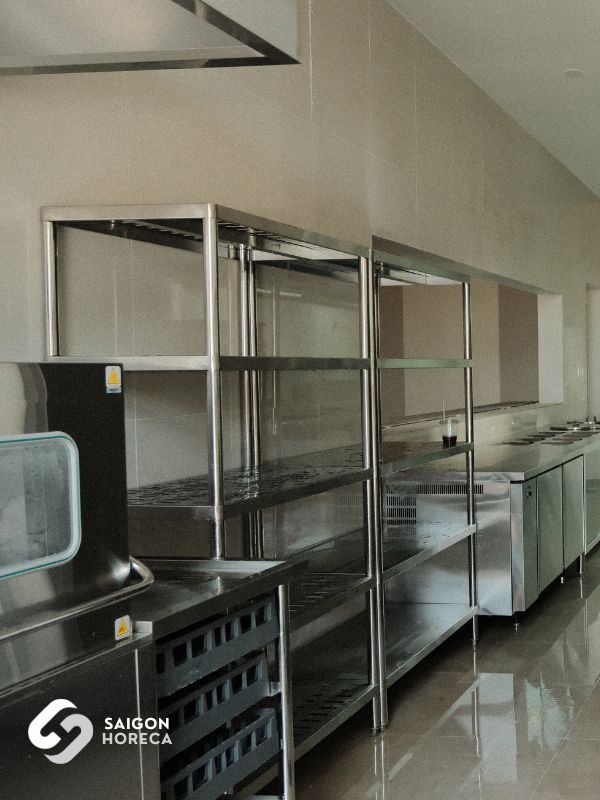
- 304 stainless steel ceiling-mounted cabinet system, streamlined design, ensuring hygiene and taking advantage of vertical space – an optimal choice in small kitchen models such as ramen shop or izakaya.
The collaboration with Heiwa Sushi is a typical example. With an understanding of the technical requirements of Japanese kitchens, Saigon Horeca has provided an entire modern stainless steel rack system, along with imported Japanese standard freezers, contributing to making the kitchen space here both beautiful – standard – effective.
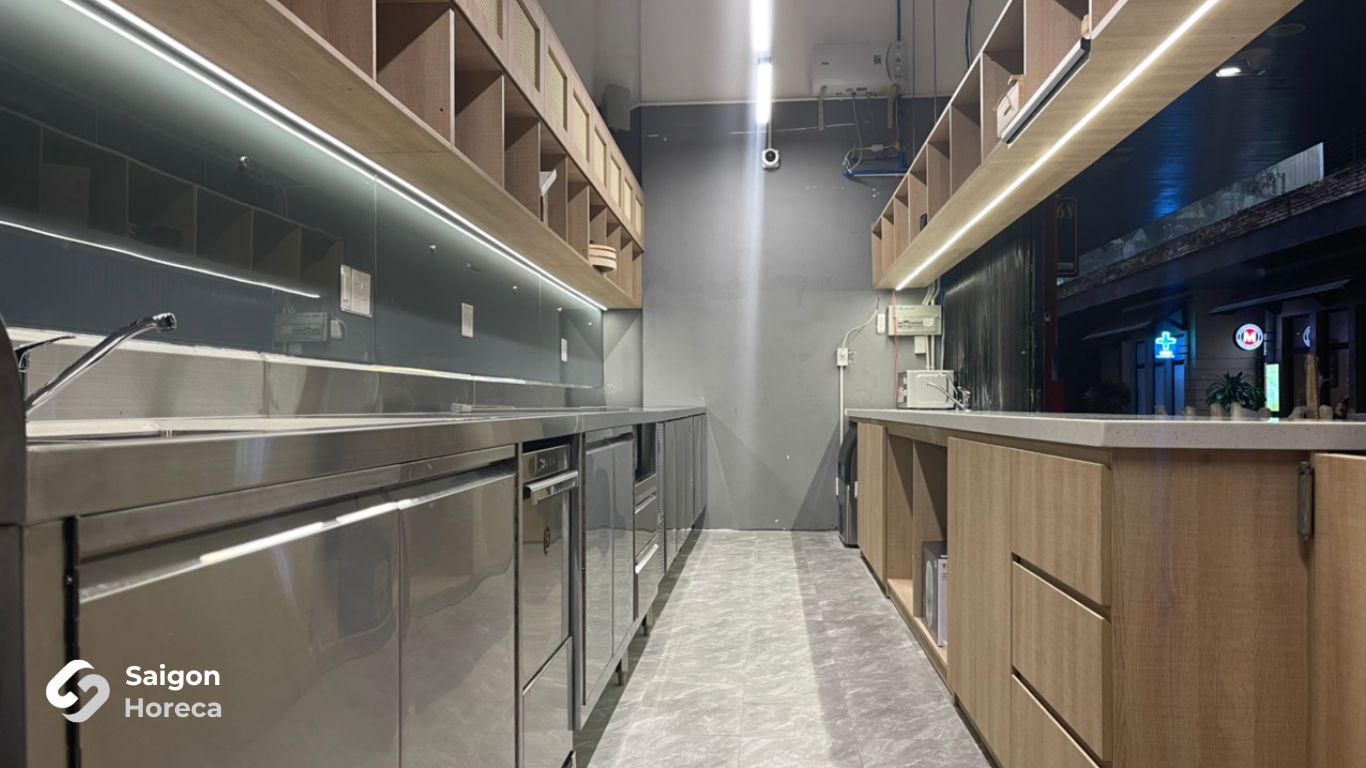
Experience in designing industrial kitchens in a Japanese business environment
Typical project: Nichiyo company canteen – Long Hau Industrial Park
It’s not a restaurant, but the canteen project at Nichiyo – a 100% Japanese business, sets strict standards no less than professional culinary chains.
Japanese kitchen standards in the corporate environment
Even though he serves internally, Nichiyo still requests:
- Closed kitchen process from receiving ingredients – preparing – cooking – washing, no cutting corners.
- Food safety meets HACCP standards – from space layout to selection of food contact materials.
- Separate oil and waste treatment system, ensuring no odor and no impact on the industrial park environment.
This is a clear testament to Japanese thinking: even if it is a worker’s meal, it must still be clean, professional and optimally operated.
Solution from Saigon Horeca: Compact, urgent, but not rushed
Under the pressure of short construction time and limited investment budget, Saigon Horeca has:
- Design a 1-way kitchen system according to HACCP standards, but still flexible according to actual space.
- Clear separation of processing area – hot stove – washing area, limit intersections.
- Installation of industrial gas stove equipment, hot storage cabinets, and specialized deodorizing systems for medium-sized kitchens.
- Implement a solution to treat grease at the source, through a 304 stainless steel grease trap, easy to disassemble and clean periodically.
The result is a kitchen that can regularly operate 500 meals/day, cleanly – effectively – at a reasonable cost.
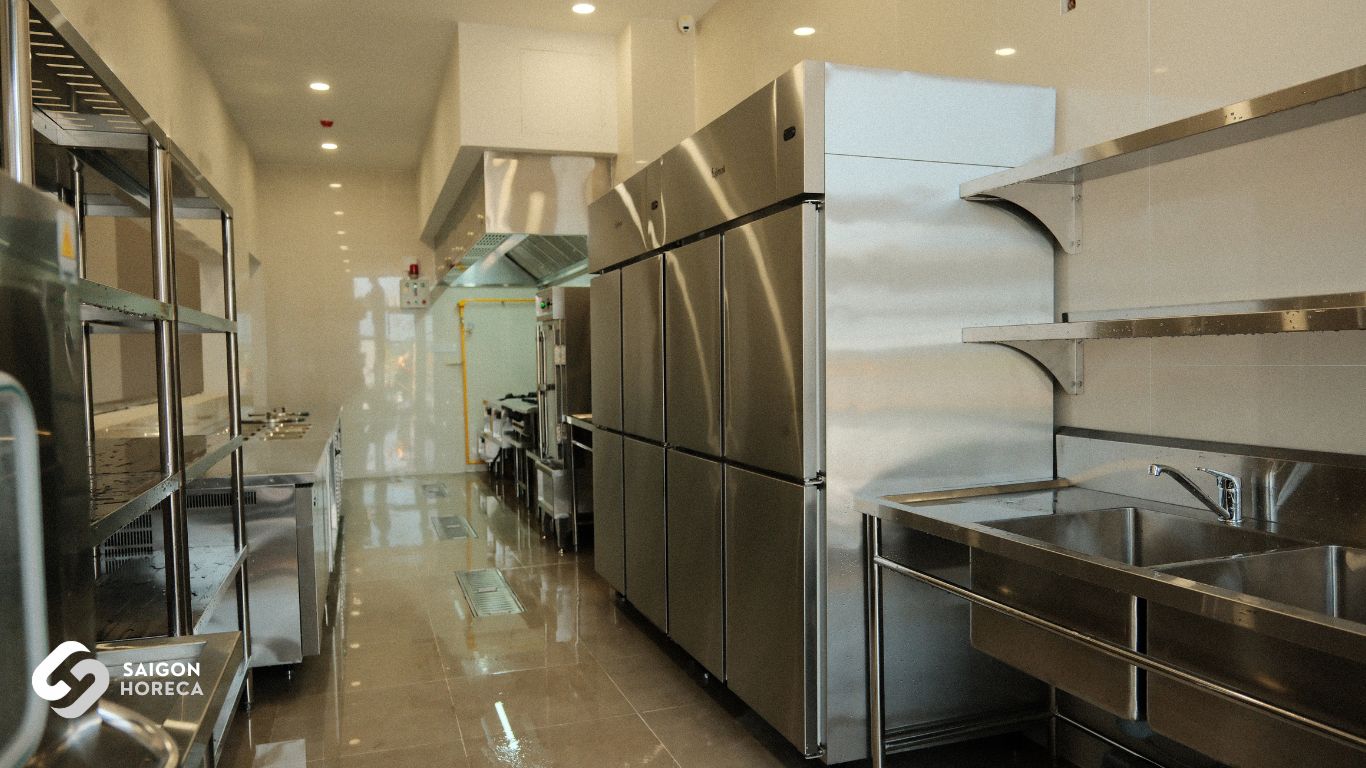
Why should you choose Saigon Horeca for Japanese restaurant projects?
Japanese cuisine is not simply food – it is a standard of process, sophistication and precision. Therefore, designing a kitchen for a Japanese restaurant requires a partner who not only has experience, but also must truly understand Japanese culture and operating thinking.
- Saigon Horeca has directly deployed many different models. Diverse experience – from high-end omakase to industrial kitchens serving large portions
- Omakase, where every detail in the kitchen must reach high perfection, ensuring both performance and aesthetics for the “performance” space.
- Industrial kitchens for Japanese businesses (like Nichiyo) with HACCP requirements and strict procedures.
- Special design thinking for each model. There is no “one design that applies to all”. Each project is supported by Saigon Horeca:
- Survey the chef’s operational details, from processing processes to travel habits.
- Optimize every centimeter of space, suitable for both small premises and large technical requirements.
- Ensure that the kitchen operates smoothly, is clean, and has clear divisions, in accordance with Japanese standards.
- Understanding Japanese culture and technical standards: Working with Japanese investors is a journey that requires patience, diligence and absolute precision.
Saigon Horeca is confident thanks to:
- Understand closed operating procedures, strict hygiene requirements and standards such as HACCP.
- Experience in direct coordination with Japanese operations managers and chefs – understanding their language and working style.
- Proactively propose optimal solutions in terms of both technique and budget, without affecting operational quality.
From Japanese-style meals for 10 omakase diners, to 500 industrial meals per day, Saigon Horeca designs with the same philosophy: Deep understanding – Standard preparation – Long-term commitment.
 Facebook
 Zalo
Zalo