Japanese kitchen design handbook 2025: Sushi, Ramen, Izakaya, Teppanyaki
Japanese cuisine is not just food – it is the art of balance: between aesthetics and function, between sophistication and discipline. Therefore, a true Japanese kitchen cannot just be “beautiful” or “modern”, but must be designed to respect the operating philosophy of each model: the silence of Sushi, the vibrant rhythm of Ramen, the connected atmosphere of Izakaya or the performing fire of Teppanyaki.
Entering 2025, when customers increasingly focus on experience and operational efficiency, F&B investors need more than a drawing – they need a design “handbook” that helps shape style, optimize space and maintain the Japanese spirit in every detail.
In this article, Saigon Horeca will explore with you how to create a standard Japanese kitchen, where every element – from layout, equipment, to operating procedures – reflects the blend of culture, technique and emotion.
Japanese kitchen design handbook
1. Japanese kitchen design thinking: Start from philosophy, not equipment
What makes Japanese kitchens different is not in technology or materials, but in the philosophy of “Omotenashi” – the spirit of devotion in every detail. The Japanese believe that if the chef can operate smoothly, cleanly and focused, the dish will naturally reach perfection.
Therefore, a Japanese kitchen design does not start from choosing an oven, cabinet or exhaust fan, but from the question:
“How will the chef move, manipulate and serve guests in this space?”
From there, every detail – from the direction of the ingredients to the location of the knife, the stove, the sink – is arranged according to the natural flow of the cooking process: import → preparation → processing → presentation → serving.
2. Sushi Kitchen – A space of stillness and precision
Sushi kitchen does not need too much equipment, but requires absolute streamlining.
The Sushi counter is considered an open stage, where every slice, every move is witnessed by guests.
Golden rules in design:
- Minimize travel distance – chefs should only turn around to get ingredients.
- The system for cooling and preserving raw fish must be completely separated from other processing areas to avoid cross-contamination.
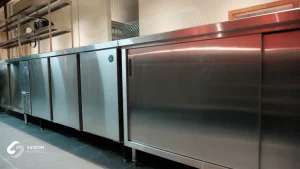
- The table surface must be made of a material that is moisture-proof and easy to disinfect, because Sushi depends on absolute freshness.
A well-designed Sushi kitchen is where the chef can operate seamlessly without interrupting concentration – that is “zen” in the operating space.
3. Ramen Kitchen – Speed and efficiency are the soul
In contrast to Sushi, a Ramen kitchen is where everything happens at high speed.
When customers are waiting, every second counts – so the design must support the chef in maximum efficiency and workflow.
Ramen kitchen design highlights:
- The stock area must be separate from the topping and plating areas, to avoid steam reducing the quality of ingredients.
- The smoke extraction system needs a large capacity and low layout, because the amount of steam from the boiling water pot is very large.
- Equipment such as gas stove, electric stove, noodle storage cabinet, topping table should be arranged in a closed circle so that the chef can operate continuously without moving far.
A standard Japanese Ramen kitchen is where everything operates in the rhythm of “turn on – cook – scoop – serve” – fast, accurate, and without wasting energy.
4. Izakaya Kitchen – Flexible in space and emotion
Izakaya is the soul of Japanese culinary exchange culture – where guests come not only to eat, but to connect. Therefore, Izakaya kitchen design not only focuses on functionality, but also must integrate with the atmosphere of the restaurant.
Outstanding design principles:
- The grilling (yakitori), frying (tempura) area and bar need to be arranged in a “half open kitchen” model – ensuring interaction while also maintaining the privacy of the operating area.
- Lighting and exhaust fans should be designed so that the fire remains central to the experience, but does not cause smoke or odor.
- The layout needs to allow multiple chefs to work at the same time in a narrow space without obstructing each other.
A good Izakaya kitchen is where customers can feel the warmth and energy of the chef, even through just one view.
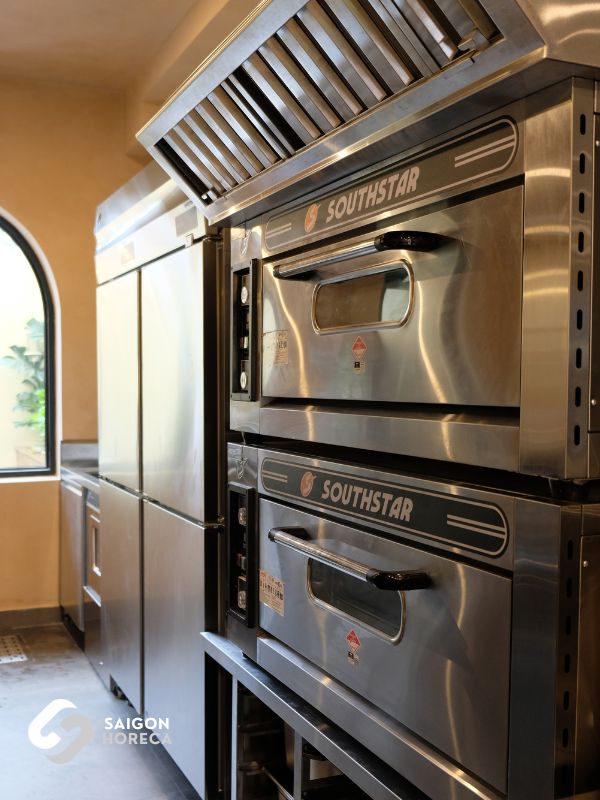
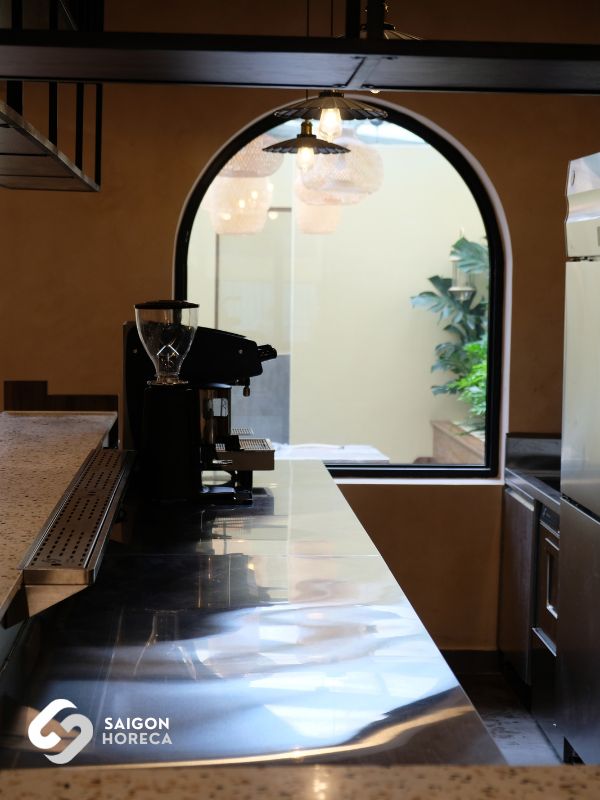
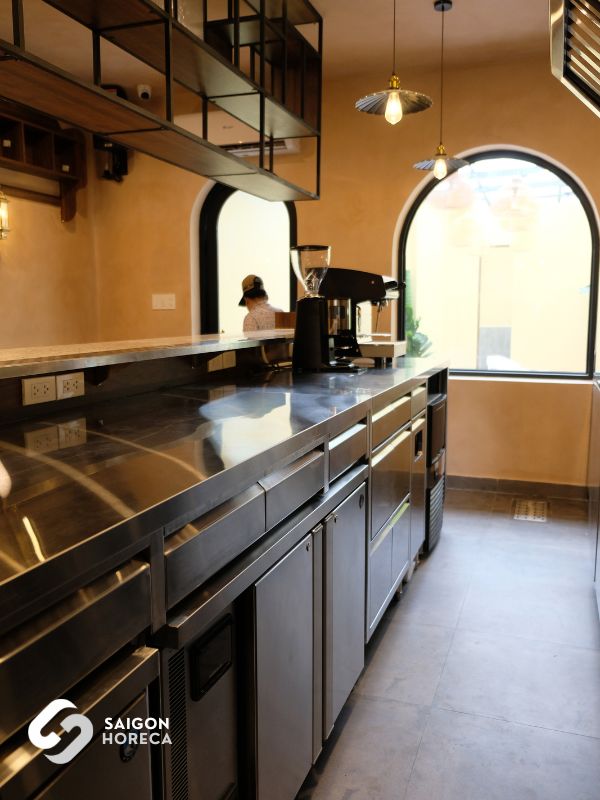
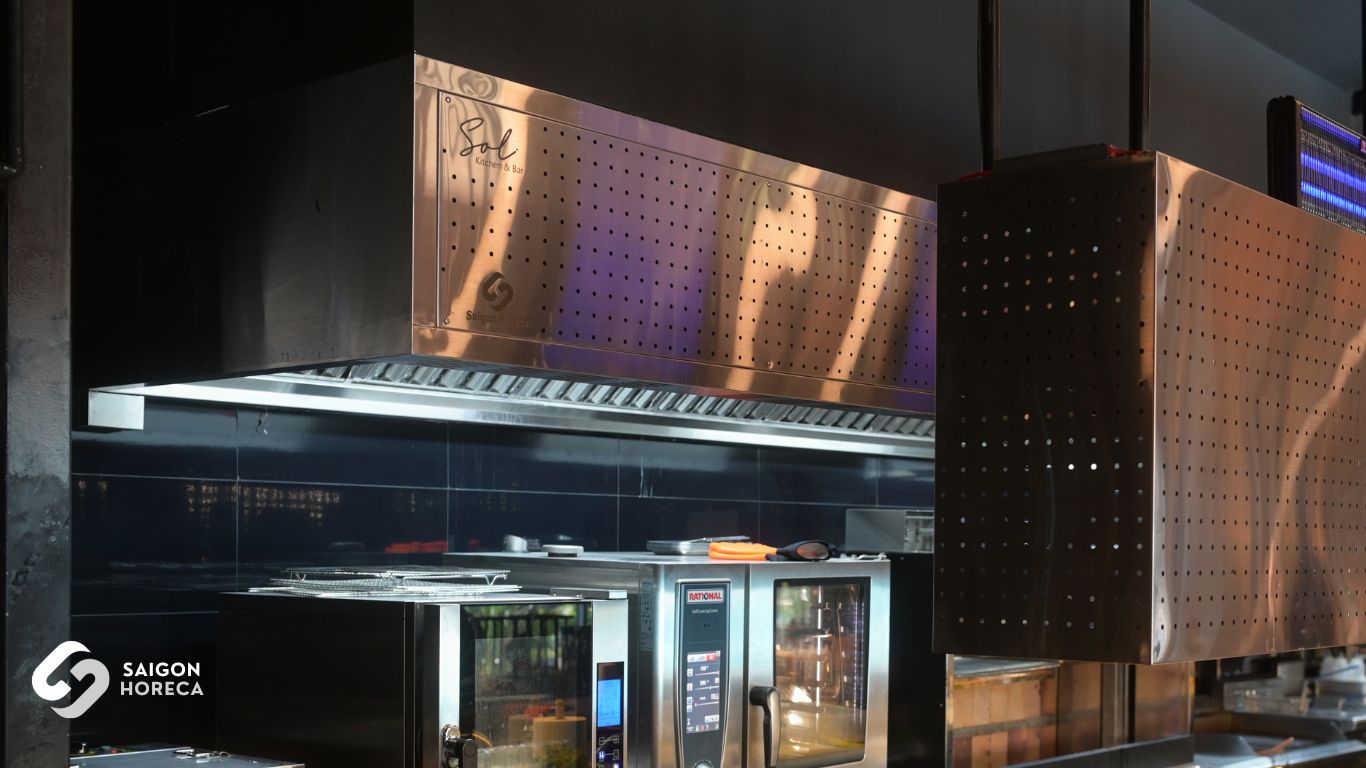
5. Teppanyaki Kitchen – When design becomes performance
Teppanyaki is the most special type of kitchen – where the chef is the artist, and the space is the stage.
This makes Teppanyaki kitchen design carry two tasks: ensuring safety – and creating a visual experience.
Design elements that need attention:
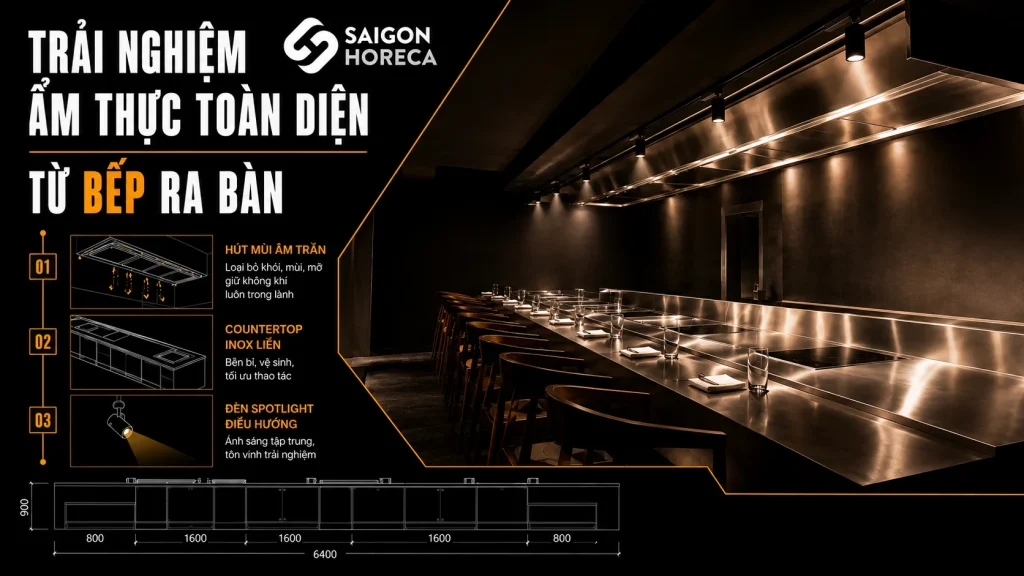
- The smoke extraction system must be integrated right on the grill, completely limiting the burning smell.
- Steel surfaces must meet standards for even heat conductivity, but still be safe for people sitting nearby.
- The lighting system needs to honor the chef’s movements, not create shadows or glare.
A successful Teppanyaki design is when customers not only eat – but also remember the “wow” feeling from the fire, smell, sound and light.
6. Japanese kitchen design trends 2025 – Optimized, automatic, and green
The year 2025 marks a strong transformation of the Japanese F&B industry:
- Automate the processing process with automatic cutting and cooking machines.
- Integrate renewable energy – utilize waste heat from the kitchen for water heating or air conditioning.
- Modular kitchen design – makes it easy to upgrade and change business models.
However, even though technology changes, the soul of Japanese kitchens still lies in respect for people and ingredients – that is the constant that every design needs to preserve.

The Japanese kitchen is not just a cooking space – it is an operating culture
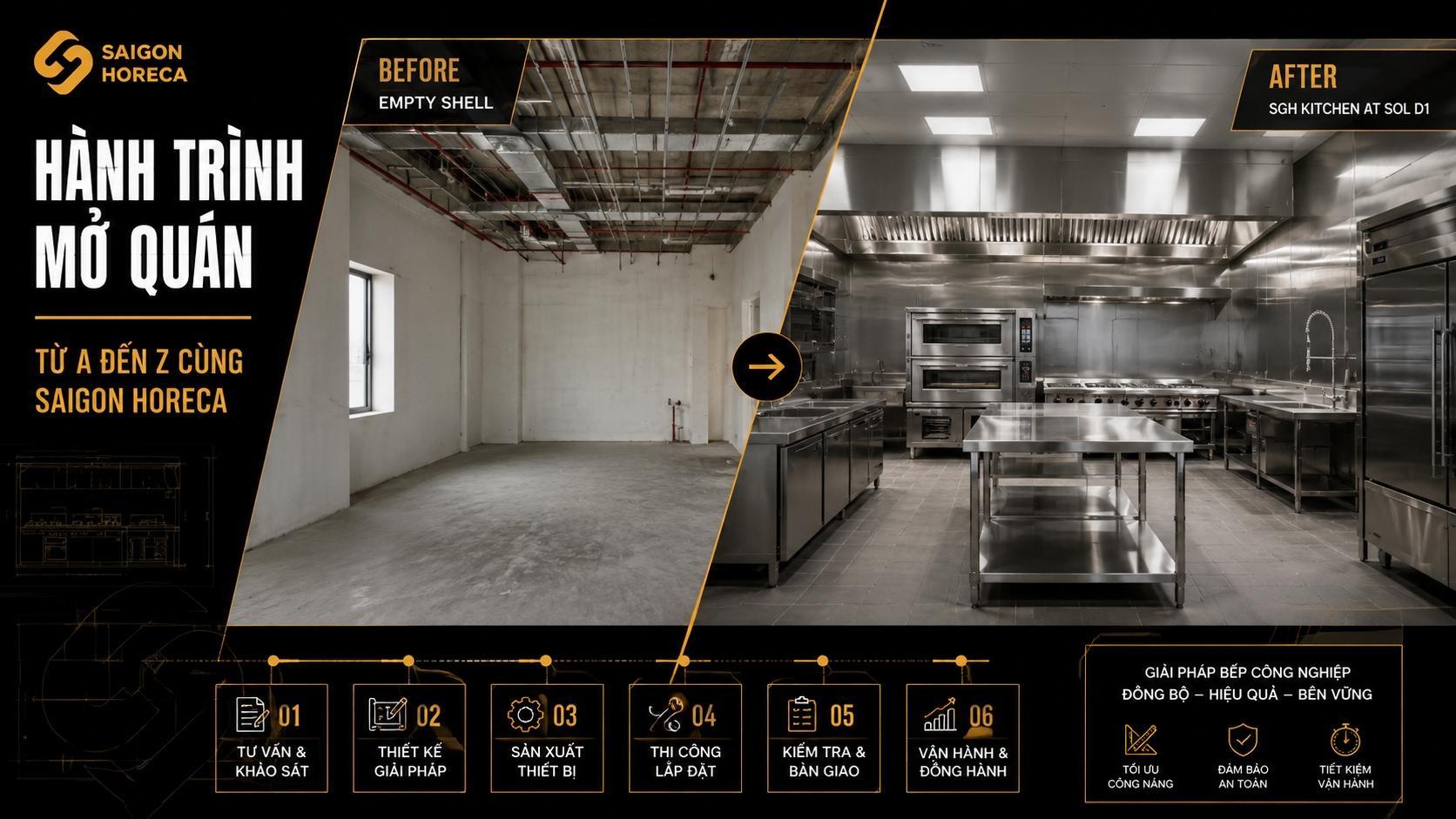
When Saigon Horeca carries out Japanese kitchen projects, we not only create technical drawings, but accompany the investor in transforming the Japanese spirit into practical operating solutions.
From Sushi to Teppanyaki, each model needs a unique design – both effective and touching the user’s emotions.
If you are preparing to open a Japanese restaurant or want to renovate your current kitchen system, let Saigon Horeca help you “realize the Japanese spirit” in every design detail.
 Facebook
 Zalo
Zalo