- Saigon Horeca, News
What is food sampling? Process of storing samples in the restaurant
Food hygiene and safety is an important foundation for creating delicious, nutritious and quality dishes. Therefore, the food sample storage process is applied to control and ensure food safety and hygiene after processing. This is an indispensable step in any kitchen, from restaurants, hotels to food service businesses, to bring peace of mind to customers and maintain the reputation of the business unit.
So, why is it necessary to save food samples? What are the steps involved in the process of storing food samples in hotel and restaurant kitchens? The following article will help you better understand the importance and details of the process of storing food samples in restaurants, hotels and current culinary business models.
Article content
General introduction to the process of storing food samples
The process of storing food samples is a mandatory requirement in all culinary businesses, including on-site service or distribution to other places. This process is regulated by law in Decision 1246/QD-BYT in 2017. According to this decision, restaurants, hotels, food service business models, and commercial kitchen must ensure food hygiene and safety before providing it to customers.
According to Article 2 of this Decision, storing food samples includes the following steps:
- Sampling: Select and take a representative amount of food from prepared dishes.
- Sample preservation: Store food samples in the best conditions to ensure quality and safety.
- Record information: Record detailed information about the food sample taken, including name of dish, preparation time, and person.
- Document retention: Preserve documents related to food samples so they can be looked up when necessary.
According to regulations, all meals serving a minimum of 30 servings must have food samples saved. Therefore, restaurants, hotels, eateries, commercial kitchen, and commercial kitchens must all implement this process. Strictly implementing the food sample storage process helps protect consumer health and maintain the reputation of food service establishments.
Why is it necessary to save food samples?
Large-scale culinary businesses such as restaurants, hotels, or commercial kitchen at schools, hospitals, businesses, factories, and workshops serve a large number of customers. If the food contains potential pathogens or risks, the risk of food poisoning can affect a large number of diners, causing great harm to human health and even threatening human life. This not only seriously affects public health but also reduces the reputation and image of restaurants and hotels.
Saving food samples is a mandatory process in culinary businesses such as restaurants and hotels. The process of storing food samples is to ensure food hygiene and safety, helping to monitor and check food quality after processing. Saving samples helps detect food safety issues early, and is also the basis for resolving disputes and investigating the cause in case of food poisoning.
Saving food samples is necessary so that authorities can test and certify the hygiene and safety of processed ingredients. This process also helps chefs and restaurant managers consider whether the combination of ingredients is harmful or negatively affects the health of diners.
- Determine the cause of poisoning (if any): If there is a case where a customer has food poisoning, saving samples will help determine the exact type of food causing the poisoning, thereby taking remedial measures and preventing similar situations from occurring.
- Monitoring food quality:Saving samples helps monitor food quality over a certain period of time, helping to evaluate the effectiveness of food processing and preservation processes.
- Comply with legal regulations: Many countries and localities have regulations requiring culinary businesses to store food samples.
- Protect customers’ rights: Saving samples demonstrates the transparency and responsibility of the business to customers.

How long does the food sample storage process take?
The minimum time to store food samples is 24 hours. During this process, restaurant and hotel staff will take the following steps:
- Food sampling:
- Food samples are taken in the food preparation area before serving to customers.
- Take a representative sample from each dish to ensure accuracy and comprehensiveness.
- Sample storage:
- Food samples are stored in the best conditions, usually in the refrigerator or freezer.
- Ensure that food samples are not contaminated or degraded during storage.
- Record information:
- Record full information about the food sample, including name of dish, date and time of sampling, and person who performed it.
- A tracking book or electronic management system is used to store and manage information about food samples.
- Retain samples as required:
- If there is a request from the authorities or when the customer is not assured about the safety of the food, the food sample will be retained until further notice.
The minimum sample retention time is 24 hours, however, in special cases, food samples may be retained longer at the request of authorities or customers. Complying with the sample storage process not only helps businesses meet legal regulations but also maintains reputation and customer trust.
Introducing the process of storing standard food samples for hotel and restaurant kitchens
The process of storing food samples includes 3 main steps: preparing to take food samples, taking samples, and destroying saved samples. Specifically, in each step, the following tasks will be performed:
Step 1: Prepare to take food samples
Prepare the sample storage device:
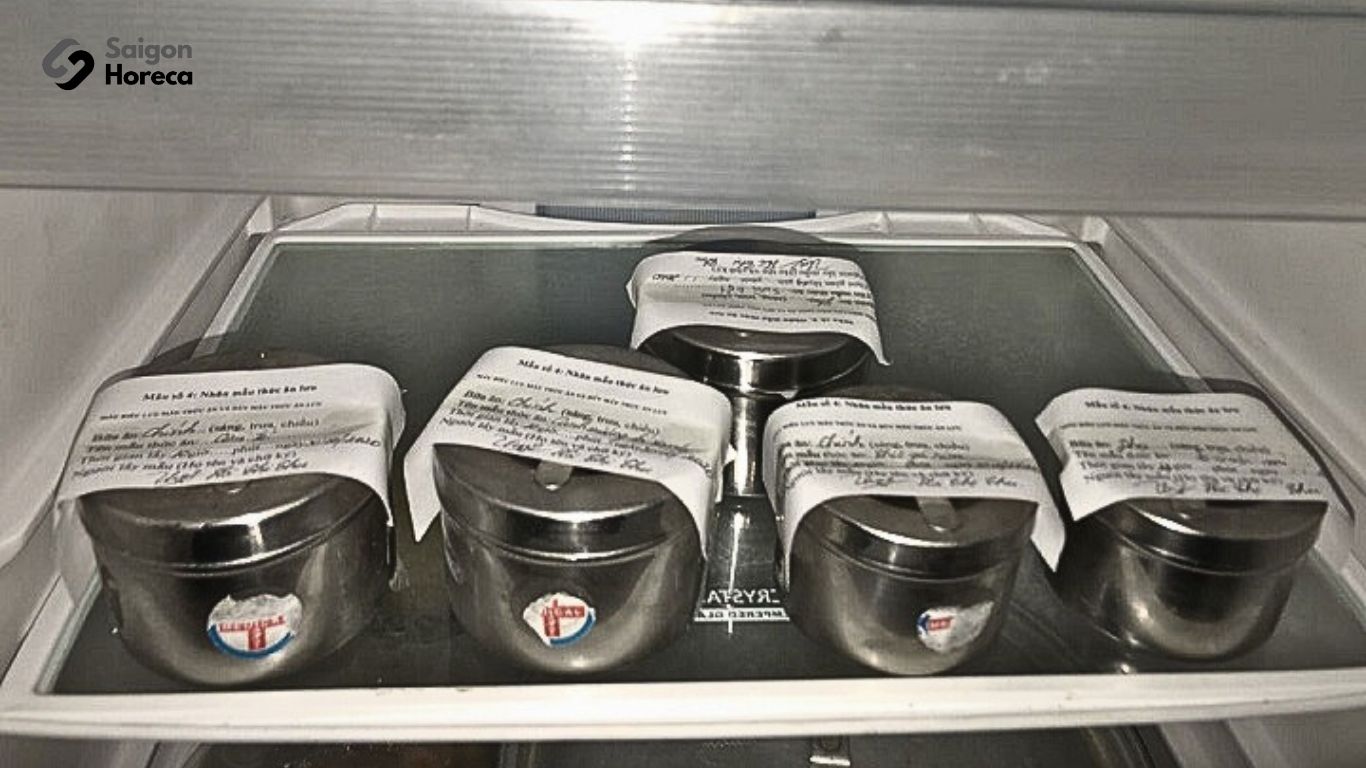
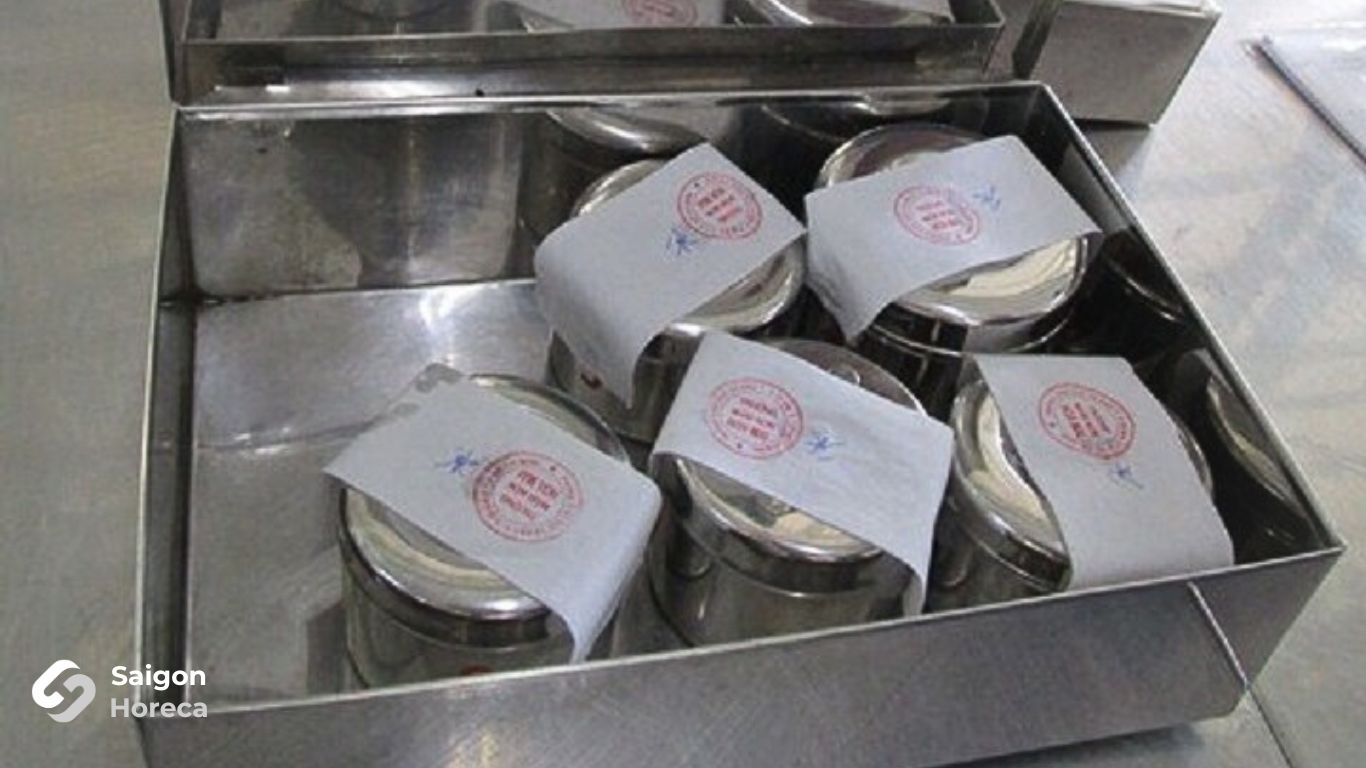
- Utensils with tight lids:Dry food must hold at least 100 grams and liquid food must hold at least 150ml.
- Utensil material: You should use glass or stainless steel utensils, because these materials often have flat surfaces, do not have many textures or patterns and ensure to avoid contamination with food.
- Sterilize sample storage tools: Tools need to be sterilized by blanching in boiling water for at least 3 minutes or using an oven at 70 degrees Celsius for 40-60 minutes.
Sampling equipment:
- Separate equipment: Each type of food will use a separate set of spoons, spoons or tongs and must be sterilized similarly to the sample storage equipment.
Employees need to prepare:
- Protective clothing: Use protective clothing, gloves, masks, hoods, etc. as prescribed by law.
- Hand hygiene: Wash your hands with antiseptic water before taking samples.
Step 2: Take real samples product
Points that need to be adjusted:
- The most appropriate temperature for preserving food samples is 2-8 degrees Celsius. This temperature helps maintain the state of the food sample without causing bacteria to multiply too quickly.
- You should use glass or stainless steel utensils with tight lids. Avoid using plastic tools that are easily deformed or contaminated with foreign substances.
- Although the minimum sample retention time is 24 hours, in some special cases (such as when food poisoning is suspected), samples may be kept longer at the request of the authorities.
Detailed food sampling process (adjusted):
- When to collect samples: Collect samples before serving.
- Number of samples:
For meals of 30 people or more.
Take at least 100g for solid foods and 150ml for liquid foods.
- Utensils: Use clean, dry tools with tight lids (preferably glass or stainless steel).
- Packaging: Pack the sample into each separate device, clearly labeled.
Step 3: Cancel saved results sample
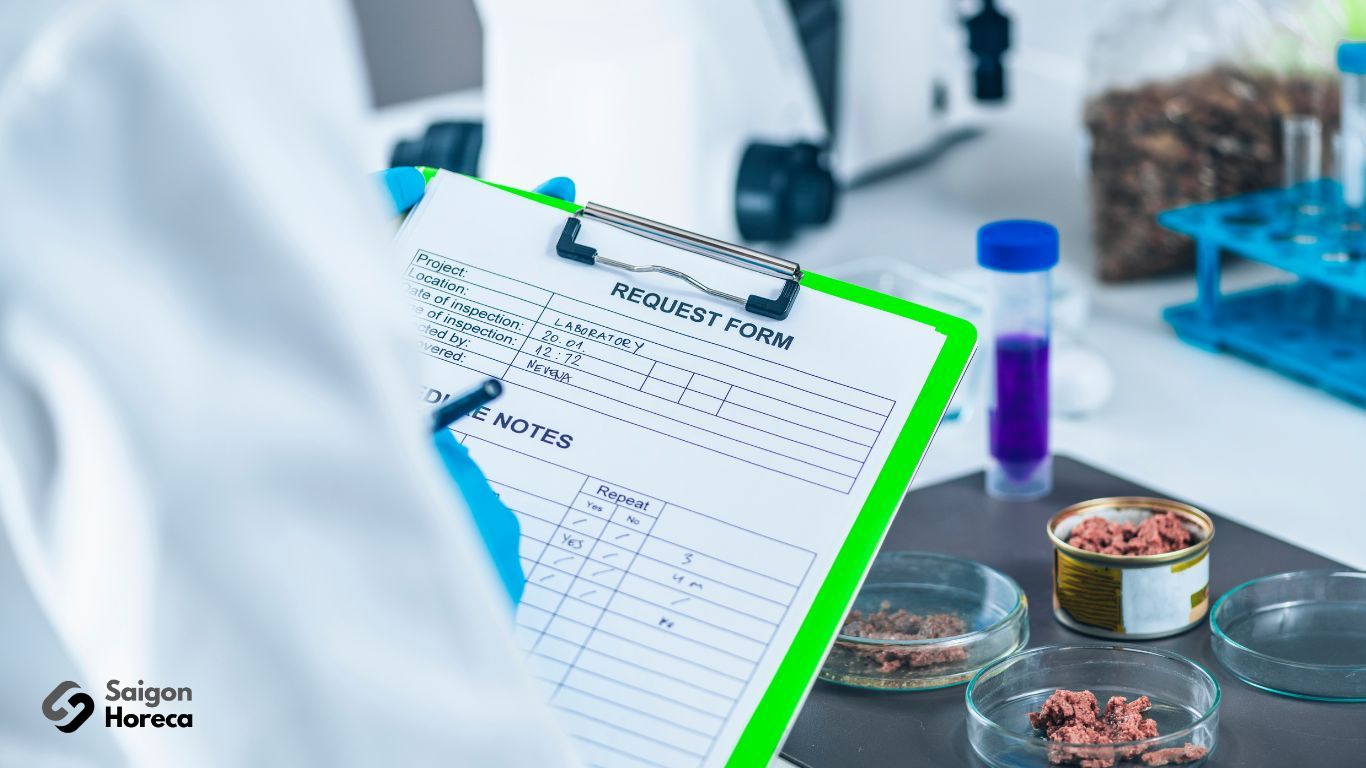
If after the minimum sample retention time (24 hours) the food is not found to be contaminated or there are no other requirements from management agencies, staff will proceed to destroy the food sample. This process includes the following steps:
- Make sure the food sample has been stored for at least 24 hours.
- Confirm that no signs of contamination or food safety issues were detected in the sample.
- Write full information about the food sample in the tracking form, including name of food, date and time of sample collection, date and time of sample destruction, and person who performed it.
- Dispose of food samples according to regulations to ensure environmental hygiene. Sample destruction methods may include household waste treatment or special destruction procedures of the business establishment.
- Update information about sample destruction in the tracking book to complete the sample saving process.
Saving food samples is not only a mandatory requirement but also a commitment of businesses to the health and safety of consumers. Correct implementation of food sample storage procedures not only helps protect the reputation of the business but also contributes to building a safe and healthy culinary environment.
Saigon Horeca with many years of experience in the field of commercial kitchen design and consulting, understands the importance of ensuring food safety and hygiene. We are committed to accompanying businesses in building and perfecting quality management systems, helping you achieve business success.

 Facebook
 Zalo
Zalo