How to maintain & clean Josper furnace to prolong life
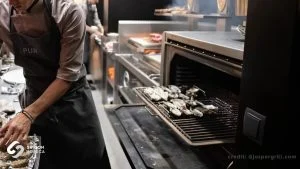
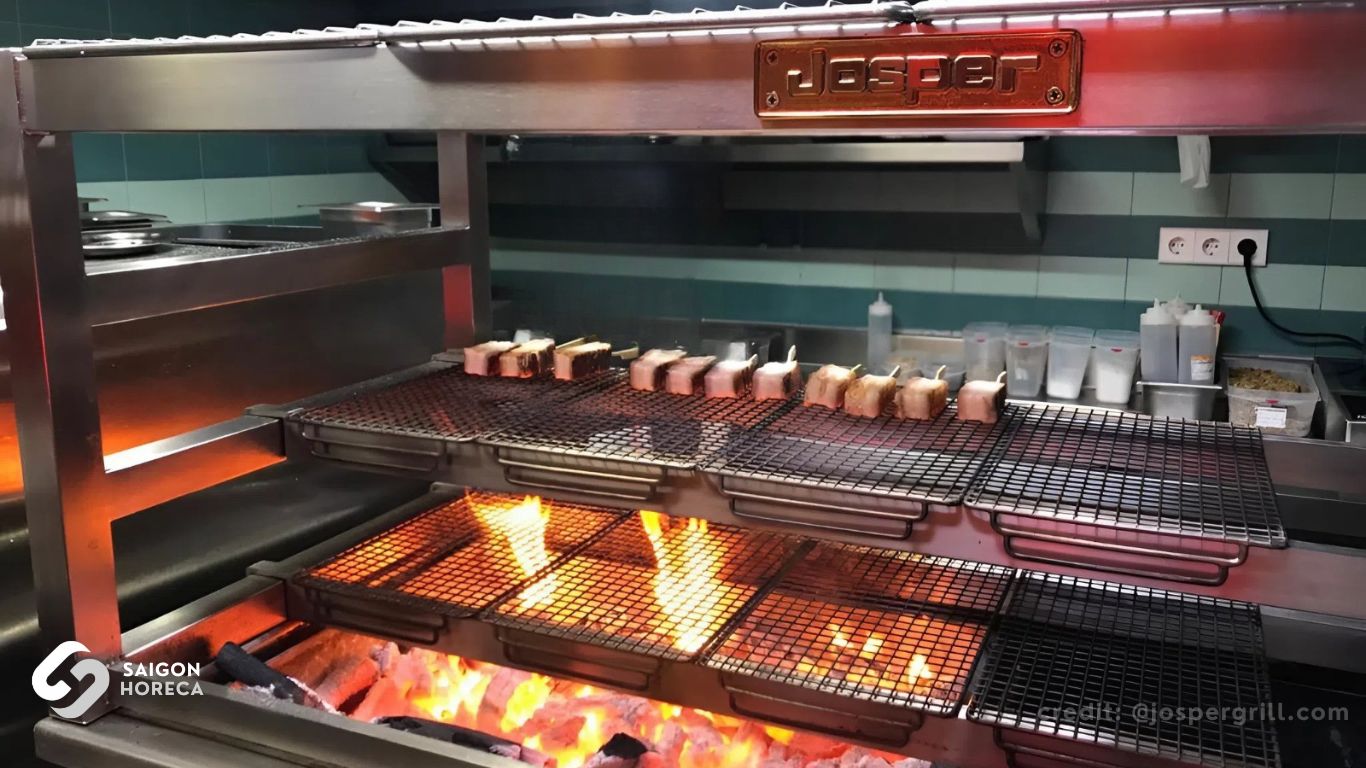
In fine-dining kitchens, where every detail is optimized to achieve perfection, Josper oven is considered the “heart” that creates a flavorful impression for the restaurant. A unique combination of charcoal oven and grill, Josper operates at continuous high heat, providing a characteristic caramelized structure and natural smoke layer that is difficult to replace with any other device. However, this same harsh operating intensity requires the furnace to be properly maintained and cleaned if performance, thermal stability and equipment longevity are to be maintained.
In the context of restaurants increasingly focusing on high-end culinary experiences, taking care of Josper ovens is not only a daily operation but also a process to protect food quality and consistency in operation. A properly cleaned oven saves coal, stabilizes airflow, reduces the risk of fire and explosion, and ensures a delicate charcoal flavor—the element that creates the “signature flavor” that many F&B brands pursue.
This article from Saigon Horeca will provide complete, standard instructions according to manufacturer recommendations and practical experience in deploying high-end industrial kitchen equipment. These are not ordinary cleaning tips, but in-depth maintenance procedures for chefs, investors and operations teams who want to extend the life of Josper ovens, optimize costs and keep the performance of this expensive equipment for many years.
Why is it necessary to maintain Josper furnace properly?
In fine-dining kitchens – a high-end culinary model that requires perfection in every detail – Josper oven is considered the heart of the charcoal stove system. This is a hybrid charcoal oven–grill device, which is a combination of a charcoal oven and a direct grill, allowing stable operation at high temperatures from 300–500°C. It is this special hybrid structure that creates strong heat retention, delicate smoky flavor and natural caramelization that no other device can copy.
For high-end restaurants, Josper is not just a cooking appliance, but a tool to create “signature flavor” – that is, the signature flavor of the brand. Each time it operates, the oven needs to achieve stability in airflow and temperature to maintain a consistent flavor structure for each dish.
Proper cleaning and maintenance bring clear benefits:
- Retains the delicate smoky flavor, without the smell of soot or burnt fat from previous grilling sessions.
- Ensures airflow and temperature are always stable, helping dishes cook evenly, achieving perfect color and texture.
- Reduce 15–25% of coal consumption, thanks to the efficient combustion and heat storage system.
- Extends equipment life from 7–12+ years, minimizing the cost of replacing or repairing important components such as heat-resistant enamel, hinges, or smoke pipes.
With these values, cleaning the Josper oven is no longer simply a daily operational task, but becomes a ritual that protects the quality of food, the stability of the kitchen and the reputation of the restaurant.
Risks of cleaning the Josper oven incorrectly
Although the Josper oven is highly durable and designed for continuous operation in a professional kitchen environment, incorrect cleaning procedures can lead to serious damage, directly affecting baking performance, food flavor and equipment longevity. These are the risks that Saigon Horeca often encounters during restaurant maintenance:
1. Heat shock due to direct water flushing
Many new operators often mistakenly believe that using water to cool the furnace quickly is a way to save time. However, this action causes thermal shock, which is a sudden change in temperature that causes the metal and heat-resistant enamel to expand unevenly. Consequences include:
- Cracking enamel coating (enamel coating – heat-resistant enamel coating inside the oven)
- Furnace body deformation
- Reduces heat retention during subsequent baking
This is one of the main reasons why furnaces lose performance after just a few months of operation.
2. Use strong cleaning chemicals
Another common mistake is using strong industrial cleaning chemicals, containing high acids or alkalis to treat stains. With Josper furnaces, this is extremely dangerous because:
- Destroys the antioxidant enamel layer
- Loss natural anti-adhesion ability
- Leave behind chemical vapors that affect the flavor structure of the dish
- Shorten equipment life
Josper is designed to operate on natural coal, so strong chemicals are always recommended by the manufacturer absolutely not used.
3. Scratches to the furnace interior due to incorrect tools – Surface Damage
Some employees use metal scrapers, or stiff brushes to remove residue. These tools cause:
- Scratch the inner surface of the oven
- Corrosion of thermal protection layer
- Creates a weak spot that causes the enamel layer to easily peel off when exposed to high heat
If just a few small scratches accumulate over time, the furnace will begin to lose its ability to retain heat and consume more coal.
4. Blockage of the air conditioning system causes thermal instability
In the Josper furnace, the air flow regulation system plays a decisive role in maintaining a temperature level of 300–500°C. When ash, grease or soot accumulates thickly:
- Airflow in and out is limited
- Insufficient oxygen supply for combustion
- Temperature fluctuates erratically, sometimes not reaching the operating “sweet spot”
This causes the dish to not have the desired grilled texture and affects the serving speed.
5. Risk of backfire
In some cases of improper cleaning, especially when soot accumulates thickly in the chimney, the phenomenon of backburning smoke may occur. This is a situation where flammable gas is compressed and explodes strongly when exposed to oxygen, causing serious danger.
Backdraft not only affects the equipment, but also threatens the operational safety of the kitchen team.
Improper cleaning not only causes physical damage to the Josper oven but also affects the quality of the food and the stability of the entire kitchen. This is the reason why Saigon Horeca always emphasizes the correct application of standard procedures recommended by the manufacturer.
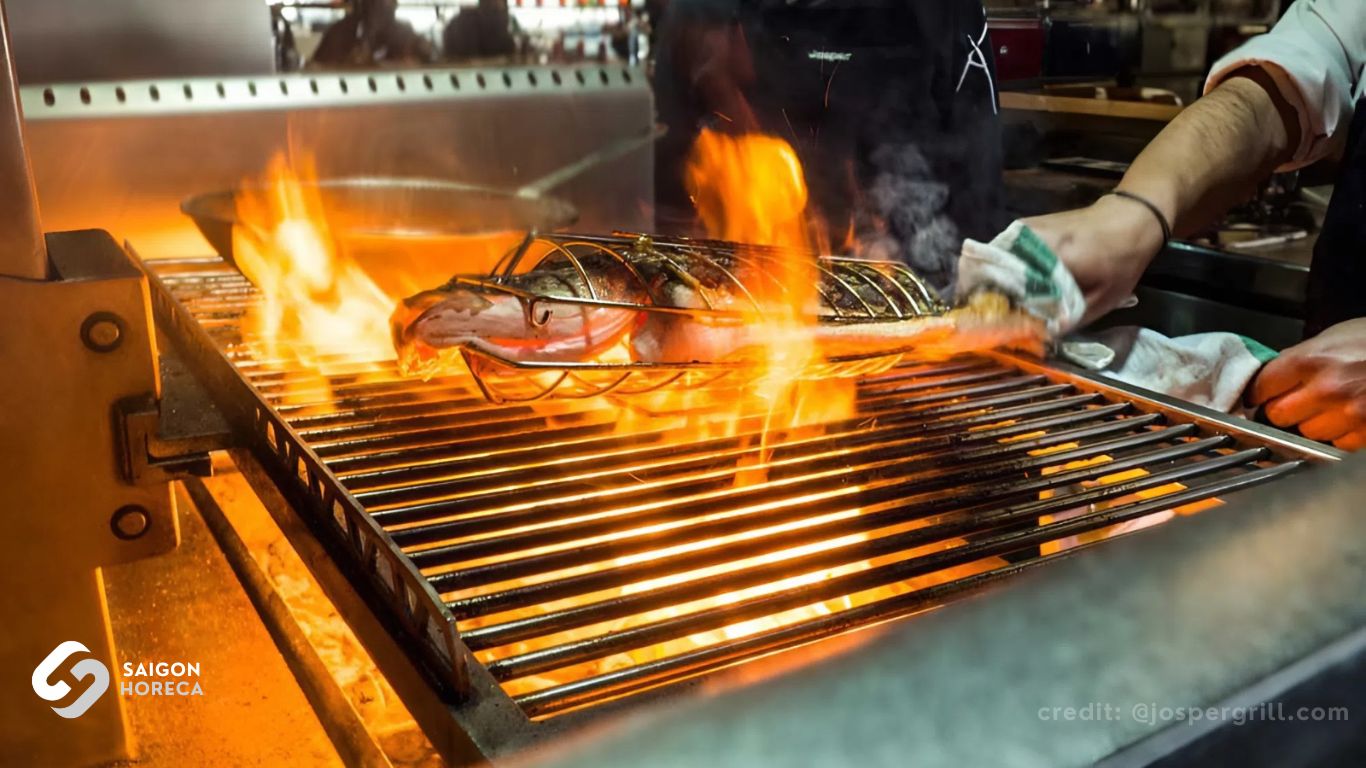
Daily cleaning checklist day
Daily cleaning not only helps maintain grilling performance but also ensures the oven always operates in a stable state, saves coal and preserves the flavor of the dish. Below is the standard process based on manufacturer Josper’s instructions combined with Saigon Horeca’s practical experience in hundreds of high-end kitchen projects.
1. Ash Removal
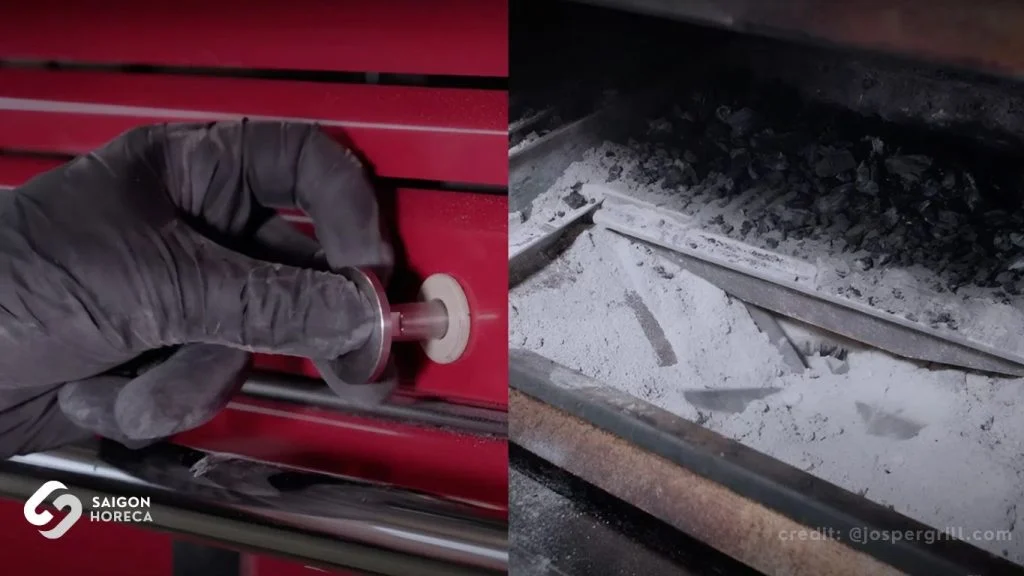
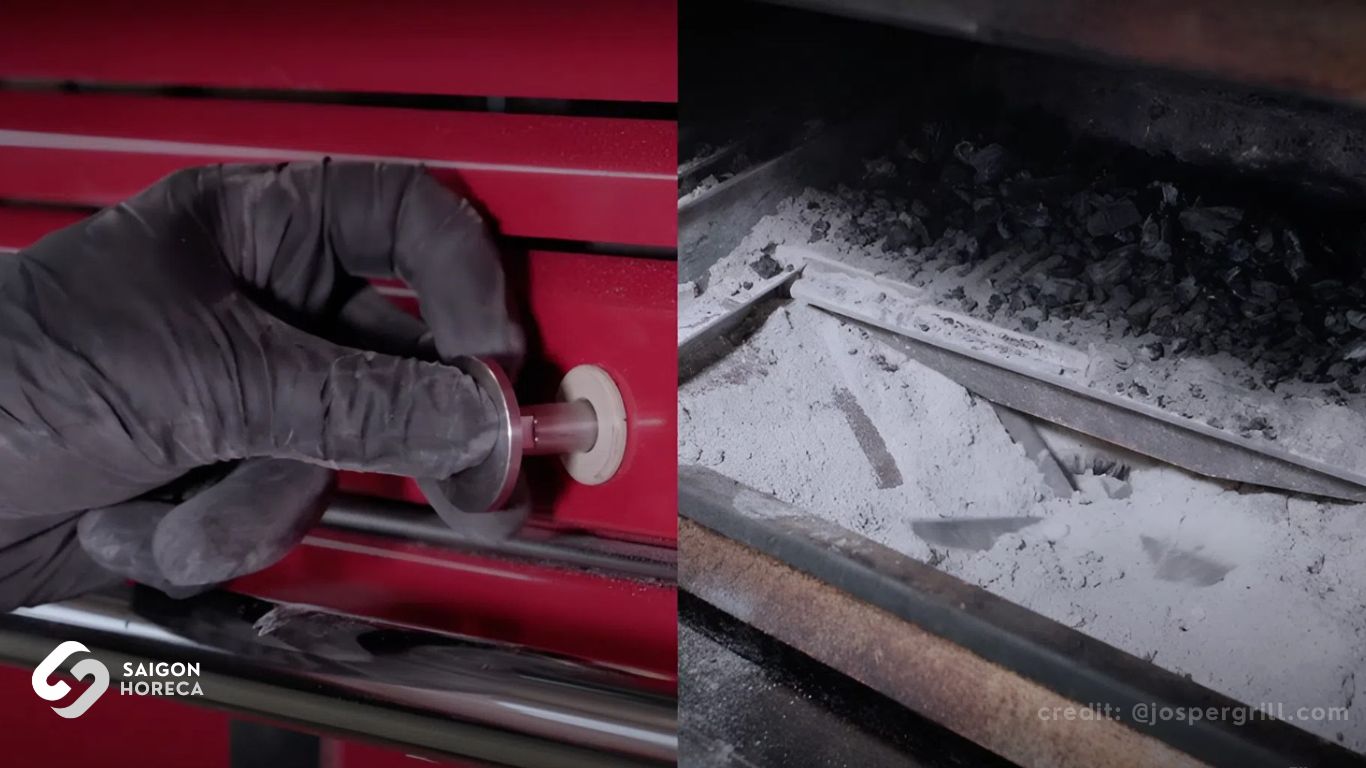
After each cooking shift, when the coals have gradually extinguished and the temperature in the oven is lowered to a safe level, the operator needs to handle the remaining ash layer. This is the amount of fine dust generated from the continuous burning process. If left to accumulate for a long time, it will cover the air slots, reducing the furnace’s ability to absorb air and burn coal.
Some restaurants make the mistake of trying to cool the oven with water to speed up cleaning, but this can easily cause thermal shock, causing the heat-resistant enamel layer inside to crack – a type of damage that requires very high repair costs. The ash needs to be removed when the oven has stabilized the temperature, with a suitable tool so as not to scratch the inner surface.
Once the furnace has stabilized the heat, use Josper’s special shovel for handling ash to take out the ash. Absolutely do not use rough metal tools because they can easily scratch the heart of the oven.
Expert note:
Never use water to extinguish embers. Water meeting hot coals can cause a steam explosion, which is extremely dangerous.
2. Clean the grill
In addition to removing ash, the grill also needs to be treated while still warm. At this time, the residue created from scorched fat and protein is still soft and easy to remove. If you wait until completely cooled, they will harden and stick tightly to the metal, creating a bitter burning smell when grilled later and directly affecting the color and texture of the dish.
Brushing the grates at the right time is therefore an important part of maintaining the pure flavor and consistency of charcoal-grilled dishes. Please use a specialized stainless steel bristle brush, designed not to damage the metal structure of the blister.
Steps:
- Brush in one direction to avoid residue falling into the air vents
- Wipe with a heat-resistant cloth
- Absolutely do not soak the blister in cold water → easily causes metal warping
Why is this step important?
Dirty blisters cause a burnt smell to the food, and also affect Josper’s ability to create beautiful charred layers.
3. Clean the inner surface of the oven
The heart of the oven, which is covered with a specialized heat-resistant enamel layer, also needs to be wiped clean of grease and dust with a dry or slightly damp cloth. Many people mistakenly believe that using strong detergents will help clean faster, but alkaline or acidic chemicals have the ability to destroy the enamel layer, making the oven susceptible to oxidation and reducing its ability to retain heat.
A furnace that maintains the integrity of its enamel layer typically operates more efficiently, consumes less fuel and produces a more consistent level of heat.
Pro-tip from Saigon Horeca:
Absolutely do not use household cleaning solutions, because they contain alkaline or acidic ingredients that damage heat-resistant enamel.
If mild cleaning is needed, use a specialized cleaning solution for charcoal ovens, designed not to affect the enamel layer.
4. Check and clean the airflow system
Checking the air ducts is an indispensable part of the daily process. This is where the burning speed of the coal and its ability to reach the desired heat level are determined. As long as a thin layer of ash or grease sticks to it, the airflow is narrowed, leading to a situation where the furnace is difficult to heat up, or the heat increases slowly and is unstable.
In a restaurant kitchen, where speed and precision are crucial, steady airflow is vital to maintaining food quality and service rhythm.
Josper furnace has an airflow coordination system including:
- the main oxygen supply
- door regulates air flow out of the chimney
Thick accumulation of ash or soot can cause air flow blockage, preventing the oven from reaching the desired heat level.
Therefore, every day you need:
- Check to see if the air box is covered by ash
- Make sure the damper operates smoothly
- Clean the air vents if there is any grease
This is an important step to help maintain temperature stability, a vital factor for high-quality baked goods.
5. Check the condition of door seals and hinges
Finally, the oven door – the area subject to constantly changing temperatures – needs to be observed every day to promptly detect signs of leaking gaskets or hinges that are not operating smoothly. A door that does not close tightly causes the oven to lose heat, consume more coal and make it difficult for the chef to control the temperature during service.
Every day, check:
- Is the door gasket worn or frayed
- Does the hinge operate smoothly or does it make strange sounds
If the door is not closed tightly, the oven loses heat quickly, consumes more coal and the dish is difficult to meet standards.
Special notes from Saigon Horeca
Although Josper furnaces are known for their durability and strong performance, using the correct technique is still the deciding factor in the longevity and total performance of the device. Below are important notes that the Saigon Horeca technical team always recommends for professional kitchen models:
1. Do not use water to put out a fire in the oven
One of the most important notes is to absolutely not use water to put out the fire or cool it. Water meeting a red-hot metal surface always creates a sudden change in temperature, causing damage to the material structure.
The heat-resistant enamel layer – which is the protective heart of the oven – can crack after just one thermal shock, and this damage is often irreversible.
2. Do not use household chemicals
Household detergents often contain more alkaline or acid than allowed, which can:
- Destroying heat-resistant enamel
- Affects the flavor of food
- Generates toxic vapors when exposed to high heat
Instead, use specialized cleaning products specifically for charcoal ovens, tested to be safe at high temperatures.
Even the physical impact on the grill and oven cavity needs to be carefully controlled. Sharp, hard tools or vigorous scraping will leave small scratches that are invisible to the naked eye, but are weak points that cause the enamel layer to degrade faster. As the interior surface begins to lose integrity, the furnace will consume more coal and have difficulty maintaining a stable temperature.
3. Train new employees on proper cleaning procedures
Saigon Horeca noticed that in many restaurants, failures occurred not due to equipment but due to incorrect operation.
Josper ovens are high-end appliances, so every operation – from opening the door, brushing the grill, removing ash to checking the air vents – needs to be communicated properly. Without initial guidance, just a few weeks of incorrect operation can create cumulative damage that will later be difficult to repair.
Therefore, every time there is a new kitchen employee, it is necessary to:
- Training on proper cleaning procedures
- Instructions for handling ash, blisters and airflow
- Clear explanation of prohibited practices (flooding, using strong chemicals, scraping metal…)
Consistency in operating techniques helps the furnace maintain long-term performance.
4. Every 3–6 months, there should be an inspection by the Saigon Horeca technical team
Saigon Horeca recommends that restaurants maintain a general inspection routine every three to six months. Even though the kitchen team cleans properly every day, professional maintenance is still needed.
This is the time for the professional technical team to evaluate the status of the enamel layer, the tightness of the door, the condition of the smoke duct, and the coal burning efficiency. Early detection of abnormal signs helps prevent operating risks and prolongs equipment life by many years.
This phase includes:
- Check the tightness of the door
- Adjust the airflow system
- Clean the smoke duct
- Check the surface inside the oven door
- Assess unusual hot spots
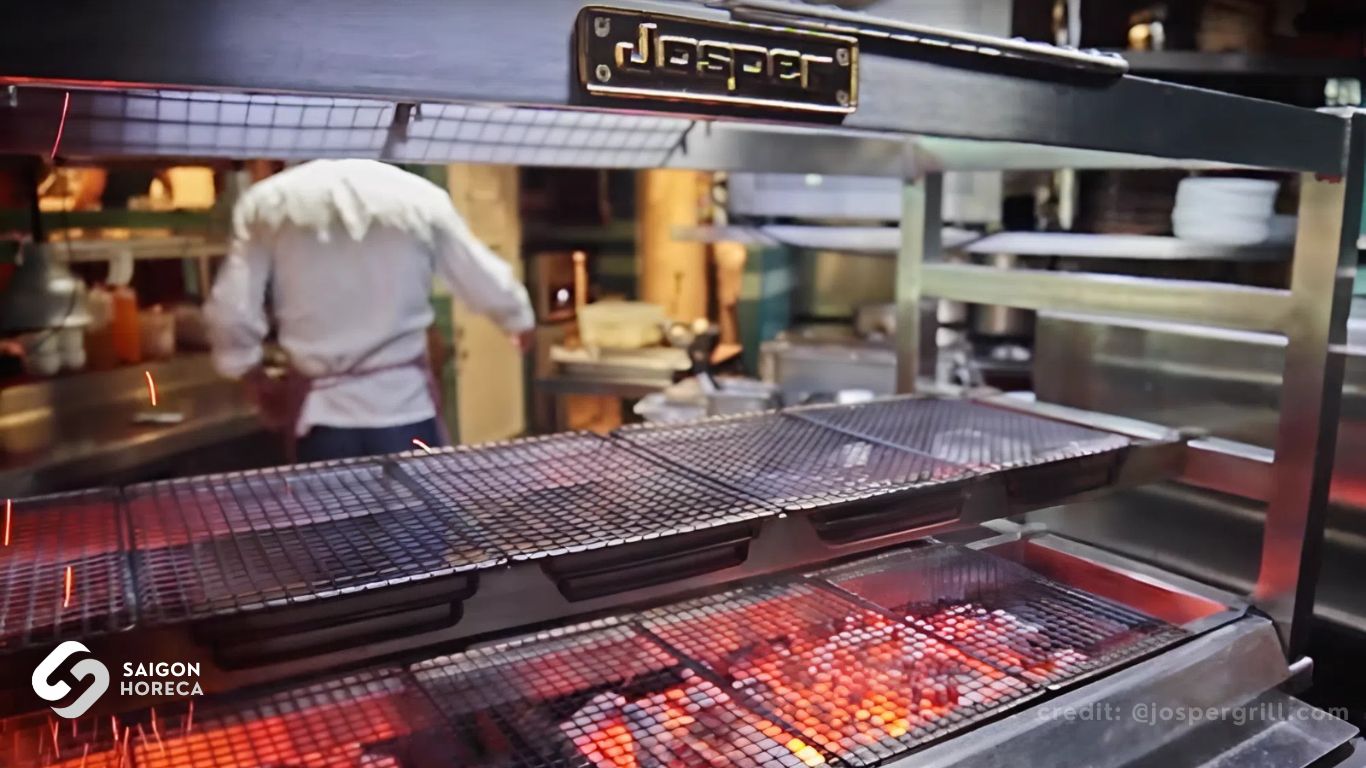
When to call a technician Saigon Horeca instead of handling it ourselves
Even though the kitchen team can take care of the majority of routine cleaning tasks, there are still situations where the operator should not handle them themselves, as any improper intervention can seriously affect the safety and longevity of the oven.
One of the first signs that technical support is needed:
- When the furnace cannot reach the familiar temperature even though the amount of coal used is the same as usual
- A furnace that is slow to heat up, or that continuously fluctuates in temperature, often reflects a deep-seated problem related to the air duct, the tightness of the door, or the accumulation of soot in the chimney.
- If you try to do it yourself, the operator may accidentally deform the gas direction slots or misalign the structure inside the furnace – errors that can increase repair costs many times.
Another common situation is when the oven door no longer closes tightly:
- A door that is not airtight causes heat loss, causing the coals to burn faster and making it difficult for the dish to achieve its characteristic charred color.
- Damages related to doors always need to be handled by a technician, because Josper’s door structure and hinges are designed with high precision; Just a millimeter of misalignment can cause the oven to lose its thermal balance
In addition, when the operator notices that the oven emits a strange smell, smoke changes color or tends to be pushed back into the kitchen, that is an urgent warning signal. Even unusual sounds – a strange metallic sound, a slight squeak when opening the door, or a slight bang from inside the oven – are signs worth calling a technician.
Proper maintenance is to preserve the “heart” of the coal stove
In every restaurant operating at high culinary standards, stability is always the most important factor. A perfect dish requires not only the chef’s technique, but also the equipment behind it – the equipment must be reliable, durable and ready to meet the exact heat level the chef desires.
The Josper oven, with its ability to create a delicate smoky flavor and unique grilling structure, is part of that culinary soul. Saigon Horeca always believes that a properly cared for Josper oven will not only operate better, but also help the kitchen operate smoothly, safely and efficiently.
Because with high-end equipment like Josper, durability does not come from the nature of steel or enamel, but from the way people understand and treat it every day.
 Facebook
 Zalo
Zalo