Conquering the Restaurant Kitchen: The Secret to Maintaining Stainless Steel Equipment to Ensure Hygiene and Performance
In restaurant and hotel kitchens environments where operations are continuous and professionalism is required, the care of stainless steel equipment plays an important role in maintaining not only hygiene but also the long-term performance of the equipment. Stainless steel, with its anti-corrosion and easy-to-clean properties, is a popular material used in the production of equipment such as pots, pans, food racks and many other items.
This article will share effective preservation tips for stainless steel equipment in kitchens restaurants and hotels, helping to ensure not only cleanliness but also durability and food safety. Join us to explore the practical and detailed methods below to maintain and improve the quality of stainless steel equipment in your professional kitchen space.
Causes of Decreased Quality of Stainless Steel Sink in the Kitchen
During use, stainless steel appliances in the kitchen, such as sinks, often have to face environmental factors that can affect their quality and durability. Stainless steel, also known as stainless steel, is often chosen because of its corrosion resistance and ease of cleaning. However, if proper hygiene is not maintained, they can become affected by environmental factors.
One of the common problems is improper cleaning of thehs. Using strong or incorrect detergents can reduce the anti-corrosion layer on the stainless steel surface. This can lead to the loss of stainless steel’s ability to protect against environmental influences. To solve this problem, the most important thing is to choose specialized cleaning products for stainless steel and follow the instructions for use.
In addition, grease and scratches are also other factors that can reduce the protective performance of stainless steel. Grease and scratches can reduce the interaction between chromium on the stainless steel surface and air, reducing corrosion protection performance. Avoiding contact with grease and storing stainless steel equipment properly to avoid scratches is important.
Another problem is lack of routine care and maintenance. Ignoring care and maintenance can lead to corrosion and loss of shine on the stainless steel surface. This can be resolved through performing routine care and maintenance steps, including cleaning and lubrication as needed.
Finally, improper chemical action is also a cause that significantly affects the quality of stainless steel. Using detergents with strong chemicals can negatively impact the chromium barrier layer on the stainless steel surface. Choosing cleaning products that do not contain chemicals that affect stainless steel is important to protect and maintain the quality of equipment over the long term.
Storing Stainless Steel Equipment in Hotel Restaurant Kitchens
Stainless steel sinks, an important part of restaurant and hotel kitchen spaces, often face the problem of yellowing and rust. The main cause often comes from the water source used, which may contain salt, alum or other chemicals. The fix requires immediate handling of the water source problem, because if not resolved, stainless steel sinks will continuously rust, causing waste and unnecessary costs for businesses.
Remedial Measures
Step 1: Clean and Remove Dirt:
- First, wipe off dust and stains on the stainless steel sink.
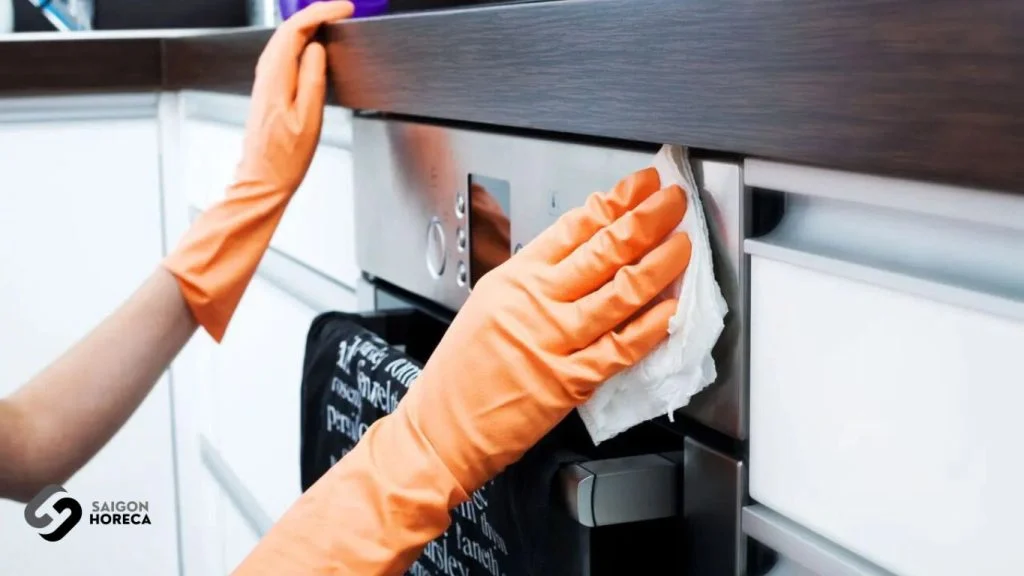
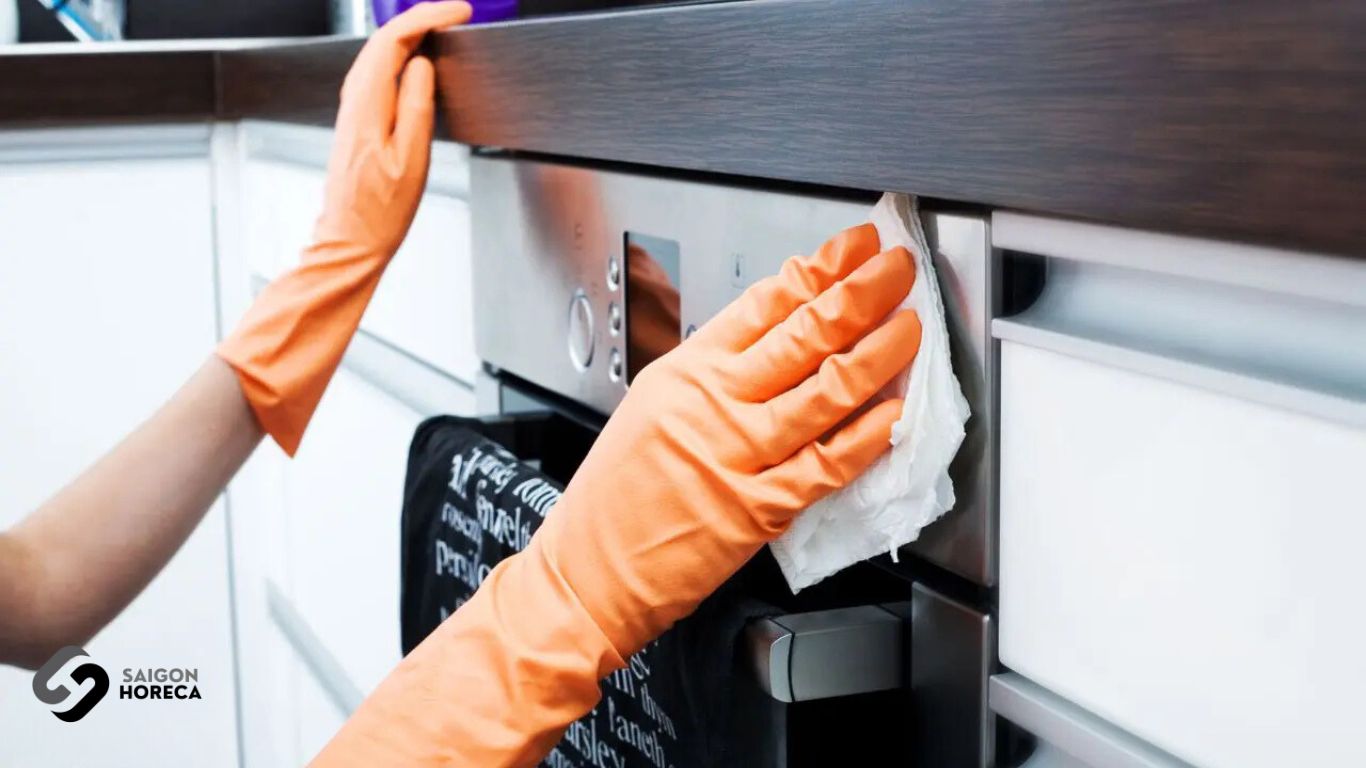
- Use surface cleaning tools and clean thoroughly with a soft cloth and toilet paper.
Step 2: Water Treatment:
- Immediately resolve problems with your water source, such as removing salt, alum, or chemicals from your home water source.
Step 3: Use Detergent Correctly:
- If the surface of the stainless steel pot is tarnished, use a specialized detergent, avoid acidic or caustic detergents that can corrode the metal.
How to Clean with Water and Special Detergent
- Cleaning with Water:
Use a cloth and cleaning tool to scrub and polish the sink surface.
Wipe off any remaining water stains with a dry cloth. - Using Detergent and Glass Cleaner Solution:
Dissolve soap and dishwashing liquid in warm water, adjust the concentration depending on how dirty the device is.
Spray the glass cleaner solution on the sink surface and wipe clean with a cloth. - Use Specialized Cleaning Solutions:
For stubborn stains, use specialized cleaning solutions.
Follow the instructions for use to avoid chemical effects that can affect your health and device quality.
These measures not only help maintain the beauty and durability of stainless steel sinks but also ensure food safety and hygiene in professional restaurant and hotel environments.
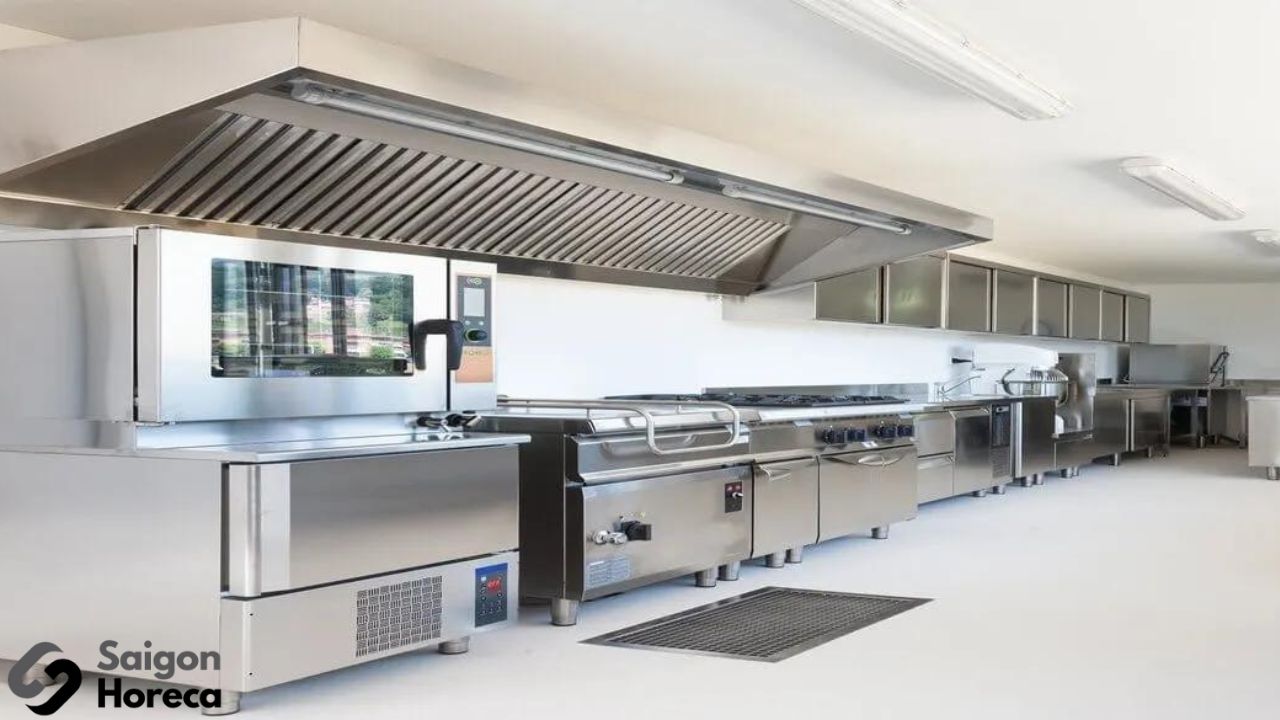
Things to Avoid During the Process Cleaning Stainless Steel Equipment
In preserving and cleaning stainless steel equipment, there are a few things to avoid to ensure that they not only maintain their beauty but also maintain their long-term durability.
- Do not use rough sponges and steel brushes as these can scratch the steel and create scratches, opening the door to corrosion and rust. Instead, use a soft bristle brush and mild cleaning agent to protect the stainless steel surface.
- Detergents with high acid content can destroy the protective layer on the stainless steel surface, creating conditions for corrosion and rust. Choose products that contain little acid and are suitable for stainless steel.
- To avoid the accumulation of dirt and plaque, keep the item in a high, dry place and always keep it clean. This not only increases aesthetics but also protects the life of kitchen equipment.
- When cleaning, avoid applying excessive force, especially in areas that may be sensitive to impact. Unnecessarily applied force can damage the surface and reduce the gloss of stainless steel.
- Regularly check and periodically maintain stainless steel equipment. This includes cleaning, inspecting for scratches, and maintaining moving parts to ensure they operate smoothly.
The above measures not only help preserve the beauty of stainless steel equipment but also increase their durability and performance, bringing peace of mind and cost savings to businesses. When you need advice or professional kitchen equipment installation, do not hesitate to contact us to receive professional support and the most reasonable shopping costs.
>>> Stainless steel 304 is considered a leading and indispensable material in many different manufacturing industries, especially carefully selected kitchen equipment for your restaurant kitchen. Therefore, let’s join Saigon Horeca to learn and discover more types of stainless steel, especially stainless steel 304: Stainless steel 304 – Durability and Diverse applications of Stainless Steel.
 Facebook
 Zalo
Zalo