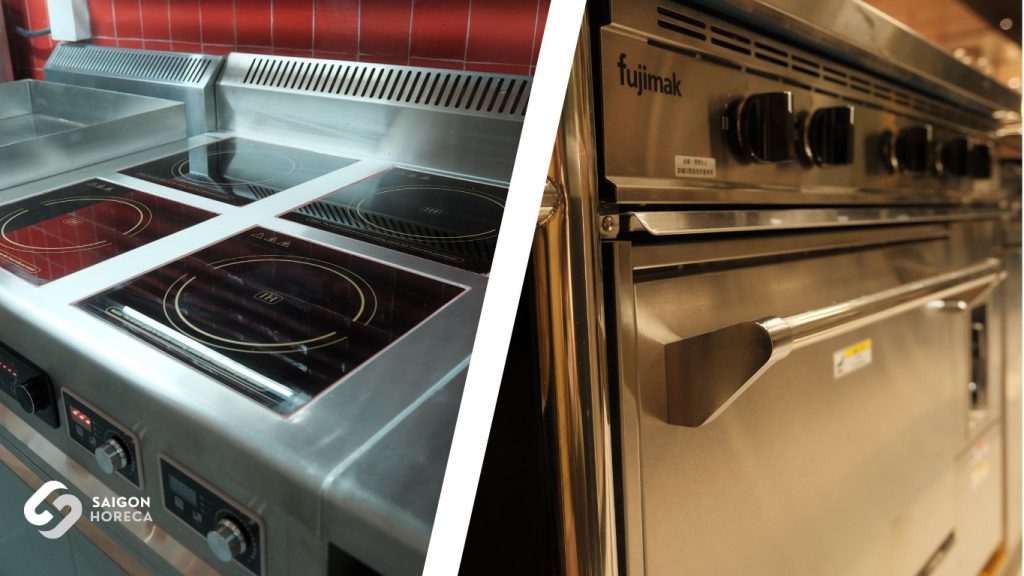
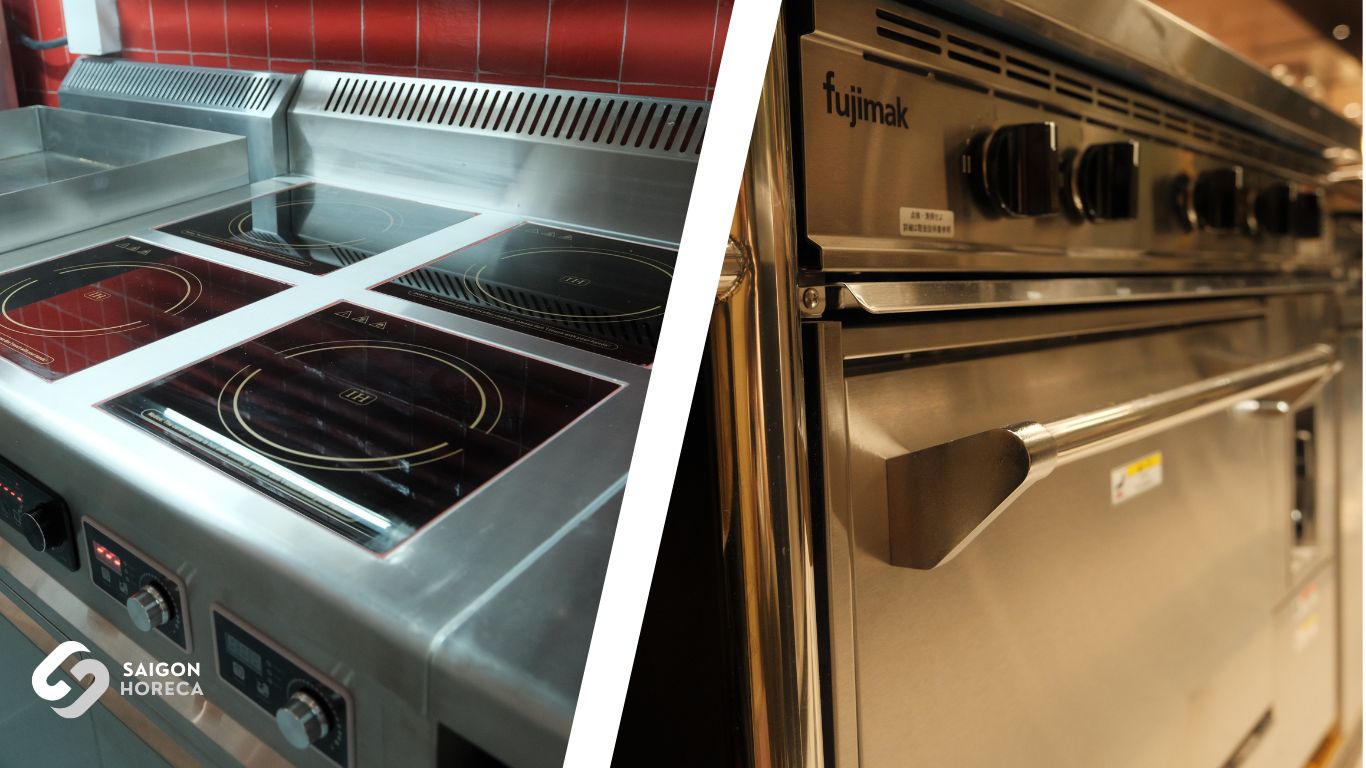
Comparing industrial gas stoves and industrial induction stoves: Which is the better choice?
In the F&B industry, especially large-capacity kitchens such as restaurants, hotels or collective kitchens, the choice of cooking equipment not only affects the speed of food preparation but also directly affects operating costs, safety and energy efficiency. Industrial gas stove and industrial induction stove are two popular options, each type has its own advantages and limitations.
Gas stoves have long been considered the “standard” of professional kitchens thanks to their ability to create strong, flexible flames with all types of pots and pans. Meanwhile, industrial induction cookers – with modern technology, more energy saving and safety – are increasingly popular, especially in open kitchen style restaurants or requiring a clean working environment with little excess heat.
So, between the traditional stability of a gas stove and the modernity and savings of an induction stove, which is the most suitable choice for your business model? Let’s analyze in detail with Saigon Horeca in this article!
Compare industrial gas stoves and industrial induction stoves
Cooking performance: Speed or energy savings?
In an industrial kitchen, cooking performance is the key factor that determines service speed and food quality. The difference between industrial gas stoves and industrial induction stoves is not only in how they generate heat but also affects operating efficiency and the chef’s experience.
Industrial gas stove
Industrial gas stoves have long been trusted by professional chefs thanks to their ability to create instant heat with powerful flames. In particular, this type of stove allows flexible temperature adjustment, helping chefs easily perform processing techniques that require high heat control such as stir-frying over high heat, deep-frying or grilling directly over fire.
However, due to the characteristics of using an open flame, gas stoves have a high level of heat loss, only about 40-60% of the heat is actually transferred to the food, the rest is radiated into the air, wasting fuel and increasing the temperature of the kitchen environment.
Industrial induction cooker
In contrast, industrial induction cookers use the principle of electromagnetic induction to directly heat the bottom of the pot, fast and accurate heating without the need for a flame. Thanks to this technology, induction cookers have an efficiency of up to 90-95%, almost all the electricity is converted into heat for cooking.
This helps shorten processing time, reduces energy waste and keeps the kitchen cooler. However, induction cookers require appropriate cooking utensils, usually pots and pans with magnetic bottoms, and it may take some time for the chef to get used to electronic temperature adjustment.
Operating costs: Initial investment or long-term savings?
When choosing between industrial gas stoves and industrial induction stoves, many kitchen owners not only consider performance but also have to calculate operating costs. A device with a cheap initial price may not necessarily save costs in the long term, and conversely, a large investment can bring sustainable benefits if used properly.
Industrial gas stove
One of the biggest advantages of industrial gas stoves is low initial investment costs. The price of an industrial gas stove is often significantly cheaper than an induction stove of the same capacity, making it a popular choice for newly opened restaurants, eateries or business models with limited budgets.
However, operating costs are another story. Gas stoves have an efficiency of only about 40-60%, which means nearly half of the fuel is lost as heat to the environment.
In addition, gas prices are unstable and easily fluctuate with market conditions, making it difficult for businesses to control fuel costs in the long term. With large capacity kitchens, monthly gas consumption can become a significant financial burden.
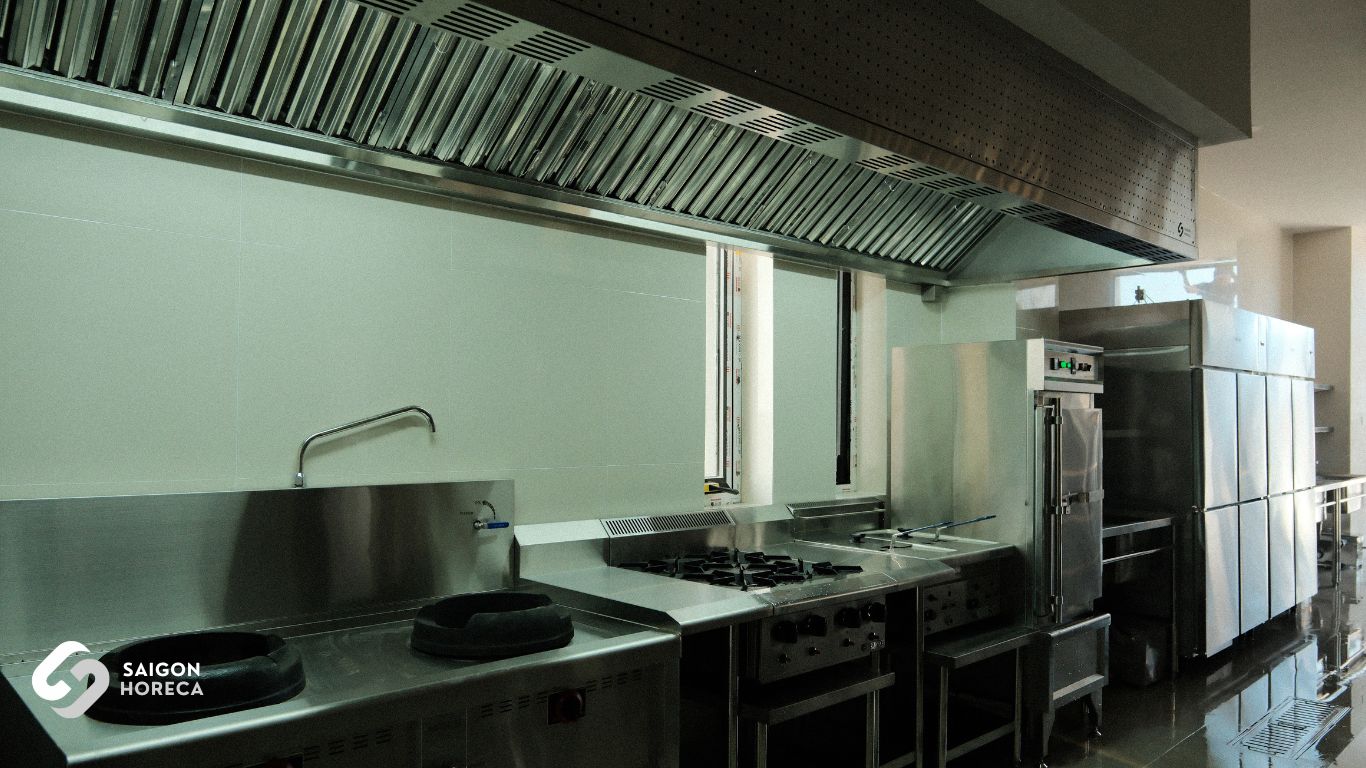
Industrial induction cooker
In contrast, industrial induction cookers have a higher initial purchase cost, but consume energy much more efficiently. Thanks to induction technology, induction cookers have an efficiency of up to 90-95%, almost all the electricity is converted into heat for cooking.
In fact, many industrial stove models have noted that, if used regularly, an induction stove can help save up to 30-50% of fuel costs compared to a gas stove. In addition, electricity prices tend to be more stable than gas prices, making it easier for businesses to estimate costs.
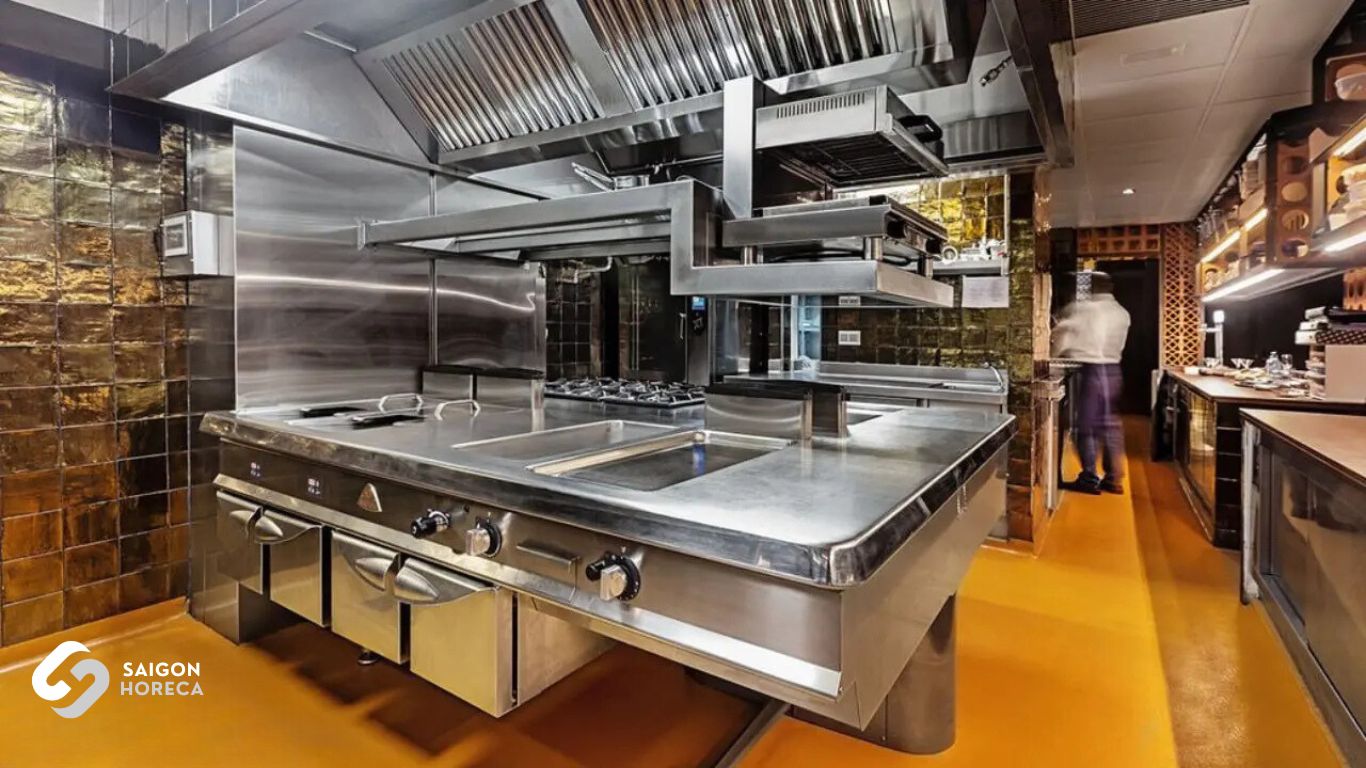
Safety and impact environment
When operating an industrial kitchen, performance and cost are not the only factors to consider. Safety and environmental impact are two important issues that directly affect employee health, kitchen stability and long-term brand image.
Industrial gas stove
Industrial gas stoves have long been widely used thanks to their ability to create strong flames and easily adjust the temperature. However, along with that comes the risk of gas leaks, one of the leading causes of serious fires and explosions in the kitchen. If the gas system is not regularly maintained, the valve is leaking or the operator is careless, even a small spark can cause unpredictable consequences.
Not only that, gas stoves also produce CO₂, CO and other toxic compounds during the process of burning fuel. In closed kitchen spaces, these emissions can reduce air quality, causing difficulty breathing and fatigue for chefs and staff. For business models aiming at sustainable development or meeting strict food safety standards, using gas stoves can become a significant minus point.

Kitchen from industry
Industrial induction cookers operate on the principle of electromagnetic induction, without using direct flame, helping to completely eliminate the risk of fire and explosion due to fuel leakage. Even if you accidentally turn on the stove without a pot on the surface, the stove will not generate heat, minimizing the risk of fire.
In addition, induction cookers do not emit harmful gases, creating a clean, airy and less hot working environment than gas stoves. This not only improves the health of kitchen staff but also helps increase productivity, especially in closed kitchen spaces or restaurant kitchens with high density of use.

Flexibility and technical requirements
In an industrial kitchen environment, where flexibility and stability play an important role, the selection of cooking equipment requires careful consideration based on actual conditions and operating requirements. Both industrial gas stoves and industrial induction stoves have their own advantages and disadvantages in terms of adaptability to different types of cooking utensils and technical conditions of the kitchen space.
Industrial gas stove: Simple, easy to adapt to all types of pots
One of the biggest advantages of industrial gas stoves is that they are not picky about cooking utensils. Whether you use an aluminum, cast iron, stainless steel pot or a round bottom pan to cook over high heat, a gas stove still works effectively without needing to invest in specialized equipment. This provides great flexibility, especially in kitchens with a variety of dishes, from Asian dishes that require high heat to European dishes that need to be simmered for a long time.
In addition, gas stoves do not depend on the power source, helping to maintain operation even during unexpected power outages. This is especially important for restaurants, hotels or industrial kitchens in areas with unstable power sources.
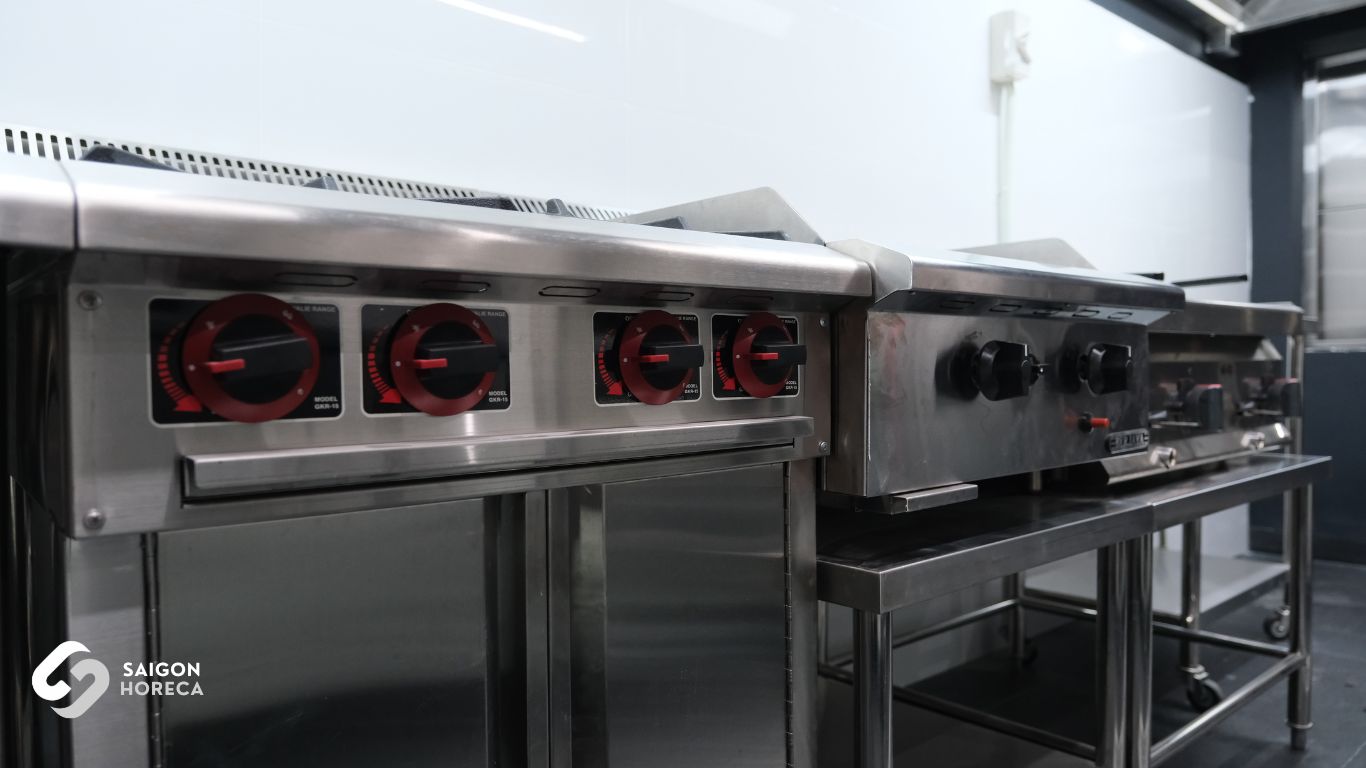
Industrial induction cooker: Modern but needs technical conditions suitable
In contrast, industrial induction cookers operate on the principle of magnetic induction, requiring cookware to have a magnetic bottom such as 430 stainless steel or cast iron. This means that if your kitchen is using aluminum pots or some non-magnetic stainless steel pots, you will have to invest in additional specialized utensils, increasing the initial cost.
In addition, induction cookers need a stable power source to operate smoothly, especially large capacity cookers that serve continuous cooking needs. However, with the development of technology, many industrial induction cooker models are now designed with high capacity, fast heating ability and power protection modes, helping to optimize performance in professional kitchen environments.
Should I choose an industrial gas stove or an industrial induction stove?
Choosing industrial gas stove or industrial induction stove depends not only on personal preferences but also on type of business, investment budget and actual operating requirements. Each kitchen line has its own advantages, suitable for each different industrial kitchen model.
When should you choose an industrial gas stove?
Industrial gas stoves are still a popular choice in many traditional restaurants and eateries, especially kitchens specializing in Asian dishes. The main reason is the ability to create a large, high temperature and easy-to-adjust flame, helping to effectively perform quick stir-frying, deep-frying or stewing techniques.
You should consider using an industrial gas stove if:
- A restaurant specializing in Asian dishes needs a strong fire to stir-fry and cook quickly, especially dishes that require a blazing fire such as Chinese, Japanese, and Vietnamese dishes.
- Want to save initial investment costs, avoid large expenditures on electrical systems and specialized cooking utensils.
- Don’t be afraid to change gas cylinders regularly or have a stable gas supply at reasonable prices.
However, gas stoves also come with limitations such as the risk of gas leaks, CO2 emissions and lower fuel efficiency than induction stoves.
When should you choose an industrial induction cooker?
Industrial induction cookers are increasingly becoming a trend thanks to high performance, energy saving and safety in the kitchen environment. With the ability to heat directly to the bottom of the pot, the induction cooker helps reduce heat loss and speed up cooking without producing smoke or harmful gases.
You should choose an industrial induction cooker if:
- Want to save fuel costs in the long run, thanks to high heat conversion efficiency (90-95%) and no heat loss to the environment.
- Wish a safe, clean, dust-free kitchen space, avoiding risks of fire and explosion and creating a comfortable working environment for employees.
- Have a stable electrical system and be willing to invest in specialized cooking utensils such as pots and pans with magnetic bottoms.
Despite the higher initial cost, induction cookers bring long-term benefits when operating, helping to optimize energy and ensure safety for industrial kitchens.
Conclusion: The choice is suitable for the business model
If flexibility, quick heat adjustment and low initial investment are top priorities, industrial gas stoves are the right solution. On the contrary, if you aim for high performance, fuel economy and a safe working environment, an industrial induction cooker will be the more optimal choice in the long term.
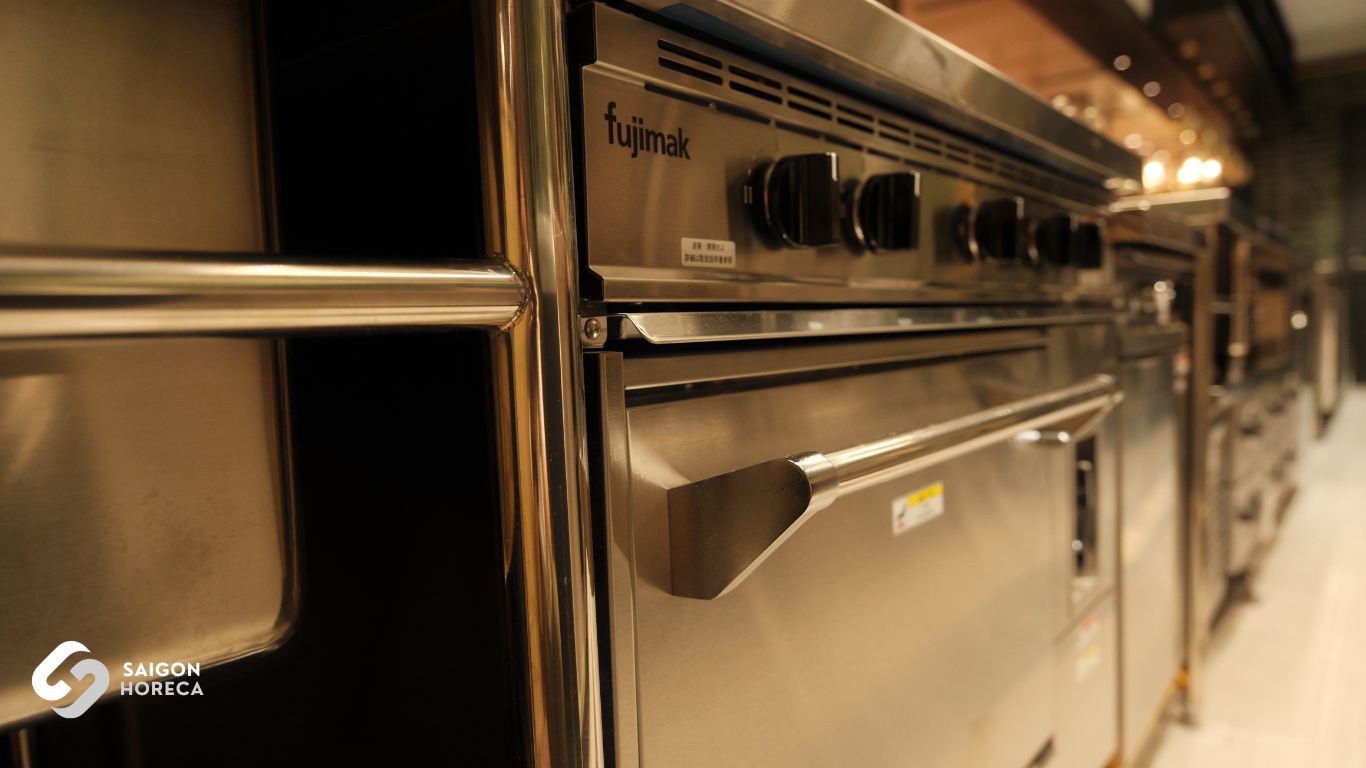
Saigon Horeca – Address providing high quality gas stoves and industrial induction stoves
The choice of industrial gas stove or industrial induction stove not only affects cooking performance but also affects the operating costs and safety of the kitchen. To ensure quality, durability and high performance, you need to find a reputable supplier that provides standard industrial kitchen equipment.
Why should you choose Saigon Horeca?
- Genuine products, high quality: We provide a variety of gas stoves and industrial induction stoves from reputable brands, ensuring high performance and outstanding durability.
- Optimal solution for each kitchen model: Saigon Horeca’s team of experts will advise and help you choose the most suitable kitchen type for your business needs, from restaurants, hotels to large industrial kitchens.
- Competitive prices – Long-term warranty support: Committed to reasonable prices, thoughtful warranty and after-sales policies, helping customers feel secure in use.
- Professional installation and maintenance service: Providing full installation service, periodic inspection and maintenance to ensure the stove operates safely and effectively.
Saigon Horeca is proud to be a trusted partner of hundreds of restaurants, hotels and industrial kitchens nationwide. Please contact us immediately for detailed advice and to receive the best quote!
 Facebook
 Zalo
Zalo