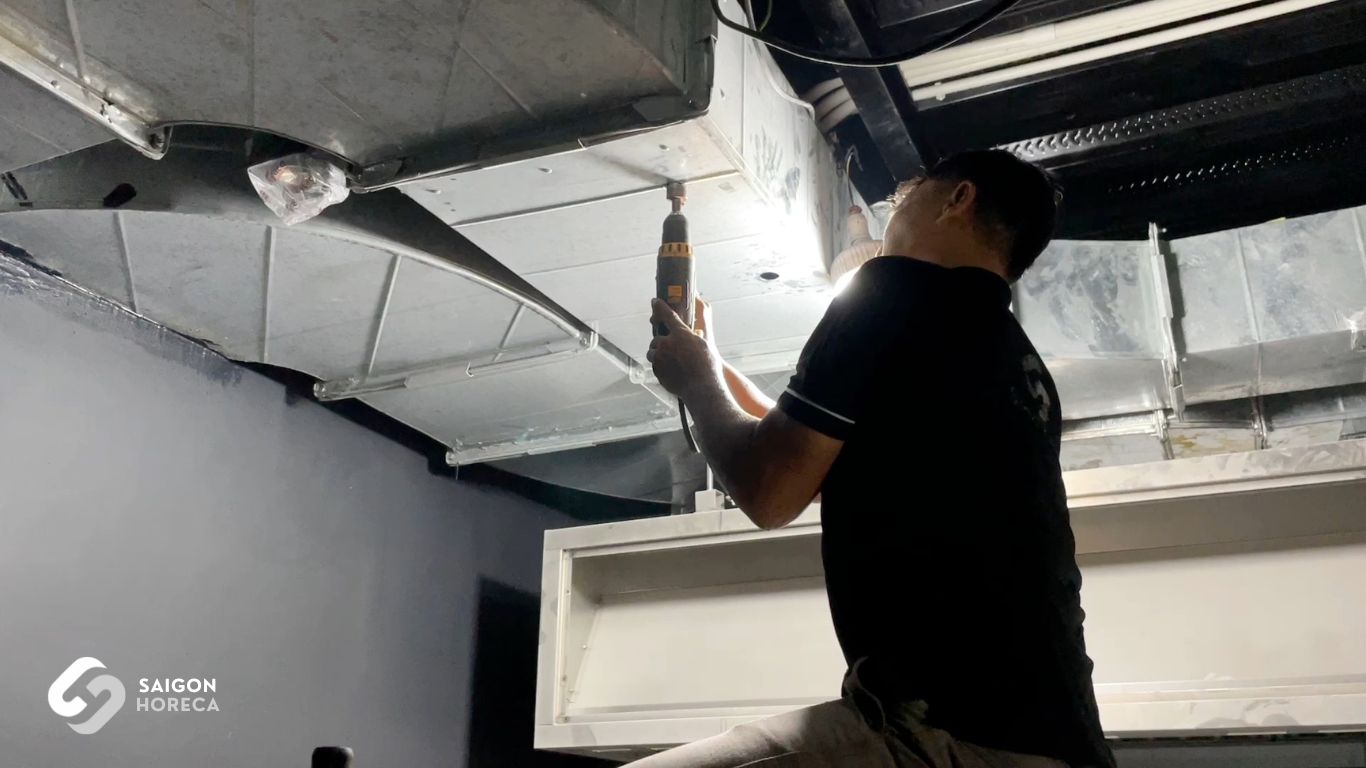
Checklist for industrial kitchen maintenance periodic maintenance to prolong equipment life
In a restaurant or hotel, the kitchen is the heart of operation. Every little problem here – from a clogged exhaust fan, to an overloaded refrigerator – can grind the whole service cycle to a halt. In fact, all industrial kitchen equipment problems do not come from design errors, but also from lack of regular maintenance.
Maintenance is not just cleaning. It is the process of prolonging equipment life, ensuring employee safety and maintaining food quality. A clean gas burner helps the stove fire evenly, a refrigeration unit that is defrosted on time helps food stay at the right temperature – all contribute to creating a stable experience for diners and sustainable profits for investors.
Regular maintenance checklist is therefore not a “should have” list, but a survival plan for restaurants and hotels to maintain smooth operations, save costs and prevent risks right before they appear.
Checklist for regular industrial kitchen maintenance to prolong equipment life “If you don’t do it – what will you lose”
To manage an industrial kitchen effectively, one cannot rely solely on experience or “wait for it to break down and then fix it”. The correct approach is proactive maintenance according to a clear schedule – like taking your car for regular maintenance to avoid breaking down in the middle of the road. With kitchens, the periodic maintenance checklist helps managers:
- Risk control: early detection of abnormal signs before serious incidents occur.
- Cost optimization: the cost of cleaning and replacing small supplies is always much cheaper than replacing the entire device.
- Preserving performance: the equipment is operated in a “healthy” state, helping the kitchen produce dishes quickly, evenly, and to the correct standards.
In fact, industrial kitchen equipment can be divided into 4 main groups that need periodic maintenance:
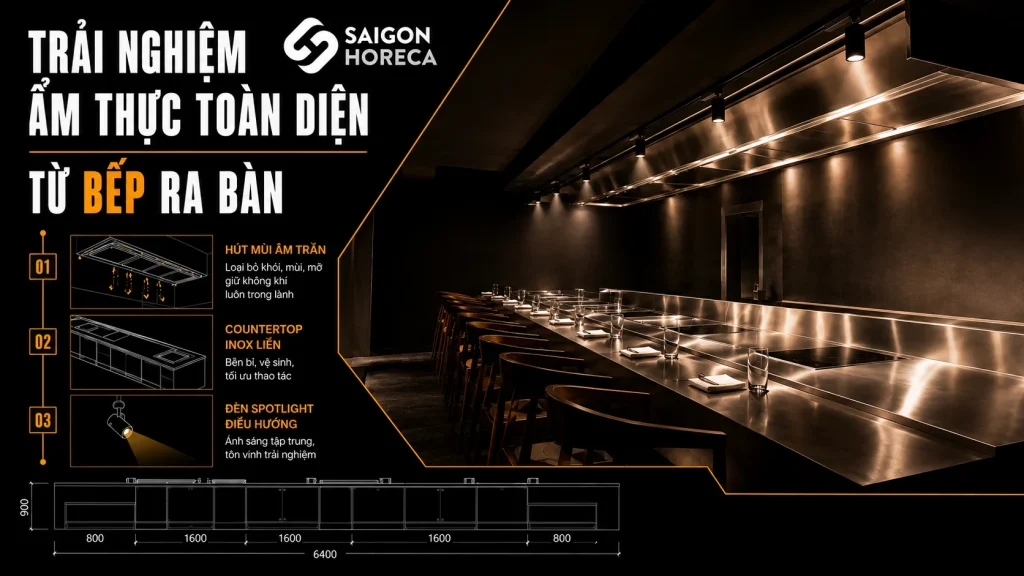
- Fume extraction & ventilation system
- Refrigeration & food preservation equipment
- Gas stove, electric stove & fuel supply system
- Stainless steel equipment & operating accessories
In the next section, we will go deeper into each group, along with the items that need to be checked, maintenance frequency and the “cost” if ignored.
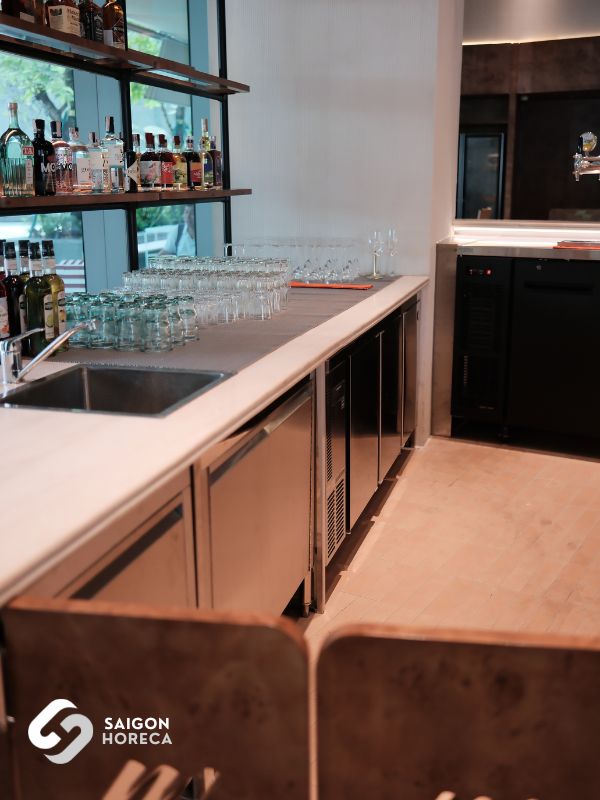
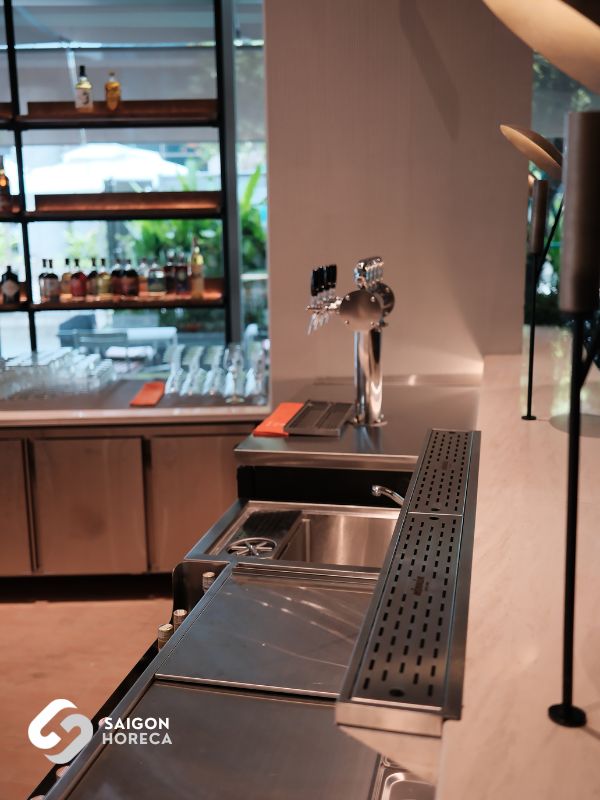
1. Smoke extraction & ventilation system
Have you noticed that in many industrial kitchens, when cooking is at its peak, the smell of grease is thick, the heat is overwhelming, the staff is uncomfortable, the food is easily affected, and the risk of fire and explosion also increases? That is a warning.
sign
Quick tip for chefs: just look at the layer of oil on the hood, pipes, fan motor… If it’s shiny and a bit viscous, it means the system is under overload. Regular cleaning not only helps the kitchen breathe easily but also reduces the risk of silent fires and explosions, which many managers often ignore.
Maintenance items
- Clean the filter: at least once a week, depending on workload.
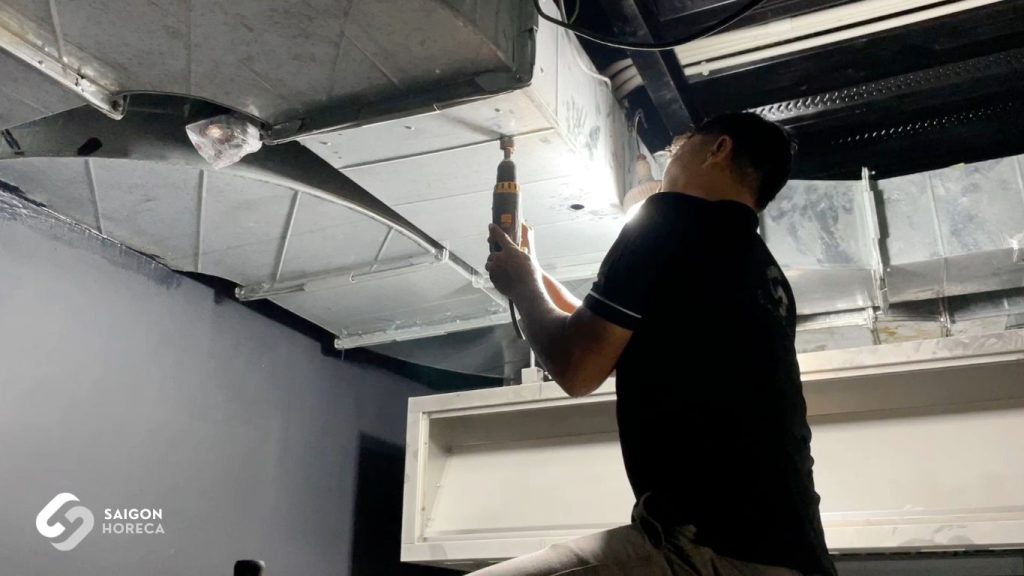
- Clean the smoke duct & exhaust hood: every 3–6 months, depending on the type of stove (grilling, frying needs more).
- Check the exhaust fan and motor: ensure smooth operation, no abnormal vibrations.
- Measure air flow & adjust air balance: at least once a year to maintain performance.
Consequences if ignored
- Danger of explosion: the layer of fat accumulated in the straw is a “detonator” just waiting for a small spark.
- Increased electricity costs: dirty exhaust fans operate sluggishly, consuming 10–15% more electricity.
- Poor working environment: hanging oil smoke makes employees tired, reduces performance, and even increases absenteeism.
Affects the quality of food: the smell of smoke and burning smells back into the ingredients, ruining the diner experience.

2. Refrigeration & food preservation equipment
If the smoke extraction system is the “lungs”, the refrigeration equipment is the “blood reserve” of the industrial kitchen. If the refrigerator, freezer, or cold storage has a problem, all the ingredients can spoil in a few hours – meaning a direct loss of tens to hundreds of millions of dong.
Maintenance items
- Defrost the cooling system & clean the coil: 1 time/month to avoid snow accumulation and ensure good heat exchange.
- Check refrigerant gas & compression system: every 6 months, detect leaks early.
- Clean cabinet door gaskets: weekly, ensuring tight seal, no heat loss.
- Measure temperature & adjust thermostat: periodically every 3 months.
- Clean fan blades & air filters: to ensure even distribution of cold air.
Consequences if ignored
- Ingredients spoil quickly: meat, fish and seafood only need a 2–3°C increase in temperature to be easily contaminated.
- Increased electricity costs: dusty indoor units cause the compressor to run continuously, consuming 15–20% more electricity.
- Compressor lifespan is drastically reduced: one compressor failure = replacement cost of 20–30 million VND.
Operational impact: the kitchen is forced to change the menu or stop serving, losing credibility with customers.

3. Gas stove, electric stove & fuel supply system
If refrigeration equipment keeps ingredients fresh, the stove is the “powerful heart” of the kitchen. Just a small problem with the gas stove, electric stove or fuel supply system will cause the entire processing line to stall. More importantly, this is also the area with the most potential for fire and explosion.
Maintenance items
- Check gas pipes: once a month; Replace immediately if there are signs of cracking, leaking or expiration date.
- Clean the burner: weekly to avoid clogging the fire and help the stove catch fire evenly.
- Check safety valve & pressure regulator: Every 6 months, ensure stable pressure.
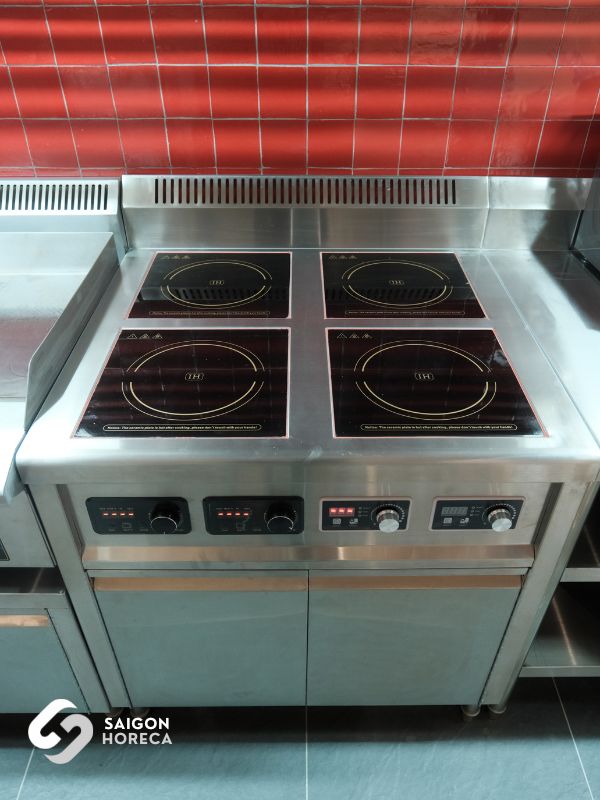
- With electric/induction stoves: clean the surface, check the power cord, socket, circuit breaker periodically.
- Test gas leak alarm system & fire extinguisher: at least once a year.
Consequences if ignored
- Danger of fire and explosion: even a small crack in a gas pipe can lead to a leak, dangerous for employees and customers.
- Service interruption: the stove does not catch fire or the electricity flickers during peak hours, causing food to be delayed and customers complaining.
High repair costs: Replacing a set of late pressure regulator valves often costs twice as much as checking and replacing them early.

4. Storage & refrigeration equipment: Refrigerators, freezers, cool storage
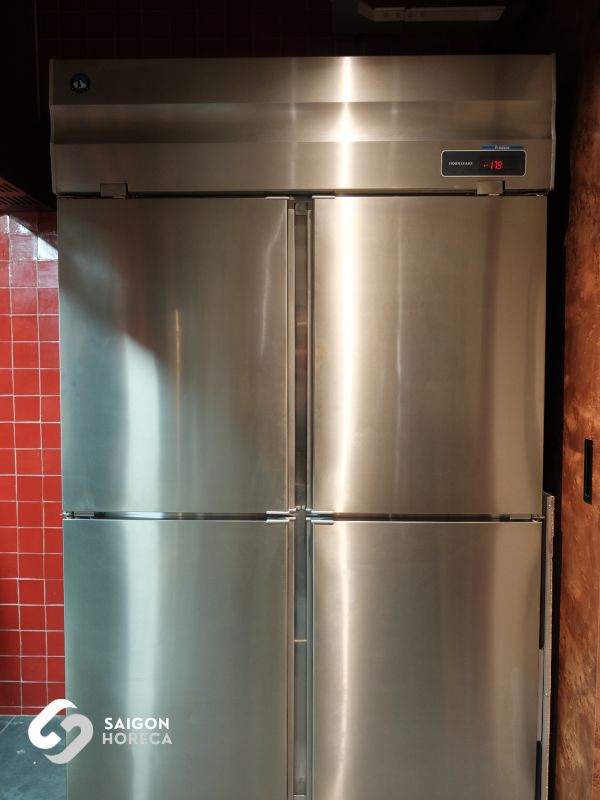
In industrial kitchens, the cooling system plays the role of “heart” to help preserve ingredients. If the refrigerator, freezer or cool storage has a problem, it not only causes great damage in terms of cost of spoiled ingredients but also directly affects the quality of food and reputation of the restaurant/hotel.
Regular maintenance checklist:
- Clean the condenser system: remove dust and dirt on the system, help the compressor operate more efficiently, reduce electricity consumption.
- Check the door seal (rubber gasket): ensure airtightness, avoid cold air loss – something that can easily happen when opening/closing continuously.
- Defrost periodically (if any): a thick layer of snow prevents the circulation of cold air, causing the machine to work more than necessary.
- Measuring storage temperature: compare with food safety standards (0–5°C for cool, -18°C for frozen). Small, prolonged deviations can reduce equipment life and affect food quality.
- Hear strange noises from the compressor: unusual sounds are an early signal of a technical problem.
Many restaurants and 4-star hotels had to destroy a lot of frozen seafood because the cold storage did not reach standard temperatures. The reason was simply that the warehouse door gasket was leaking, causing cold air to escape without the staff detecting it early. This situation shows the importance of regular inspection and early detection of small errors, instead of waiting until the problem occurs to handle it.
Consequences if you ignore refrigeration equipment maintenance
- Damaged ingredients: as long as the freezer does not meet the -18°C standard for a few hours, foods such as meat and fish can change color, lose freshness and have to be discarded.
- Increased electricity costs: dusty condenser coils or open door gaskets cause the machine to run continuously to compensate for heat, wasting 15–30% of electricity each month.
- Food safety risk: unstable storage temperature can create conditions for microorganisms to grow, posing a potential risk of food poisoning.
- Reputation damage: customers often rarely know what the refrigerator in the kitchen is like, but they will immediately feel it if the ingredients are not fresh. One bad experience may keep them from coming back.
5. Washing & cleaning equipment: The most easily “forgotten” place in the kitchen
Most chefs focus on ovens, fryers or refrigerators – devices that “directly create food”. But few people notice that the dishwasher, grease trap or drainage line are the places that determine the cleanliness and smooth operation of the entire kitchen.
A kitchen shift during rush hour, the dishwasher suddenly stopped working, the staff had to divide their hands to wash, the dishes piled up like a mountain. Result? The kitchen is slow to produce food, the staff is stressed, and customers complain. The reason is just… the dishwasher filter is not cleaned regularly.
So which checklist should you remember?
- Filter and nozzle: clean weekly.
- Grease trap: dredge at least twice a month.
- Floor drain: ensure ventilation every day.
- Disinfection: periodically with safe solution.
It seems trivial at first glance, but if ignored, the result is bad odors, mold and even operational disruption – things that can ruin the customer experience faster than any dish.
 Facebook
 Zalo
Zalo