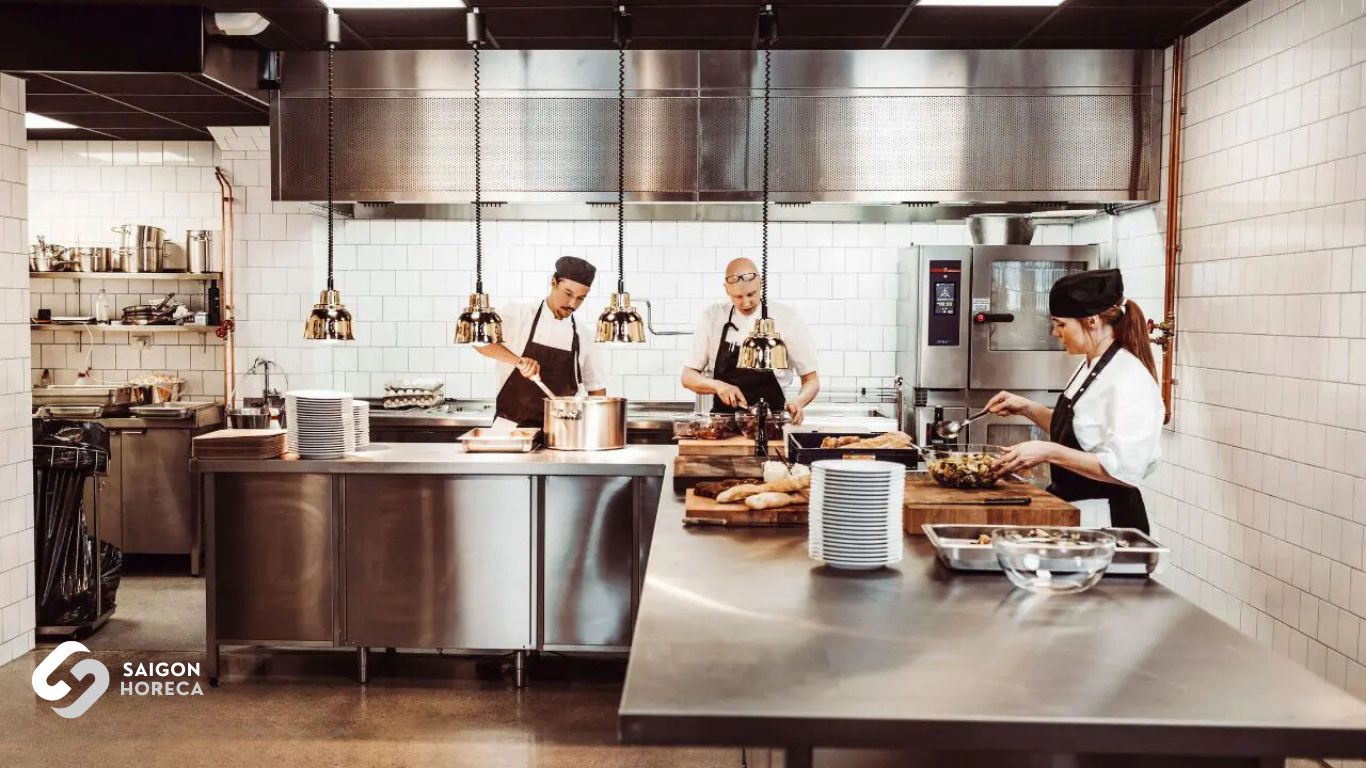
Community kitchen handbook – What you need to know
Community kitchens are increasingly popular and widely used in many organizations and agencies, including businesses, schools, hospitals, and the military. This popularity places high demands on hygiene and food safety, and the quality of the kitchen is also being placed first. So, let’s explore more deeply what a commercial kitchen is and the food hygiene and safety standards it must follow through the article below, provided by Saigon Horeca!
Learn about commercial kitchen?
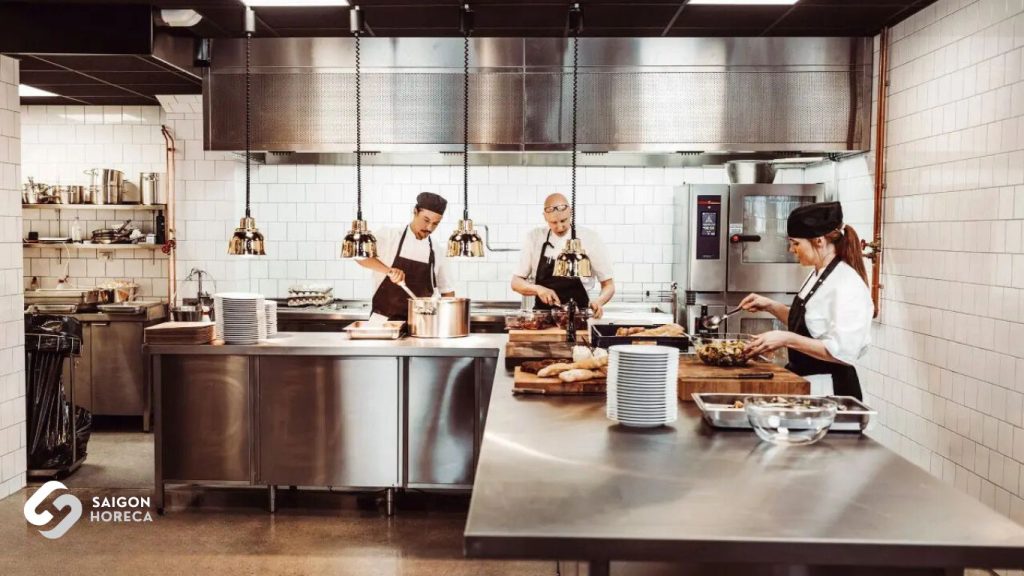
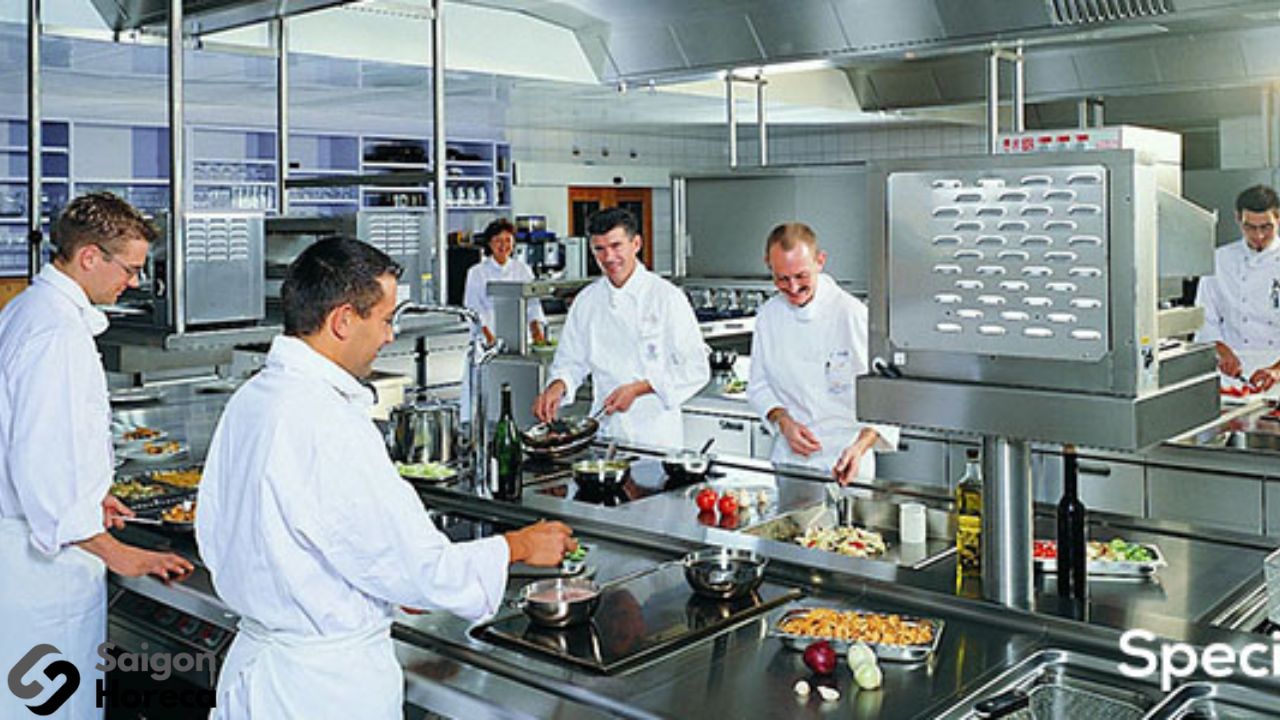
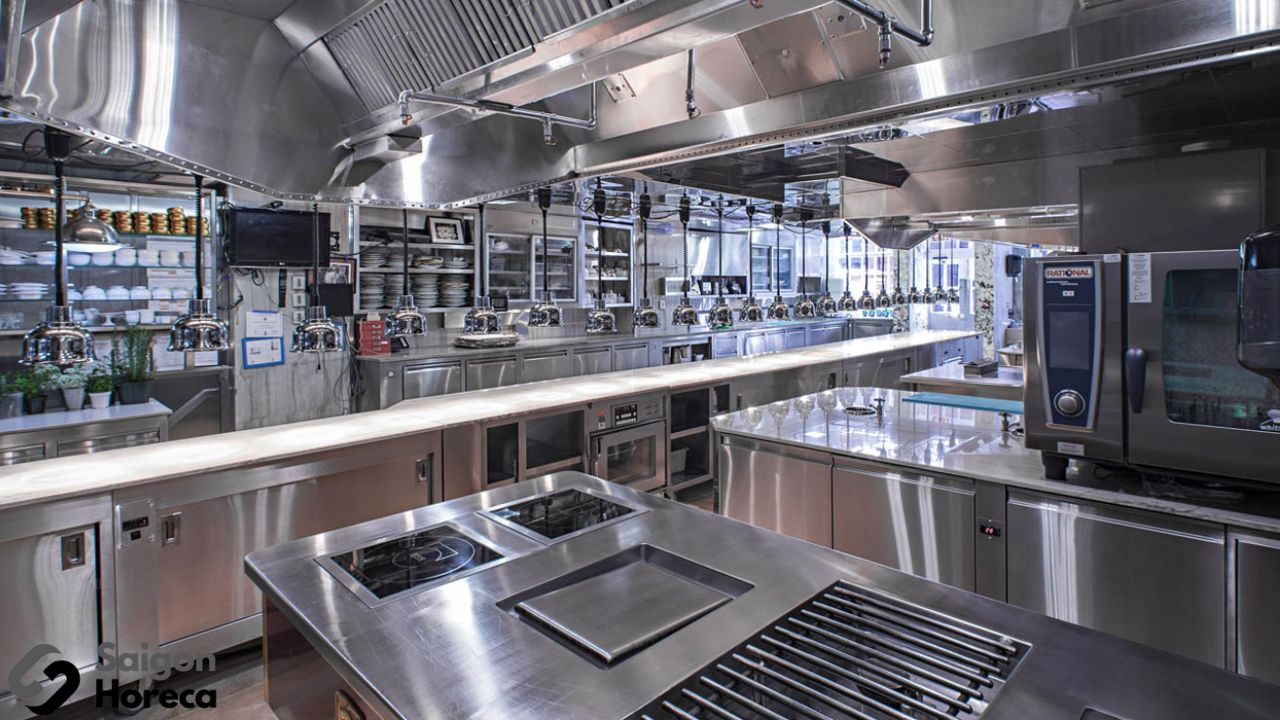
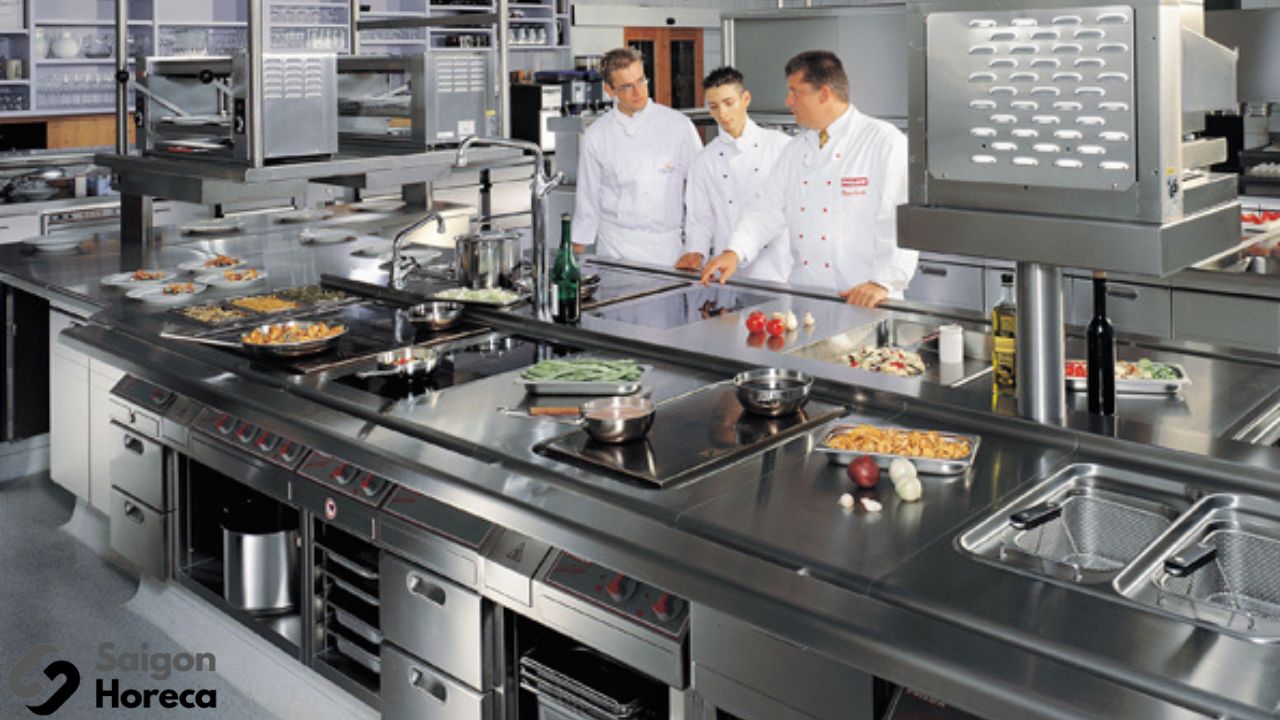
A commercial kitchen is a facility or model that cooks and provides food for a large number of people, usually in a collective setting such as a school, public agency, hotel, hospital, prison, or other special organizations and events. The main goal of a commercial kitchen is to prepare and provide food to many people effectively and safely.
commercial kitchen are often designed and equipped to handle large quantities of food, and may have strict controls to ensure food safety and compliance with food hygiene regulations. Chefs and staff in commercial kitchen must follow strict hygiene and food safety rules to ensure that food is cooked, delicious and safe to eat.
The commercial kitchen can serve daily meals or carry out special projects such as weddings, conferences, or large events. commercial kitchen facilities often provide a variety of foods to meet the culinary and nutritional needs of the people they serve.
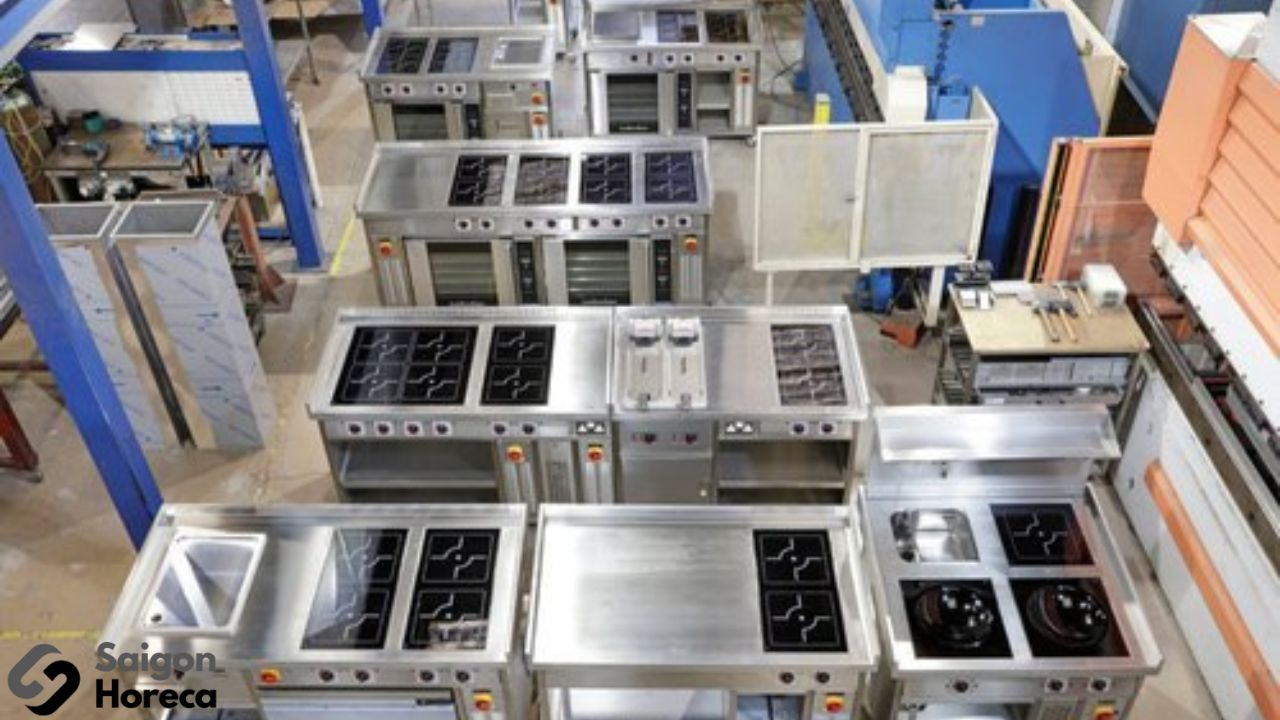
New Trends in commercial kitchen
Currently, in the field of culinary services at organizations and businesses, we see two main forms of commercial kitchen appearing. commercial kitchen following the contract model of providing industrial catering services account for a large proportion, about 80%. In this model, organizations or businesses cooperate with licensed culinary companies to provide meals for employees according to signed contracts. This model helps save time and resources for organizations, while ensuring quality and menu diversity.
The collective self-cooking kitchen, managed by the organizational unit, accounts for a smaller proportion, about 20%. In this case, the organization or business sets up and operates a commercial kitchen to serve their employees. This could include owning and managing a team of chefs and cooking staff or providing employees with self-service meals. This model offers total control over the type of food, the cooking process, and the quality of meals provided.
Each form has its own advantages and limitations, and the choice between them depends on the needs, finances and decisions of each specific organization or business.
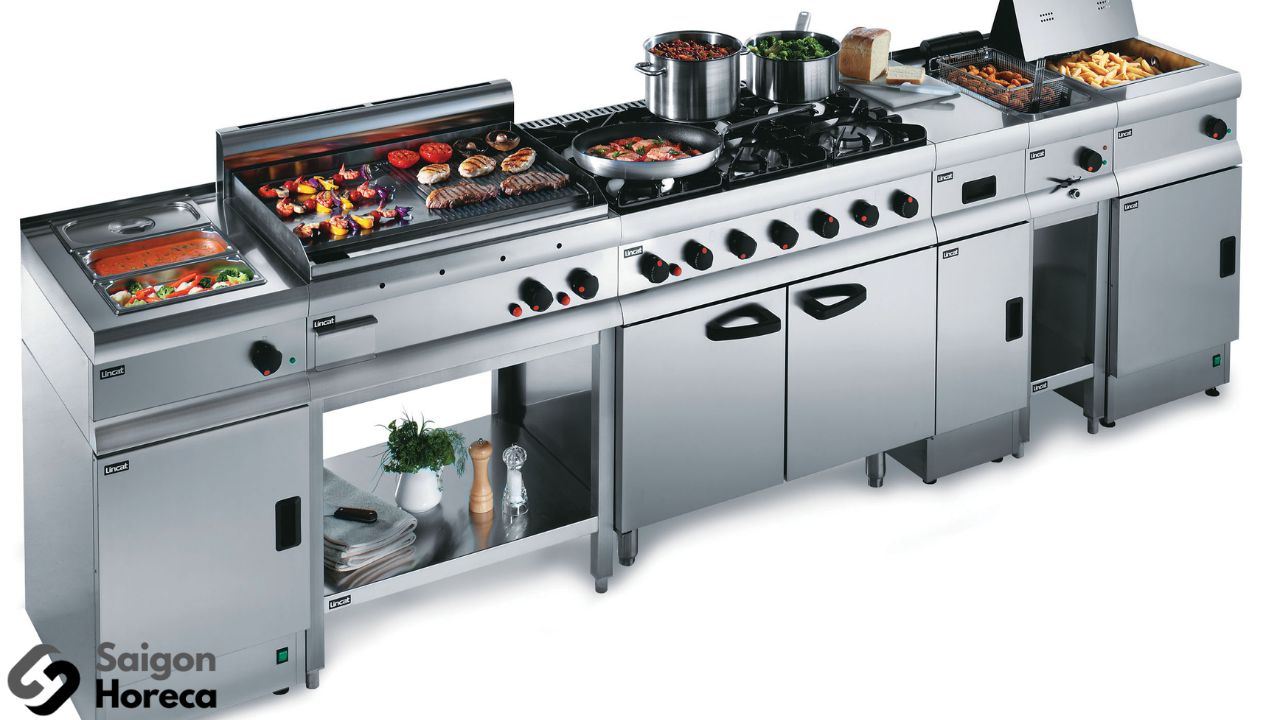
commercial kitchen signs a contract to provide industrial catering services:
- In this case, the organization or business hires a company or professional catering service provider to provide meals for employees, company employees are not involved in cooking.
- The food service company will ensure to cook, prepare, and distribute food according to the signed contract.
- This form often saves time and resources for the organization or business, while ensuring that employees have delicious meals and meet nutritional requirements.
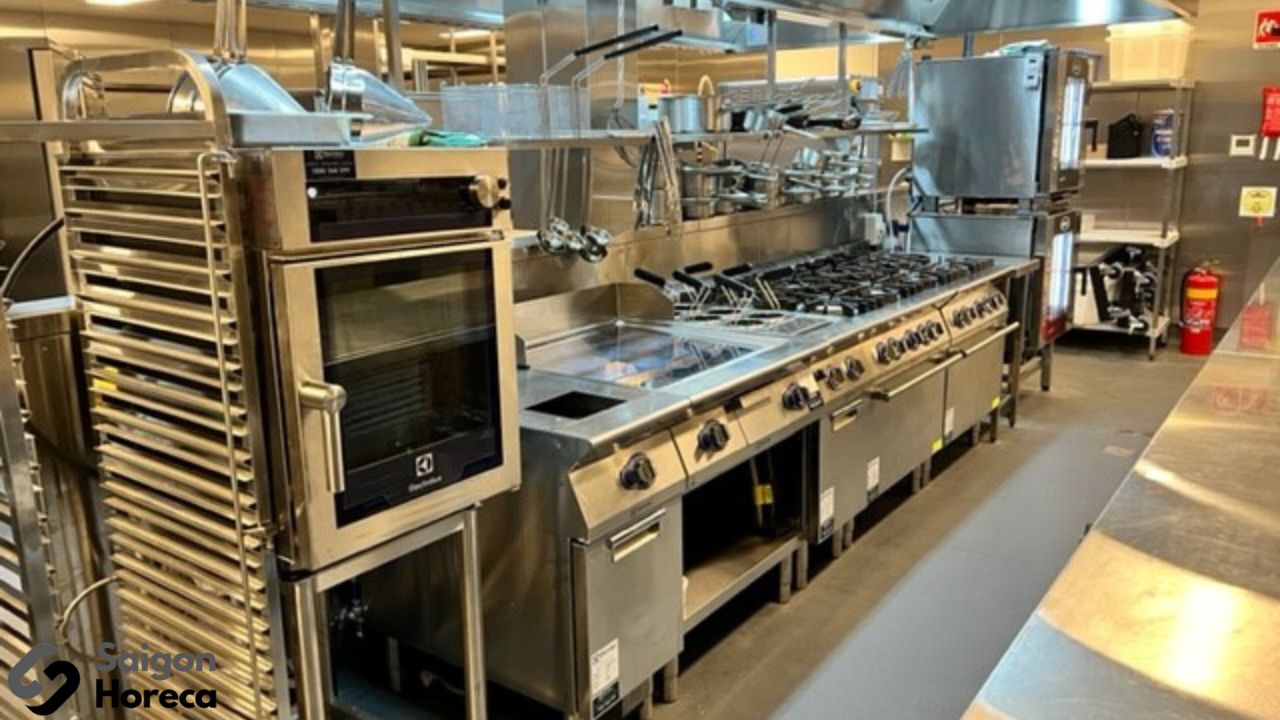
commercial kitchen cooked by the unit to serve employees:
- In this case, the organization or business sets up and manages a commercial kitchen to cook and serve their employees.
- This may require having a team of chefs and cooking staff, or staff serving the meals themselves.
- This form allows organizations or businesses to have comprehensive control over the type of food, cooking method and quality of meals they provide to employees.
Each form has its own advantages and limitations, and the choice between them depends on the needs, finances and decisions of each specific organization or business.
Food Hygiene Standards in commercial kitchen
In recent times, food poisoning has skyrocketed, with 70% of cases stemming from the use of food transported from far away. The main cause of this condition is often related to the long time spent transporting food along with unsafe conditions during this process.
With the goal of protecting public health, the Ministry of Health has issued regulations requiring the issuance of food hygiene and safety licenses for commercial kitchen, such as those providing food to schools, hospitals, businesses and factories. In addition, inspection teams will strictly monitor the operations of these commercial kitchen.
According to Circular No. 30/2012/TT-BYT of the Ministry of Health, issued to set out regulations on food safety standards applicable to food service establishments, specifically street food and commercial kitchen. Food safety conditions are regulated as follows:
Site Standards and Facility Environment
Areas used for food preparation and enjoyment should ensure that the environment is not wet, free of standing water, and not affected by factors such as insects, animals, or harmful microorganisms. In particular, do not be affected by areas contaminated by dust, chemicals, or other toxic sources.
>> To ensure hygiene and food safety in the commercial kitchen environment. Read more in the article below, which will delve into factors such as food storage, cooking process, and cleaning process to help you understand and take the necessary measures to prevent the spread of bacteria and protect the health of customers: 10 principles of food hygiene and safety for kitchen systems industrial eating.
Design and Layout Standards in the Food Industry
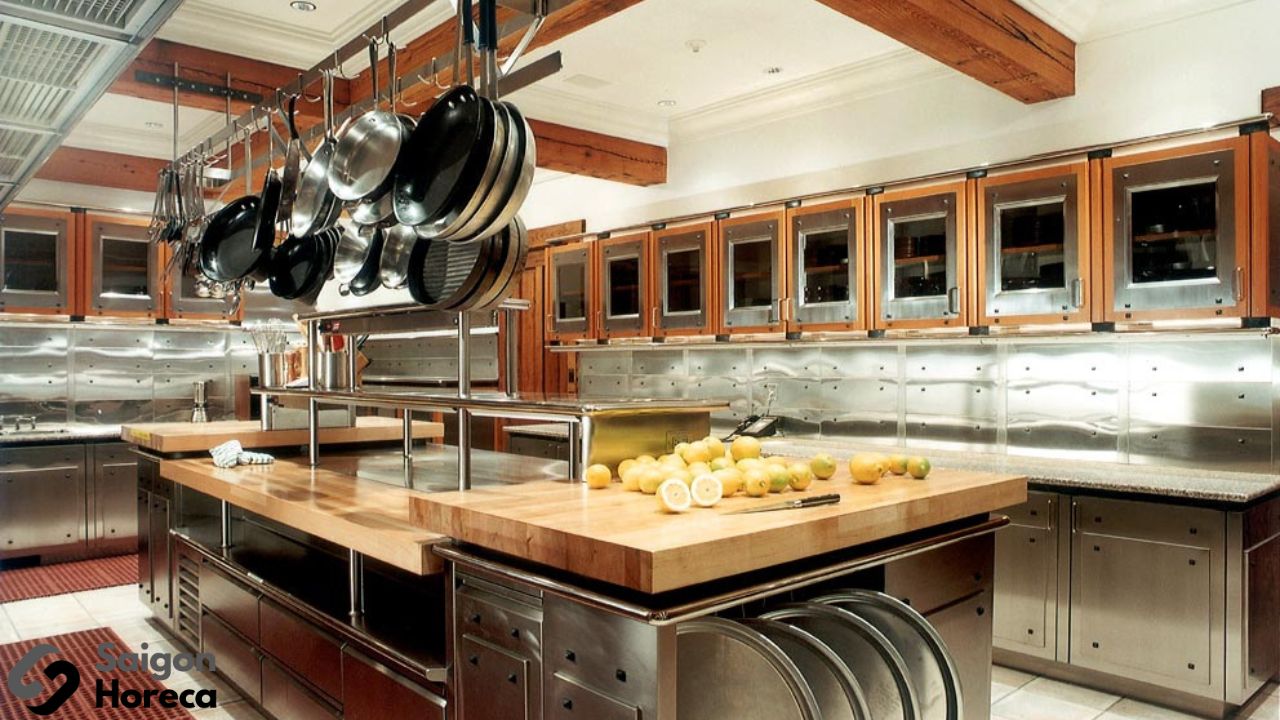
The organization or unit must ensure the existence of important and separate areas, including:
- Ingredient and food preparation area: This is where the preparation and separation of raw materials required for food processing takes place.
- Processing and cooking area: This is where cooking is done and ingredients are processed into finished dishes.
- Food storage area: This is the place to store food after processing to ensure food safety and quality.
- Separate packaged storage area: A place where packaged food is stored, which can be ready-for-service food or inventory.
- Food area: The place where customers or employees enjoy prepared food.
- Cleaning area: This area should be designed to ensure hygiene for both staff and customers, including hand washing and personal hygiene facilities.
Creating separate and organized areas is a way to ensure that every aspect of food preparation and delivery is done safely and efficiently. 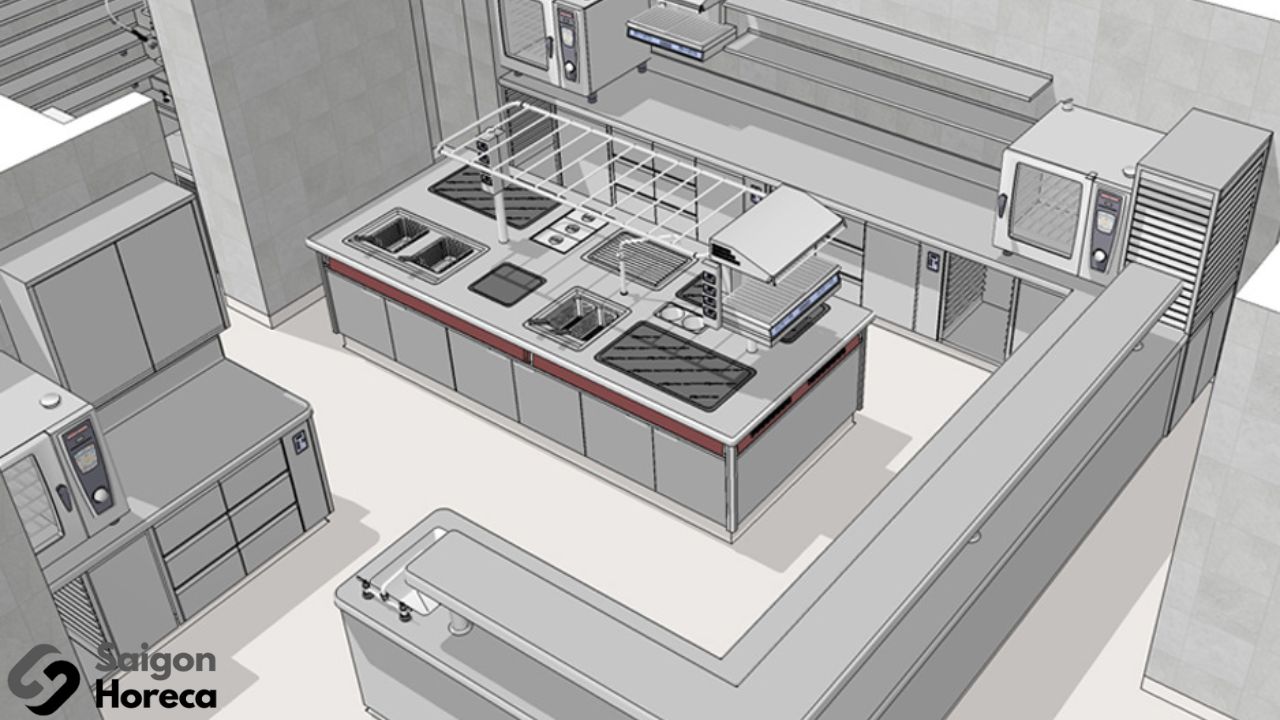
Conditions on Food Ingredients and Specific Equipment
Food ingredients, additives, processing aids, or preservatives need to comply with the following requirements:
- Origin and provenance: All food ingredients need to have a clearly identified origin, and should be supplied according to regulations and with the necessary licenses. This ensures the safety and quality of the ingredients.
- License for use: Components require a license for use according to regulations. This ensures that the materials are used correctly and do not violate food safety laws.
Equipment and tools in direct contact with food must comply with Safety standards and not pollute the environment. Equipment and utensils in direct contact with food need to be made from safe materials and do not pollute the environment. This ensures that food is not contaminated or harmful to health when exposed to these devices.
Ensuring the origin and safety of food ingredients and equipment is important to ensure that food is prepared and served in a safe and quality manner.
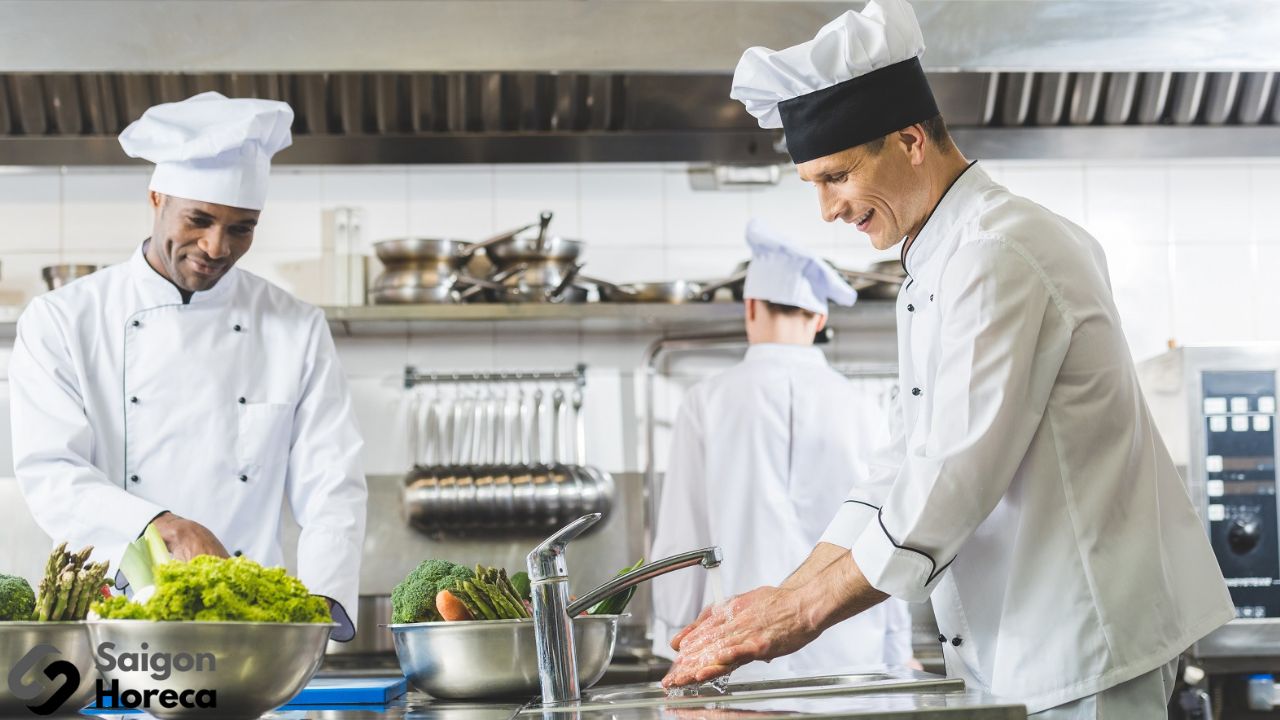
Requirements for Personnel Directly Involved in Food Production
Owners of commercial kitchen units and employees directly involved in food production need to Train on food safety and hygiene. It includes training employees in food safety and sanitation rules and standards, including how to store, handle, and cook food safely and hygienically. After completing the training course, employees need to be issued a training certificate, which is a document proving that they have received training in food safety and hygiene.
These measures ensure that employees have the knowledge and skills necessary to ensure food safety during production and service. It also plays an important role in ensuring compliance with food hygiene regulations and reducing the risk of breaking the law in this area.
Standards for Food Preservation During Production
When handling and preserving food in a commercial kitchen environment, having a separate storage area is an indispensable important factor to ensure that the quality and safety of food is always maintained. Food ingredients, packaging and food ingredients need to be stored in separate areas, designed to be spacious enough to ensure effective arrangement and organization.
Dividing food ingredients into specialized areas helps prevent mix-ups and loss, while also making it easier to identify and trace specific products. Separate storage areas also allow for temperature and humidity control, two important factors in maintaining food freshness and safety. This also helps prevent the growth of harmful microorganisms and ensures that food is not affected by foreign factors such as dust, insects, or toxic substances.
In addition, using a separate storage area also helps control the quantity of food during the import and export process and ensures that food never expires or is used after the specified time. All of these together play an important role in ensuring the safety and quality of food in commercial kitchen.
 Facebook
 Zalo
Zalo