- commercial kitchen Equipment, News
5 tips for using industrial gas stoves to help ensure absolute safety
In the context of the increasingly strong culinary industry, industrial gas stoves have become an indispensable part of restaurants, hotels and food processing facilities. However, using a gas stove also poses many risks if not done properly. According to statistics, many gas-related accidents can be prevented simply by following basic safety rules.
In this article, we will give you 5 ways to use industrial gas stoves safely from A-Z. Each method will be presented in detail, helping you not only understand the usage process but also equip yourself with the necessary knowledge to protect yourself and your colleagues. Let’s explore these secrets to ensure maximum safety and efficiency in your kitchen work.
Article content
Check the gas system periodically
Regularly checking the gas system is an essential step in the process of operating industrial gas stoves, not only to ensure operational efficiency but also to ensure safety for employees and facilities. In the commercial kitchen environment, where there is continuous operation and high frequency of use, this becomes more important than ever.
1. Check gas tank:
Before putting into use, it is necessary to carefully check the condition of the gas tank. Factors to pay attention to include: no signs of rust, cracks or leaks around the joints. Use leak test solution (soap and water) to detect any leaks, ensuring safety before use.
2. Gas pipeline:
Gas pipes also need to be checked periodically to ensure there are no cracks or damage. Corroded or damaged pipe sections should be replaced immediately. In particular, it is necessary to ensure that the joints are sturdy and that there are no signs of gas leakage.
3. Lock valve:
The lock valve is an important device that helps disconnect gas when not in use or in an emergency. Check the shutoff valve to make sure it is working properly and is not stuck. If the valve is detected to show signs of damage, it should be replaced promptly to avoid unwanted risks.
4. Overall rating:
Finally, a comprehensive assessment of the gas system should be performed, including planning for routine maintenance and replacement of equipment. This not only helps maintain safety but also optimizes the performance of industrial gas stoves.
By performing these checks periodically and professionally, you will contribute significantly to creating a safe and productive working environment in your commercial kitchen. This not only protects the lives and health of employees, but also ensures that the food processing process runs smoothly.
Proper installation and operation
Proper installation and operation of industrial gas stoves not only ensures efficiency in the food processing process but is also an important factor in preventing accidents. Below are detailed instructions on how to install the gas tank and the safe procedure for turning the stove on/off.
Instructions for installing gas tanks:
- Installation location: Gas tanks need to be placed in a well-ventilated place, away from heat sources, direct sunlight and flammable substances. Avoid placing gas cylinders in enclosed spaces or places where there is a risk of collision.
- Pipe connection: Make sure that the gas pipeline is securely installed and has no cracks or damage. Use high quality gas pipes and suitable accessories to connect to the gas stove. Joints need to be tightened to prevent leakage.
- Check for leaks: After installation, perform a leak test with soap solution. If air bubbles appear, it means there is a gas leak, and needs to be fixed immediately.
Procedure for safely turning on and off gas stove:
- Turn on the gas stove:
- Before turning on the stove, check for any gas smell. If so, stop immediately and find a way to fix it before continuing.
- Open the gas valve to supply gas to the stove. Then, use an igniter or matches to ignite the flame. Be sure to keep the igniter close to the cooking area to prevent gas from building up before igniting.
- Turn off the gas stove:
- When not in use, make sure to turn off the stove by closing the gas valve immediately. This helps prevent gas leaks in the kitchen space.
- Check thoroughly to ensure that there are no remaining flames and no gas smell in the cooking area.
Regular maintenance:
- Perform routine maintenance on gas systems and related equipment. Check valves, pipes and gas stoves to make sure everything is running smoothly and safely.
Proper installation and operation of industrial gas stoves not only improves working efficiency but also protects the safety of all employees in the kitchen. Always follow the process and periodically check to minimize risks and create a safe working environment.
How to use industrial gas stove
Using industrial gas stoves properly not only ensures cooking performance but also protects the safety of employees in the kitchen environment. Below are detailed step-by-step instructions for using a gas stove safely and effectively.
Step 1: Turn on the Gas Stove
To start the gas stove, do the following:
- Open the gas tank valve:
First, make sure that the gas valve on the gas tank is completely open.
- Press the gas stove knob:
Press the gas stove knob and hold for about 5-10 seconds to let the gas reach the burners.
- Turn the stove knob:
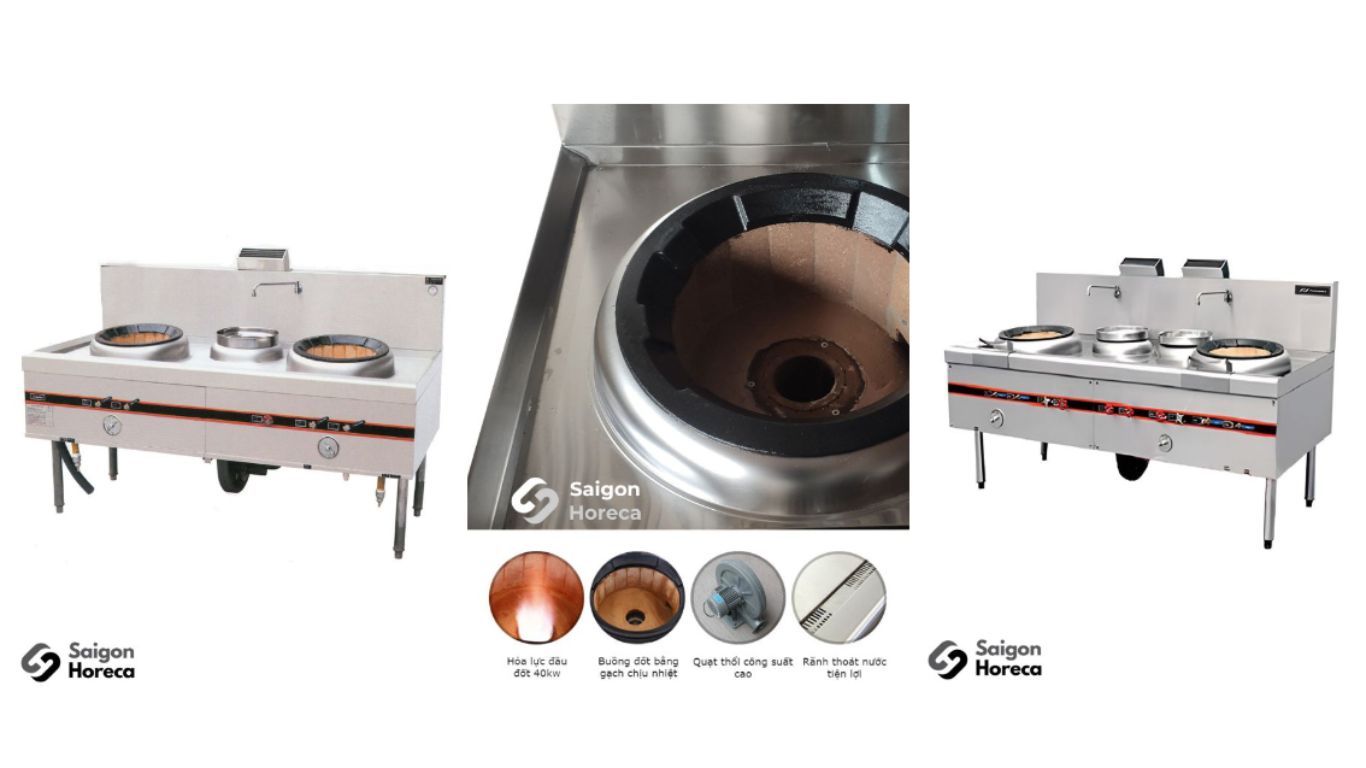
Turn the stove knob counterclockwise until the flame burns evenly. Make sure the fire is burning in the correct position in the cooking stove. For double stoves, both the small and large ovens will burn at the same time. If you only use a small oven, you only need to turn the control knob for the small oven area.
- Adjust the fire source:
Turn the control knob to adjust the fire source according to cooking needs.
Step 2: Adjust the Fire
If the flame burns unevenly or is red, adjust the air blade at the top of the burner, located at the bottom of the stove, until the desired flame is achieved. A blue flame is a sign that the stove is working effectively.
Step 3: Use Different Cooking Zones
Using the cooking zones on industrial gas stoves properly is very important:
- High heat zone:
Suitable for rapid boiling, frying and cooking dishes that require strong heat. Place the pot or pan on high heat, making sure the bottom diameter of the pot or pan is suitable to optimize cooking performance.
- Medium heat zone:
Suitable for stir-frying and cooking dishes that require medium heat. Place the pot or pan on medium heat and ensure the bottom diameter corresponds.
- Low heat zone:
Suitable for reheating and frying dishes that need to be cooked evenly. Place the pot or pan on low heat and control the temperature accurately.
- Fire off zone:
This is the position when you completely turn off the gas stove. Place a pot or pan over this area to keep cooked food warm.
Step 4: Turn off the Gas Stove After Use
After completing cooking:
- Turn the stove control knob to the OFF position:
Turn the knob until you hear a “click” sound, ensuring that the stove is completely turned off.
- Lock the gas valve on the gas tank:
To ensure safety, always lock the gas valve after use.
Troubleshooting when detecting odors gas
In an commercial kitchen environment, the detection of gas odor is an important warning signal, requiring a quick and accurate response to ensure the safety of all employees and customers. Below are detailed instructions on what to do when detecting the smell of gas.
- The smell of gas often has a pungent, easily recognizable odor. If you suspect a gas leak, take action immediately.
- First, quickly turn off the gas valve at the tank or at the connection point. This helps prevent gas from continuing to escape, reducing the risk of fire and explosion.
- Immediately after turning off the gas source, open all windows and doors for ventilation. This helps gas escape and reduces the risk of accumulation, increasing the safety of the kitchen space.
- Avoid using any electrical equipment, including lights, fans or other appliances, in an area with a gas odor. Any electrical spark can cause a fire or explosion in a gas environment.
- Once safety is assured, staff can inspect gas tanks, pipes and joints to determine the source of the leak. If the cause cannot be determined or if the gas smell persists, call a professional service immediately for assistance.
- Immediately notify the manager or person in charge of the incident to take timely measures. In some serious cases, it is necessary to evacuate employees and customers from the danger area.
- After the incident is resolved, conduct an assessment and review of existing safety measures. Organize training sessions on gas safety for employees to improve awareness and skills in handling situations.
Quickly and properly handling when detecting gas odor is extremely important in the commercial kitchen industry. Always keep yourself informed and take safety measures to protect yourself and your colleagues.
Regular maintenance of gas stove
Regular maintenance of industrial gas stoves is an important factor to help ensure equipment performance as well as increase employee safety in the kitchen environment. Regular maintenance not only helps the stove operate efficiently but also prolongs the life of the equipment. Below are the necessary steps to perform this maintenance job.
Clean the burner:
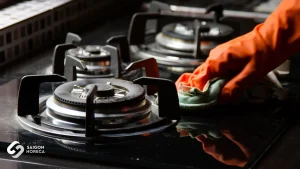
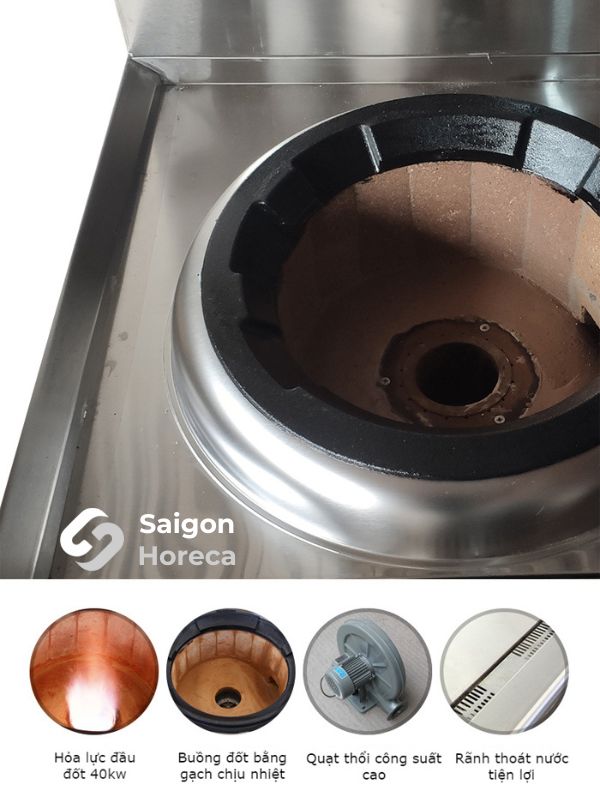
The burner is the main part responsible for creating a flame. Cleaning the burner periodically helps remove food debris and dirt, ensuring the fire always burns evenly and efficiently. Use a soft brush or clean cloth to gently scrub and remove residue without damaging the structure of the burner.
Check the ignition:
The igniter plays an important role in starting the gas stove. Check thoroughly to make sure this part is working properly. If a problem is detected, it should be replaced or repaired promptly. This will help ensure that the stove can be started quickly and safely.
Cleaning gas pipes:
Gas pipes need to be checked and cleaned periodically to ensure there is no dirt or dust blocking the flow of gas. If the hose shows signs of damage, replace it immediately. Use specialized products to clean pipes, ensuring no damage to the material.
Check and replace accessories:
Regularly check accessories such as gas valves, joints and pipes for signs of wear or damage. Timely replacement of these accessories will help prevent gas leaks and other serious problems.
Finally, perform an overall assessment of the gas stove system after each maintenance. Plan periodic maintenance and record the work performed so that it can be monitored and adjusted when necessary.
By performing these periodic maintenance steps, you will not only ensure that your industrial gas stove is always in the best operating condition, but also create a safe working environment for all employees. Consider maintenance an integral part of kitchen operations to optimize efficiency and safety.
Saigon Horeca – A reputable, quality supplier of industrial gas stoves
At Saigon Horeca, we are proud to be the leading supplier of industrial gas stoves with top quality and safety criteria. With many years of experience in the field of commercial kitchen equipment supply, we are committed to providing customers with the best products, meeting all the cooking needs of restaurants, hotels and food processing facilities.
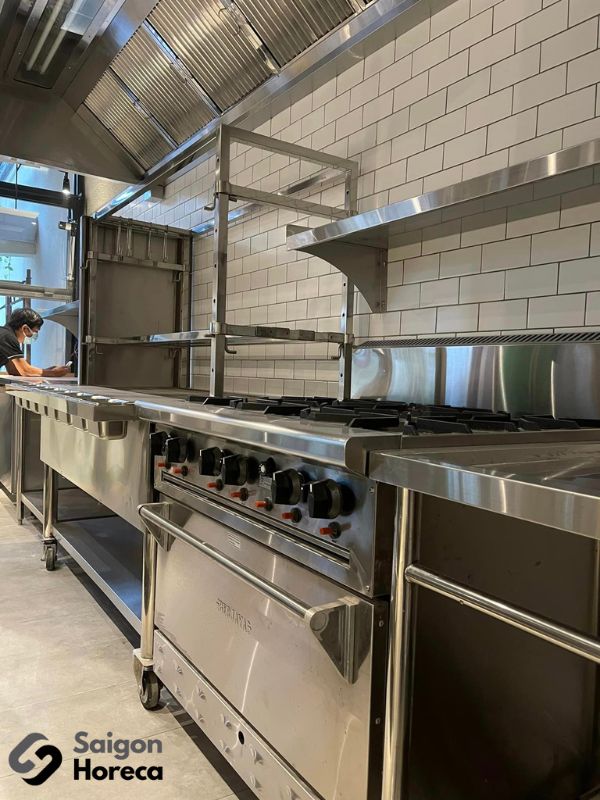
We provide a variety of industrial gas stoves, from single to double stoves, with modern design and high performance, helping to optimize the cooking process. Our team of professional technicians is always ready to advise and support customers in choosing the most suitable product.
In addition, Saigon Horeca also provides periodic maintenance and repair services, ensuring that your gas stove always operates effectively and safely. Coming to us, you not only receive quality products but also dedicated and professional service.
Let Saigon Horeca accompany you on your culinary development journey, bringing wonderful experiences to diners!

 Facebook
 Zalo
Zalo